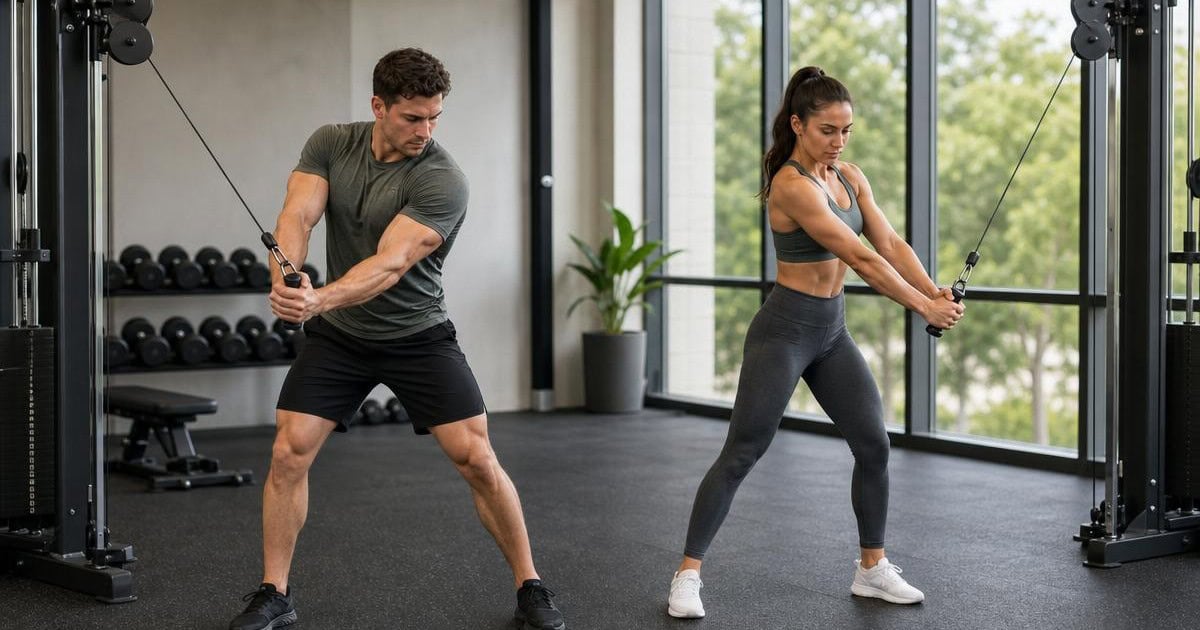
The serratus anterior is the often-overlooked muscle on the side of the rib cage that creates the visible ‘fingers’ or rib-like striations alongside the chest in well-developed physiques. The serratus is responsible for scapular protraction (pushing the shoulder blades forward), upward rotation of the scapulae (essential for healthy overhead pressing), and stabilization of the scapulae against the rib cage. A strong, well-developed serratus produces: visible rib-like striations on the side of the rib cage (the ‘boxer’s muscle’ that defines great physiques), better overhead pressing capacity through proper scapular upward rotation, reduced shoulder injury risk through proper scapular mechanics, improved punching power for boxing/martial arts (the serratus is the primary muscle that drives punches), and supported posture through scapular position control. The serratus is one of the most underdeveloped muscles in most lifters because it requires specific training emphasis: pullovers, push-up plus variations (with full scapular protraction), planks (with active protraction), and overhead pressing patterns. Most lifters who want serratus development are missing it because traditional chest and back training does not emphasize the scapular protraction motion that the serratus performs.
Below are ten of the most effective exercises for serratus anterior development, covering direct serratus work through pullover patterns (dumbbell pullover, barbell pullover, barbell bent arm pullover), scapular protraction work (push-ups with full protraction, front plank), pressing patterns with serratus emphasis (barbell bench press, dumbbell bench press, dumbbell incline bench press), and overhead pressing for upward rotation (dumbbell seated shoulder press, dumbbell front raise). Together they form a complete serratus training program. A 25 to 35-minute serratus-focused session pulled from this list, performed 1 to 2 times per week (or as accessory work in chest/shoulder sessions), produces strong serratus development for any lifter focused on building the visible rib striations or addressing serratus weakness.
Dumbbell Pullover

The Dumbbell Pullover performs pullovers with a dumbbell. The pattern produces strong serratus anterior loading through scapular protraction and upward rotation.
For serratus anterior development, the dumbbell pullover is foundational. The pattern produces serratus loading through the overhead motion. Run it for 4 sets of 10 to 12 reps as primary serratus work.
Lie on a flat bench (or perpendicular across the bench with shoulders supported) holding a dumbbell over the chest with both hands. Lower the dumbbell back behind the head by extending the arms back while keeping them slightly bent. The serratus anterior works hard through the overhead extension and scapular protraction. Pull the dumbbell back over the chest by squeezing the lats and serratus. Squeeze at peak contraction. The pattern produces strong serratus loading – the muscle activates substantially during overhead motions and the deep stretch at the bottom of the pullover engages it heavily.
Push Ups

The Push Ups perform bodyweight push-ups. The pattern produces serratus anterior work through scapular protraction at the top of each rep.
For serratus anterior development, push-ups produce serratus work through the scapular protraction at the top. Run it for 3 to 4 sets of 12 to 25 reps with full protraction emphasis as serratus work.
Get into a push-up position with hands shoulder-width apart and body in a straight line from head to ankles. Lower the body by bending the elbows until the chest nearly touches the floor. Press back up by extending the arms, then push the upper body away from the floor by protracting the shoulder blades (push the shoulder blades apart). The full protraction at the top activates the serratus anterior strongly. The pattern produces direct serratus loading through scapular protraction – emphasize the protraction phase at the top of every rep for maximum serratus activation. Plus push-ups (where you push extra hard at the top to spread the shoulder blades) are particularly effective.
Barbell Pullover

The Barbell Pullover performs pullovers with a barbell. The pattern produces strong serratus loading similar to dumbbell pullovers.
For serratus anterior development, the barbell pullover produces serratus loading through the overhead motion. Run it for 3 sets of 10 to 12 reps as serratus work.
Lie on a flat bench holding a barbell over the chest with both hands close together (about shoulder-width). Lower the barbell back behind the head by extending the arms back while keeping them slightly bent. The serratus anterior works hard through the overhead extension. Pull the barbell back over the chest by squeezing the lats and serratus. The barbell version allows for slightly different loading angles than the dumbbell version. The pattern produces strong serratus loading and also develops the lats and chest secondarily.
Dumbbell Incline Bench Press

The Dumbbell Incline Bench Press performs incline bench press with dumbbells. The pattern produces serratus work through scapular protraction during the press.
For serratus anterior development, the dumbbell incline bench press produces serratus work secondary to chest development. Run it for 3 to 4 sets of 8 to 12 reps as compound chest/serratus work.
Set up an incline bench at about 30 to 45 degrees. Lie back on the bench holding dumbbells over the chest with palms facing forward. Lower the dumbbells to chest level by bending the elbows. Press the dumbbells back up by extending the arms while protracting the shoulder blades at the top (do not let the shoulder blades over-retract). The pattern produces serratus work secondary to chest development – the serratus activates during the press to stabilize the scapulae and during scapular protraction at the top of the rep.
Barbell Bench Press

The Barbell Bench Press performs flat bench press with a barbell. The pattern produces serratus stabilization work during the press.
For serratus anterior development, the barbell bench press produces serratus work secondary to chest development. Run it for 3 to 4 sets of 6 to 10 reps as compound chest/serratus work.
Lie on a flat bench with the eyes directly under the barbell. Grip the bar with hands wider than shoulder-width. Unrack the bar and position it over the chest. Lower the bar to the chest by bending the elbows. Press the bar back up by extending the arms. The pattern produces compound chest work with serratus involvement during scapular stabilization and the press extension. The serratus activates throughout to control scapular position during the heavy press loading.
Front Plank
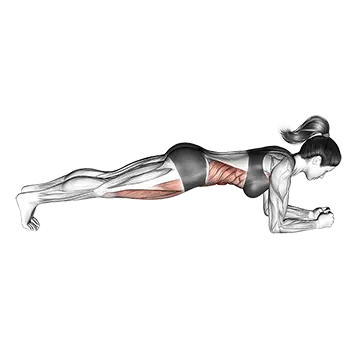
The Front Plank performs forearm plank holds. The pattern produces strong serratus anterior isometric loading through scapular protraction.
For serratus anterior development, the plank produces strong isometric serratus loading. The protracted scapula position activates serratus throughout the hold. Run it for 3 sets of 30 to 60-second holds as isometric serratus work.
Lie face-down on the floor. Prop up on the forearms with elbows under the shoulders. Lift the hips so the body forms a straight line from shoulders to ankles. Push the upper body slightly away from the floor (this activates serratus through scapular protraction). The serratus works hard isometrically to maintain the protracted scapula position. Hold for the working interval. The pattern produces direct isometric serratus loading – the protracted scapula position required for proper plank form keeps the serratus engaged throughout the hold.
Dumbbell Bench Press

The Dumbbell Bench Press performs flat bench press with dumbbells. The pattern allows greater scapular protraction range than barbell bench.
For serratus anterior development, the dumbbell bench press allows greater scapular protraction at the top than barbell bench. Run it for 3 to 4 sets of 8 to 12 reps as compound chest/serratus work.
Lie on a flat bench holding dumbbells over the chest with palms facing forward. Lower the dumbbells to chest level by bending the elbows. Press the dumbbells back up by extending the arms while protracting the shoulder blades at the top (push them apart). The dumbbells allow greater range of motion than barbell bench – the dumbbells can come closer together at the top, allowing for greater scapular protraction. The pattern produces serratus work through the protraction phase combined with chest development.
Barbell Bent Arm Pullover

The Barbell Bent Arm Pullover performs pullovers with bent elbows. The pattern produces strong serratus loading with reduced shoulder strain.
For serratus anterior development, the bent-arm pullover produces strong serratus loading with reduced shoulder demands compared to straight-arm pullovers. Run it for 3 sets of 10 to 12 reps as serratus work.
Lie on a flat bench holding a barbell over the chest with both hands and elbows bent at about 90 degrees. Lower the barbell back behind the head by extending at the shoulder while keeping elbows bent. The serratus and lats work hard through the overhead motion. Return the barbell over the chest by reversing the motion. The bent-elbow position reduces shoulder strain compared to straight-arm pullovers while still producing strong serratus loading. The pattern is excellent for those who experience shoulder discomfort with straight-arm pullovers.
Dumbbell Seated Shoulder Press

The Dumbbell Seated Shoulder Press performs strict overhead press with dumbbells. The pattern produces serratus work through upward scapular rotation.
For serratus anterior development, the seated shoulder press produces serratus work through upward scapular rotation. Run it for 3 to 4 sets of 8 to 10 reps as compound shoulder/serratus work.
Sit on a bench with the back firmly against an upright pad. Hold dumbbells at shoulder height with palms facing forward. Press the dumbbells straight overhead by extending the arms – the scapulae must rotate upward to allow the overhead position (this is where serratus activates). Lower under control. The pattern produces serratus work secondary to shoulder development – the serratus must rotate the scapulae upward to allow the overhead press position. Strong serratus is essential for healthy overhead pressing.
Dumbbell Front Raise

The Dumbbell Front Raise performs front raises with dumbbells. The pattern produces serratus work through scapular upward rotation.
For serratus anterior development, the front raise produces serratus work through scapular upward rotation. Run it for 3 sets of 10 to 12 reps as serratus/anterior delt work.
Stand with feet hip-width holding dumbbells at the front of the thighs with palms facing the body. Lift one (or both) dumbbells forward and up to shoulder height by raising the arms straight in front. The scapulae must rotate upward as the arms lift to maintain proper shoulder mechanics (this is where serratus activates). Lower under control. The pattern produces secondary serratus work alongside primary anterior delt loading. The scapular upward rotation required for the lift directly activates the serratus anterior.
How To Program These Workouts
A productive serratus session pulls 5 to 7 exercises from the list above. A common balanced session: dumbbell pullover (direct serratus), push-ups with plus protraction (scapular work), barbell bench press (compound), front plank (isometric serratus), dumbbell seated shoulder press (overhead). For mass focus: dumbbell pullover, barbell pullover, barbell bench press, dumbbell incline bench press, dumbbell bench press. For posture/health focus: push-ups with full protraction, front plank, dumbbell seated shoulder press, dumbbell front raise. Run pullover variations for 3 to 4 sets of 10 to 12 reps, push-up variations for 3 to 4 sets of 12 to 25 reps with protraction emphasis, plank holds for 3 sets of 30 to 60 seconds, pressing work for 3 to 4 sets of 6 to 12 reps. Total session covers 18 to 22 working sets focused on serratus development.
Train serratus 1 to 2 times per week as part of complete chest/shoulder programming. Most successful serratus programs incorporate the work as: 1) accessory blocks at the end of chest or shoulder sessions (3 to 4 serratus-focused exercises), 2) integrated work throughout other sessions (push-ups with full protraction, planks with active protraction, pullovers added to back day), or 3) standalone short focused sessions for those prioritizing serratus development. The serratus recovers reasonably quickly and can handle higher frequency for those wanting accelerated development. Daily protraction work (band pull-aparts in scapular protraction direction, planks) is well-tolerated.
For broader chest programming, see our best chest workouts and how to grow your chest. For posture work, see our best workouts for posture.
Final Thoughts
The best serratus anterior exercises deliver real serratus development and supportive shoulder health benefits through training that targets the specific serratus functions: scapular protraction through pullovers and push-up variations, isometric serratus loading through plank work, scapular upward rotation through overhead pressing, and stabilization through compound pressing patterns. The combination of pullovers (dumbbell and barbell variations), push-ups with full protraction, planks, bench press variations, overhead pressing, and front raises covers every functional pattern of the serratus anterior and produces broader development than traditional chest and back training would suggest. Many lifters discover visible rib striations, better overhead pressing capacity, reduced shoulder issues, and stronger punching power within 12 to 16 weeks of adding consistent serratus work. For lifters seeking the visible boxer-muscle striations, addressing shoulder issues from serratus weakness, or improving overhead press technique, dedicated serratus training is one of the most effective interventions available.
Stay focused on full scapular protraction and proper upward rotation. The most common mistake lifters make in serratus training is failing to consciously engage the serratus through full protraction at the peak of every relevant exercise. The fix: focus on consciously pushing the shoulder blades apart at the top of every push-up, plank, and bench press rep. On pullovers, focus on scapular movement (allowing the shoulder blades to rotate upward through the overhead motion). Combined with adequate volume and frequency, proper protraction technique produces the visible serratus development that traditional pressing training never achieves alone.
Frequently Asked Questions
What’s the best exercise for serratus anterior?
Pullovers and push-ups with full protraction are most effective. Dumbbell and barbell pullovers produce direct serratus loading through the overhead motion. Push-ups with conscious full protraction at the top (push-up plus) directly activate the serratus through scapular protraction. Combined with planks (isometric serratus work) and overhead pressing (upward rotation), these form the foundation of complete serratus development. The fastest gains come from combining pullover variations with protraction-focused push-ups.
Why is the serratus called the boxer’s muscle?
Because the serratus is the primary muscle that drives punches. The serratus anterior protracts the scapula forward during a punch (the shoulder blade slides forward as the arm extends). Strong serratus produces more powerful punches through the scapular protraction component of the punch motion. Boxers historically have well-developed serratus muscles because their training (pullovers, push-ups, punching) all develop the serratus through the protraction patterns. Combat sport athletes who add dedicated serratus work often see measurable improvements in punching power.
How can I get the serratus muscle striations to show?
Combine direct serratus development with low body fat. The visible serratus ‘fingers’ along the rib cage require both: 1) developed serratus muscle (through pullovers, push-ups with protraction, planks), and 2) low body fat (typically 10 to 12% body fat or lower for visible striations on most physiques). Most lifters who fail to develop visible serratus are missing one or both – either insufficient direct serratus training or too high body fat. Combined consistent serratus training and appropriate body composition produces the visible serratus development that defines aesthetic physiques.
Is the serratus important for shoulder health?
Yes critically. The serratus anterior is essential for proper scapular upward rotation during overhead pressing and reaching. Weak serratus produces poor scapular mechanics during overhead movements, contributing to common shoulder issues (impingement, rotator cuff problems). Most successful shoulder rehabilitation programs include dedicated serratus work (push-up plus variations, pullovers, planks, overhead press progressions). Strong serratus is foundational for healthy overhead pressing and reduced shoulder injury risk.
How often should I train the serratus?
1 to 2 times per week minimum, with daily light work tolerated for those prioritizing development. Most successful programs incorporate serratus work as: 1) accessory blocks at the end of chest or shoulder sessions, 2) integrated work throughout other sessions, or 3) standalone focused sessions. Daily light protraction work (push-up plus exercises, plank holds with active protraction, scapular wall slides) is well-tolerated and can accelerate serratus development for those willing to commit to higher frequency.