Tight quadriceps are one of the most common contributors to limited squat depth, anterior hip pain, and chronic lower back tightness in lifters and runners. The combination of long sitting hours, heavy squat training, and limited mobility work keeps the muscle chronically shortened across the front of the thigh. The best quad stretches address the full range of contributing factors: muscle adhesions through self-massage, static muscle length through held positions, and combined hip flexor work that addresses the deeper anterior chain.
Below are ten effective quad stretches and mobility drills that target the muscle directly through static stretching, yoga-derived positions, and self-massage with balls and foam rollers. Together they form a complete quad routine that takes 10 to 15 minutes per day and produces measurable improvements within four to six weeks of consistent practice.
Quadriceps Stretch

The Quadriceps Stretch grabs the foot from behind and pulls the heel toward the glute, stretching the front of the thigh. The position can be performed standing, lying on the side, or in a kneeling position depending on flexibility.
The classic standing quad stretch is the most accessible quad mobility drill that exists. Done daily for 60 to 90 seconds per side, it produces measurable improvements in quad flexibility and reduced post-workout tightness within four to six weeks. The standing version requires balance, but a wall or chair for support works for any flexibility level.
Stand on one leg. Bend the opposite knee and grab the foot behind the body, pulling the heel toward the glute. Keep the knees close together and the hips slightly forward. Hold for 60 to 90 seconds per side. Use a wall for balance support if needed.
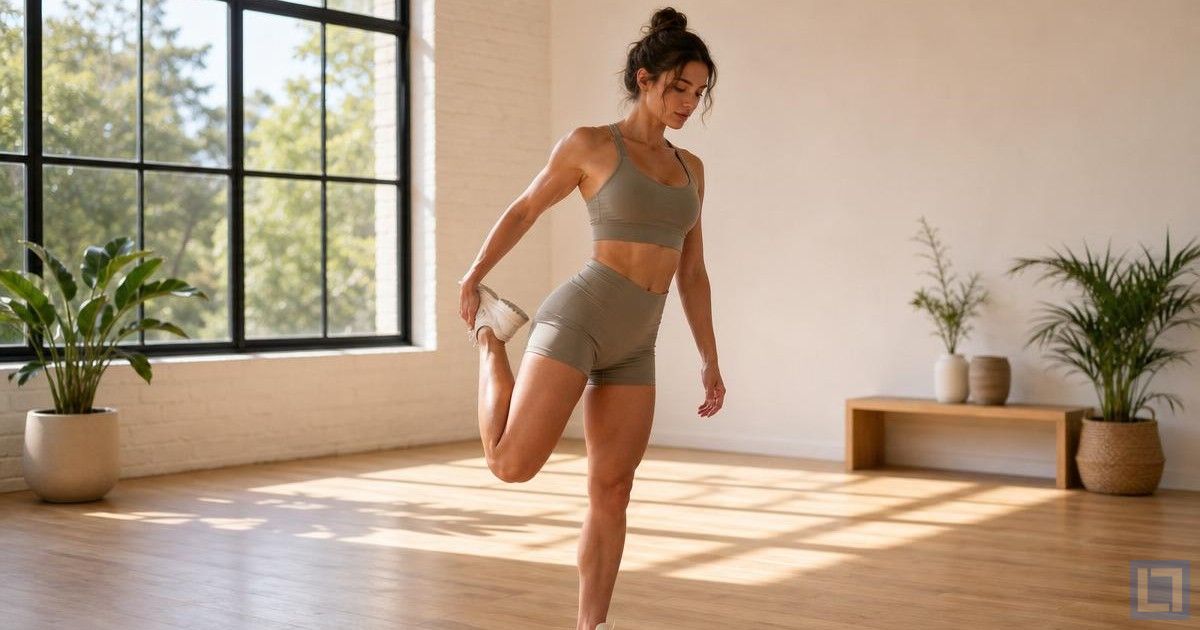
Standing Quadriceps Stretch
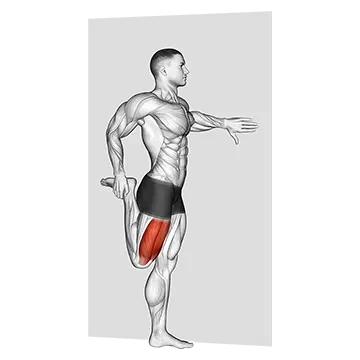
The Standing Quadriceps Stretch performs the classic quad stretch from a standing position with one hand grabbing the foot behind the body. The standing position adds balance demand on top of the stretch, which trains hip and ankle stability simultaneously.
For lifters who want to combine flexibility work with balance training, the standing quad stretch is the most efficient option. The unilateral balance demand activates the gluteus medius and ankle stabilizers throughout the stretch, which produces minor strength gains alongside the flexibility improvements.
Stand on one leg. Grab the opposite foot behind the body with the same-side hand. Pull the heel toward the glute while keeping the knees close together and the standing leg slightly bent. Hold for 60 to 90 seconds per side, switching as needed.
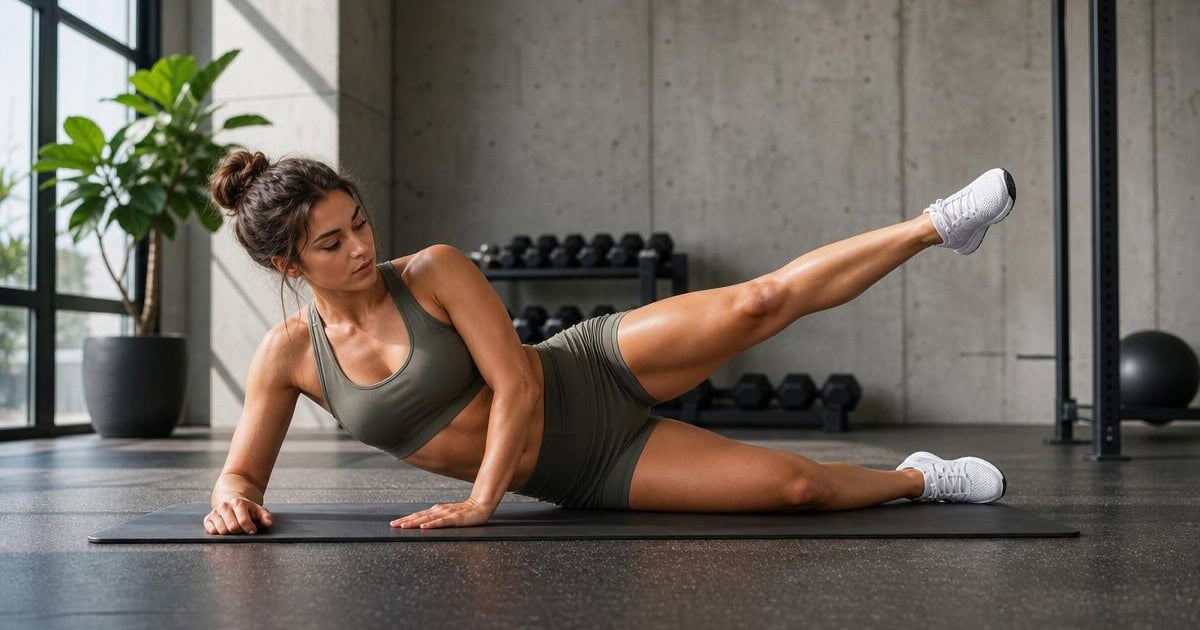
Quadriceps Lying Stretch

The Quadriceps Lying Stretch lies on the side with the working leg on top, then bends the knee and grabs the foot to pull the heel toward the glute. The lying position eliminates balance demand entirely and allows deeper depth than standing variations.
For lifters with significant quad tightness, the lying stretch reaches deeper depth than balance-limited standing variations allow. The combination of horizontal body position and unilateral focus produces strong quad relief in 60 to 90 second holds.
Lie on the side with the bottom leg straight. Bend the top leg and grab the foot, pulling the heel toward the glute. Keep the knee close to the bottom leg. Hold for 60 to 90 seconds per side. Switch by rolling to the opposite side.
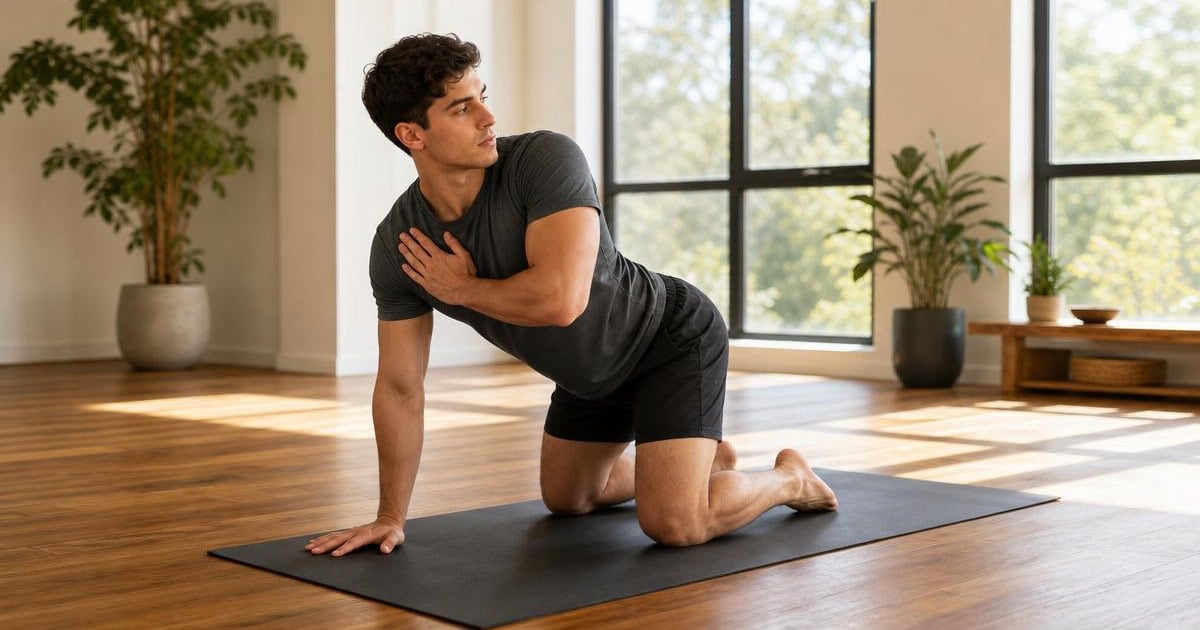
All Fours Quad Stretch

The All Fours Quad Stretch starts on hands and knees, then drops the hips back over one heel to stretch the quad of that leg. The all-fours position allows targeted depth on each leg without balance demand.
The all-fours variation reaches a different angle of the quad than standing and lying stretches. The hip-over-heel position emphasizes the upper quad (rectus femoris) more directly, which is the muscle that most often contributes to anterior hip tightness.
Start on hands and knees. Bring one foot forward to plant under the body. Drop the hips back over the other heel, sinking the body weight into the stretch. Hold for 60 to 90 seconds per side, switching as needed.
Intermediate Hip Flexor and Quad Stretch

The Intermediate Hip Flexor and Quad Stretch combines a hip flexor lunge with a quad stretch, kneeling on one leg and grabbing the back foot to pull it toward the glute while pressing the hips forward. The combined motion stretches both the hip flexor and quad simultaneously.
For lifters with chronic anterior hip and quad tightness from sitting, this combined stretch addresses both contributing muscles in one position. The hip flexor and quad share an attachment point at the front of the hip; tightness in either pulls on the lower back. Daily practice produces noticeable changes in posture and squat depth within weeks.
Kneel on one leg with the other foot planted forward in a lunge. Grab the back foot and pull the heel toward the glute. Press the hips forward to deepen the hip flexor stretch. Hold for 60 to 90 seconds per side.
Hero Pose Virasana

The Hero Pose (Virasana) kneels with the legs together, then sits back between the heels with the hips on the floor. The position stretches the front of the thighs (quads) deeply through prolonged seated holds.
Hero pose is a yoga-derived stretch that produces strong quad relief for lifters who can sit comfortably in the position. The depth requires significant ankle and quad flexibility; beginners often need to sit on a yoga block or folded blanket initially. Hold for 60 to 90 seconds, breathing slowly throughout.
Kneel with the knees together and the feet hip-width apart. Sit back between the feet so the hips rest on the floor (or on a yoga block if depth is limiting). Keep the spine tall. Hold for 60 to 90 seconds, breathing slowly.
Yoga Vajrasana Thunderbolt Diamond Pose

The Yoga Vajrasana (Thunderbolt or Diamond Pose) kneels with the legs together and sits back on the heels with the hips on top of the heels. The position is gentler on the quads than Hero pose while still producing meaningful stretch through the front of the thighs.
For beginners or lifters with limited ankle and quad flexibility, Vajrasana is the entry-point quad stretch from yoga. The seated-on-heels position is easier to maintain than Hero pose and produces gentler stretch. Use it as a starting position before progressing to Hero pose over weeks of practice.
Kneel with the knees together. Sit back so the hips rest on top of the heels. Keep the spine tall and shoulders relaxed. Hold for 60 to 90 seconds, breathing slowly throughout.
Roll Ball Lateral Vastus

The Roll Ball Lateral Vastus uses a massage ball to apply targeted pressure to the lateral vastus (outer quad muscle). Lying on the side with the ball positioned under the outer thigh, you slowly roll over the ball or hold pressure on tight spots.
Self-massage with a ball produces different effects than static stretching: it breaks up muscle adhesions, increases blood flow, and improves tissue quality. The lateral vastus is one of the most commonly tight quad areas for runners and lifters; targeted ball work releases this area more effectively than stretching alone.
Lie on the side with the working leg on top. Position a massage ball under the outer thigh. Slowly roll over the ball or hold pressure on tight spots for 30 to 60 seconds. Use a less aggressive ball (tennis ball) if a lacrosse ball is too intense.
Roll Ball Rectus Femoris

The Roll Ball Rectus Femoris uses a massage ball to apply pressure to the rectus femoris (the central front thigh muscle that crosses both the hip and knee joints). Lying face-down with the ball positioned under the front of the thigh, you slowly roll to release tension.
The rectus femoris is the most commonly tight quad muscle for lifters who spend long hours sitting because it crosses both the hip and knee joints. Targeted ball work on this muscle relieves both anterior hip tightness and the chronic quad stiffness that limits squat depth.
Lie face-down with the ball positioned under the front of one thigh. Use the forearms for support. Slowly roll over the ball or hold pressure on tight spots. Roll for one to two minutes per leg before transitioning to static stretching.
Roll Rectus Femoris

The Roll Rectus Femoris uses a foam roller to apply pressure along the entire length of the rectus femoris and into the hip flexor. The longer roller surface covers more tissue per pass than the small ball variations.
For lifters with general anterior thigh tightness rather than localized knots, the foam roller covers more area per pass and produces more thorough release. Combine it with the more targeted ball variations: roller for general work, ball for specific tight spots that the roller misses.
Lie face-down with a foam roller positioned under the front of one thigh. Use the forearms for support. Roll forward and back to move the roller along the entire length of the quad and into the hip flexor. Pause on tight spots for 20 to 30 seconds.
How To Program These Workouts
A productive quad routine combines static stretches and self-massage. Static work (standing, lying, all-fours, hero pose) holds for 60 to 90 seconds per side. Self-massage with balls and foam rollers fits before either, opening the tissue for easier stretching afterward. The combined hip flexor and quad stretch addresses two muscle groups at once and is one of the most efficient single mobility drills.
Daily mobility work produces faster results than infrequent long sessions. Five to ten minutes per day, six days per week, will produce noticeable changes within four to six weeks. Schedule the static work after training when the muscles are warm; foam rolling fits as a pre-training warm-up to open tissue before squatting and lunging.
For broader mobility programming, see our best hamstring stretches and best hip mobility stretches guides. For yoga-style flexibility work, browse our best yoga poses for beginners.
Final Thoughts
Quad tightness rarely comes from the quad alone. Tight hip flexors, weak glutes, and chronic sitting all contribute to the chronic anterior thigh tightness most lifters carry. The best quad stretches address the connected muscles as much as the quad itself, which is why programs that include hip flexor work produce better results than quad-only stretching.
Build the habit. Five to ten minutes per day produces faster change than one hour-long session per week. The body adapts to consistent, frequent stimulus better than to occasional heavy doses. Most of the drills above work without any equipment beyond a foam roller or ball, and can be done at home, in the gym, or even in an office during breaks.
Frequently Asked Questions
How long does it take to loosen tight quads?
Most lifters see meaningful improvement within four to six weeks of daily stretching combined with foam rolling. Long-term flexibility changes (the kind that produce lasting depth in deep squats) take three to six months of consistent practice. The body responds to repeated stimulus over time rather than to occasional heavy doses.
Should I stretch quads before or after squatting?
Both, but with different approaches. Before squatting, use foam rolling and dynamic mobility (5 to 10 minutes) to warm up the tissue. After squatting, use static stretches (standing quad stretch, hero pose) held for 60 to 90 seconds per side to produce lasting flexibility changes. Static stretching before lifting can temporarily reduce strength output, so save the long holds for after.
Can stretching prevent quad strains?
Some yes, but stretching alone does not provide complete protection. Quad strains are typically caused by a combination of weakness, tightness, and explosive movement under high load. Strengthening (squats, lunges, leg extensions) and stretching work together to protect against strains; stretching alone leaves the muscle flexible but potentially still weak in vulnerable positions.
How often should I stretch my quads?
Daily for best results. The quads respond well to frequent, brief sessions: 5 to 10 minutes per day produces faster change than a single long weekly session. Lifters with chronic tightness often see noticeable improvement within four to six weeks of consistent daily practice.
Why are my quads always tight?
Most chronic quad tightness comes from one of three sources: prolonged sitting (which keeps the hip flexor and rectus femoris shortened for hours per day), heavy squat training without recovery work, or running and athletic activity without stretching. Address whichever contributing factor applies; just stretching without fixing the root cause produces only temporary relief.