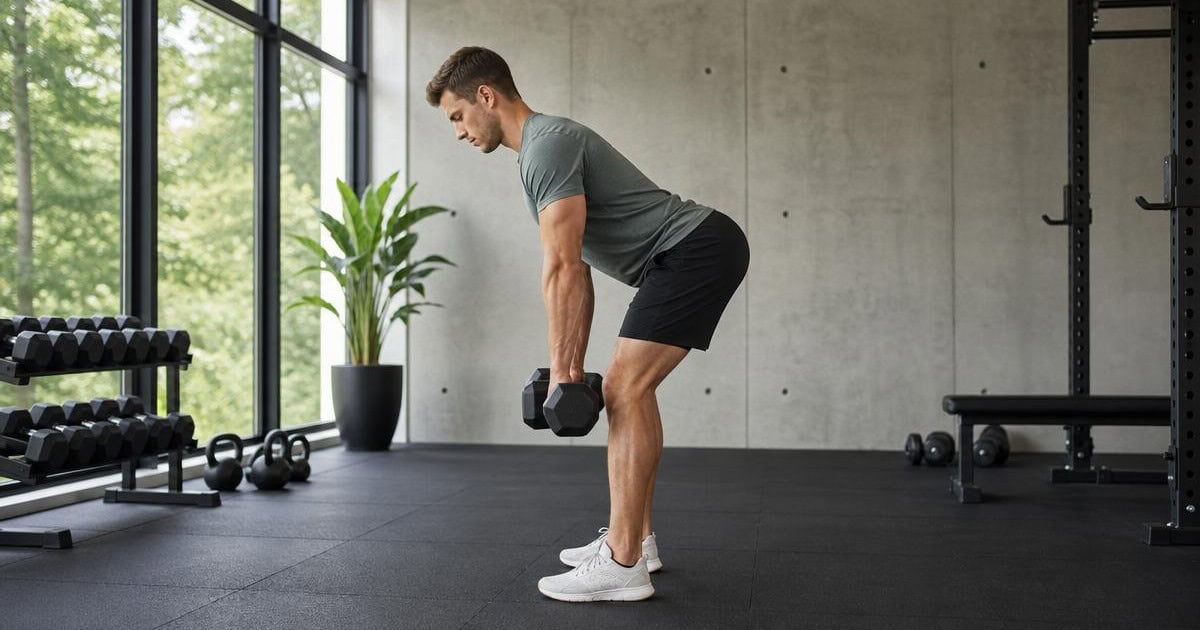
Calisthenics back training is one of the most effective ways to build a strong, developed back without weight room equipment. The combination of vertical pulling (pull-ups, chin-ups), horizontal pulling (inverted rows), and direct back-extension work covers every major back function the muscles serve. The best calisthenics back workouts use this variety to deliver complete back development with nothing more than a pull-up bar and a clear floor space.
Below are ten effective calisthenics back exercises that cover vertical pulling, horizontal pulling, lower back extensions, anti-rotation core work, and advanced gymnastic skills. Together they form a complete back training program that produces real strength and visible development at every level from beginner to advanced.
Pull Up

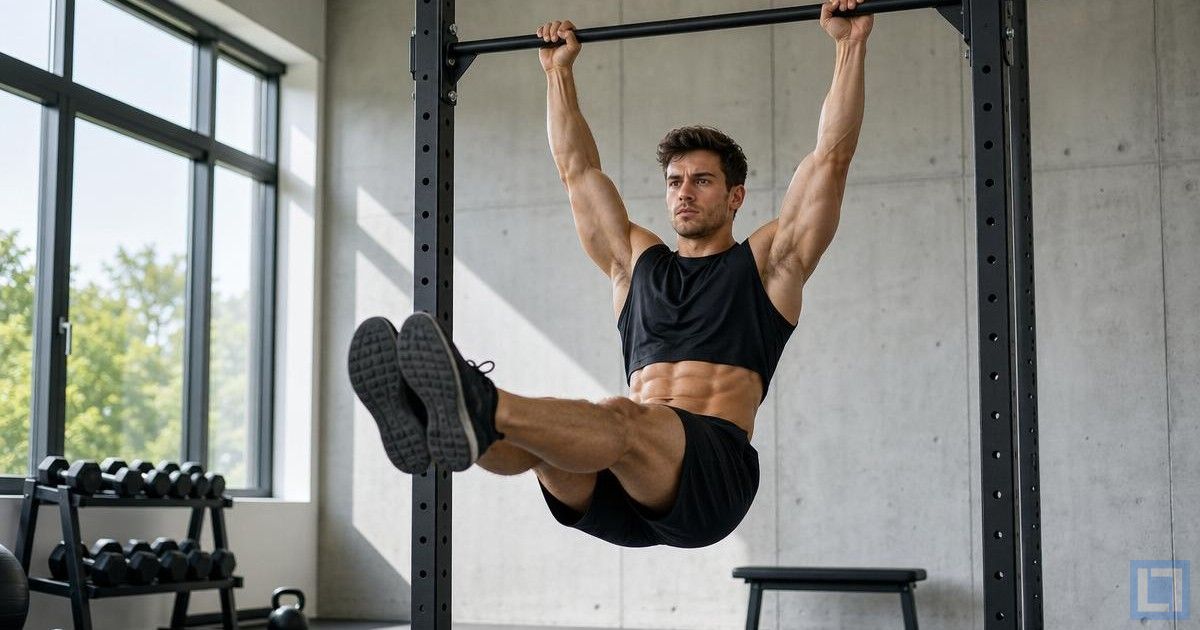
The Pull Up hangs from a bar with an overhand grip and pulls the body up until the chin clears the bar. It is the most direct measure of bodyweight pulling strength and the foundational vertical pulling exercise in any calisthenics back program.
No serious calisthenics back program runs without pull-ups. The exercise builds the lats, biceps, mid-back, and grip simultaneously, and the strength gains carry over to nearly every other back exercise. Build to 8 to 12 strict reps before progressing to weighted variations or harder bodyweight progressions.
Hang fully at the bottom with arms straight. Drive the elbows down and back to pull the chest toward the bar. Lower under control to a full hang and reset. Use a band assist or jumping pull-up if 5 strict reps are not yet possible.
Chin Up

The Chin Up hangs from a bar with an underhand grip (palms facing the body) and pulls the body up until the chin clears the bar. The underhand grip shifts emphasis to the biceps compared to the overhand pull-up while still hitting the lats heavily.
For complete back development, chin-ups complement pull-ups by adding direct bicep loading to the pulling pattern. Most lifters can do 1 to 2 more chin-ups than pull-ups due to the stronger bicep involvement. Run them as a primary back exercise alongside pull-ups for full lat and arm development.
Hang fully with palms facing the body in an underhand grip. Pull the body up by driving the elbows down and squeezing the lats and biceps. Aim for chest contact with the bar at the top. Lower under control to a full hang.
Inverted Row

The Inverted Row hangs under a horizontal bar with the body straight and pulls the chest up to the bar by squeezing the back muscles. The horizontal pulling pattern complements vertical pull-ups and builds the mid-back and rear delts.
For complete back development in calisthenics, inverted rows fill the gap that vertical pulling alone cannot cover. The horizontal pull pattern hits the rhomboids, mid-traps, and rear delts more directly than pull-ups. They also serve as a beginner-friendly back exercise for lifters who cannot yet do unassisted pull-ups.
Set up under a sturdy horizontal bar (Smith bar, suspension trainer, or two chairs with a broomstick). Hang under the bar with body straight and heels on the floor. Pull the chest up to the bar by squeezing the shoulder blades together. Lower under control. Adjust difficulty by changing the body angle.
Bodyweight Row in Doorway

The Bodyweight Row in Doorway grips both sides of a sturdy doorframe and leans back, then pulls the body up to the doorframe by squeezing the back muscles. The improvised setup produces real back loading without any equipment beyond a standard doorway.
For travelers and home lifters without dedicated row equipment, the doorway row is the most accessible bodyweight rowing variation that exists. Any sturdy doorframe at home works; the body angle can be adjusted to change the difficulty. Run it for 3 sets of 10 to 15 reps as a primary horizontal pull.
Stand in a sturdy doorway and grip both sides of the doorframe firmly. Lean back with arms extended, body in a straight line. Pull the body forward to the doorframe by squeezing the shoulder blades together. Lower under control. Adjust difficulty by changing how far back you lean.
Bodyweight Standing One Arm Row

The Bodyweight Standing One Arm Row uses any sturdy fixed object (post, doorframe, sturdy table) and leans back at an angle while gripping it with one hand, then pulls the body forward in a single-arm row pattern. The unilateral version catches strength imbalances and adds significant core demand.
Single-arm calisthenics rowing is one of the most underrated bodyweight back exercises that exists. The unilateral loading forces the entire core to engage to prevent the body from twisting toward the loaded side, which produces stronger functional core work than bilateral rows. Run it for 3 sets of 8 to 12 reps per arm.
Grip a sturdy fixed object with one hand and lean back at an angle with body straight. Pull the body forward to the gripping hand by squeezing the shoulder blade back. Lower under control. The non-working arm extends out for balance. Adjust difficulty by changing the body angle.
Superman

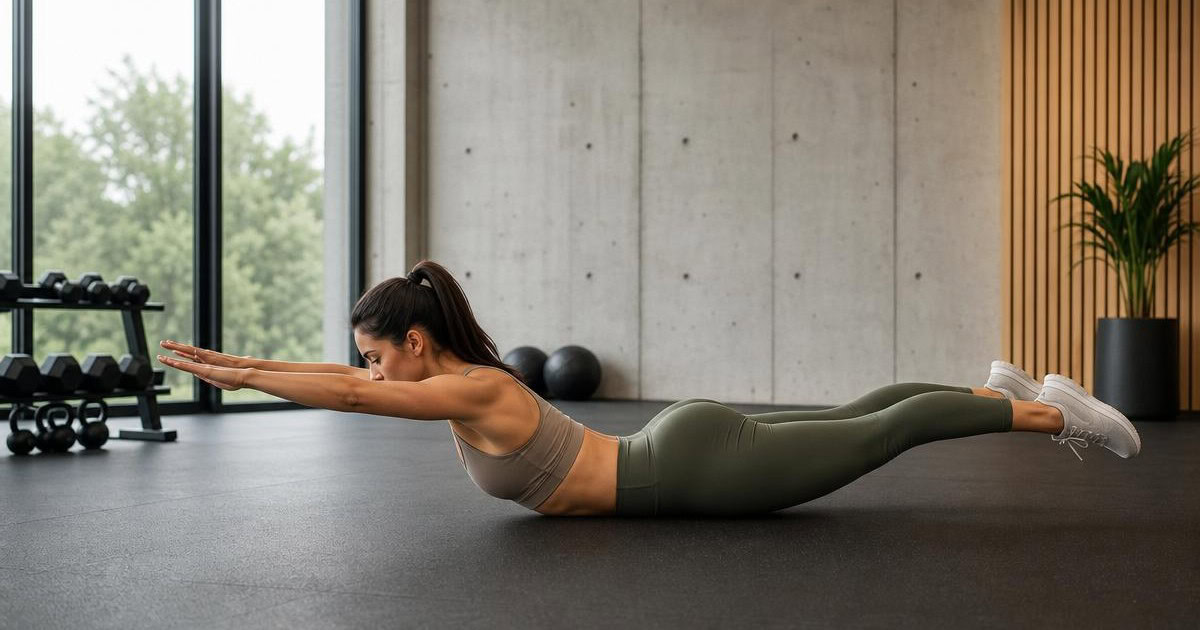
The Superman lies face-down on the floor and lifts the arms and legs simultaneously off the ground while keeping them straight. The position produces direct loading on the lower back extensors through pure isometric holding or controlled rep-based movement.
For direct lower back work in bodyweight programs, the Superman is the foundational exercise that exists. The position isolates the erector spinae muscles that protect the lumbar spine during heavier lifts, and the bodyweight loading is sufficient for years of progressive practice. Run it for 3 sets of 10 to 15 reps with 1 to 2-second holds at the top.
Lie face-down with arms extended overhead and legs straight. Lift the arms and legs off the floor simultaneously, contracting the lower back and glutes. Hold the top position briefly. Lower under control to the start. Keep the neck in line with the spine; do not crane the head back.
Bird Dog
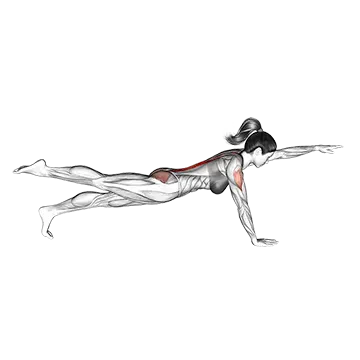
The Bird Dog starts on hands and knees and extends the opposite arm and leg simultaneously while maintaining a stable trunk. The cross-body extension trains anti-rotation core stability along with shoulder and hip control.
In calisthenics back programming, the bird dog builds the trunk stability that nearly every other back exercise depends on. The anti-rotation demand teaches the body to brace against asymmetric loading, which carries over to single-arm rows and other unilateral pulling patterns. Run it for 3 sets of 10 to 12 reps per side.
Start on hands and knees with hands directly under shoulders and knees under hips. Extend one arm forward while extending the opposite leg back, ending with both fully extended in a straight line with the trunk. Hold briefly. Return to the start and switch sides.
Lying Back Extension

The Lying Back Extension lies face-down on the floor and lifts the chest and shoulders off the ground while keeping the legs planted. The position isolates the upper-back extensors and rhomboids without leg involvement.
Where the Superman lifts both arms and legs together, the lying back extension lifts only the upper body, which isolates the upper-back extensors more directly. The two exercises complement each other in any complete bodyweight back program. Run it for 3 sets of 12 to 15 reps with 1-second holds at the top.
Lie face-down on the floor with hands behind the head or at the sides. Lift the chest and shoulders off the floor by squeezing the upper back. Hold the top position briefly. Lower under control. Keep the legs planted throughout.
45 Degrees Back Extension

The 45 Degrees Back Extension lies face-down on a 45-degree back extension bench (Roman chair or similar setup) and performs back extension reps from the inclined position. The angle increases the range of motion compared to floor-based variations.
For lifters with access to a back extension bench or Roman chair, the 45-degree variation produces stronger lower-back loading than floor-based variations. The increased range of motion at the bottom of the rep produces stronger contraction at the top. Run it for 3 sets of 10 to 15 reps with bodyweight, or hold a small weight plate at the chest for added resistance.
Position on a 45-degree back extension bench with the hips at the pad edge and feet locked in. Lower the upper body forward by hinging at the hips with a flat back. Drive back to a flat-body position by extending the lower back. Avoid hyperextending past flat at the top.
Back Lever
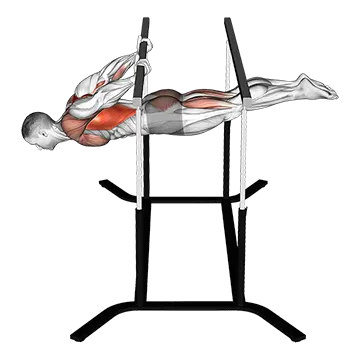
The Back Lever hangs from rings or a bar and progressively lowers the body to a horizontal position with the back facing the floor. The exercise is one of the most demanding bodyweight back skills that exists and builds advanced lat, lower back, and core strength.
For advanced calisthenics practitioners, the back lever is the gold standard test of bodyweight back strength. Most lifters need 12 to 24 months of consistent calisthenics practice before achieving a clean back lever. Use it as a long-term goal and build the prerequisite strength through pull-ups, inverted rows, and progressive lever variations.
Hang from rings or a bar with the body inverted (head pointing down). Slowly lower the body to a horizontal position with the back facing the floor. Hold the position for 3 to 5 seconds. Use tucked progressions (knees bent) before attempting full back levers; the strength curve from tucked to full takes months to build.
How To Program These Workouts
A productive calisthenics back session pulls six to eight exercises from the list above. A balanced session includes one vertical pull (pull-up or chin-up), one horizontal pull (inverted row or doorway row), one unilateral pull (one-arm row), one back extension (Superman or 45-degree extension), and one stabilizer (bird dog). Run sets of 5 to 12 reps for harder strength exercises and 12 to 20 reps for higher-rep accessory work.
Train back two to three times per week. The back muscles recover within 48 to 72 hours of moderate calisthenics training; spacing volume across multiple sessions produces faster growth than once-weekly high-volume sessions. A Monday/Thursday or Tuesday/Friday split fits most schedules; advanced lifters can sometimes handle three sessions per week.
For broader bodyweight programming, see our best calisthenics workouts and best full body calisthenics workout. To browse the equipment library, explore our bodyweight exercises collection.
Final Thoughts
The best calisthenics back workouts produce real back strength and visible muscle development through bodyweight loading alone. The combination of vertical pulling, horizontal pulling, and direct back-extension work covers every major back function in a way that few other equipment-light programs can match. For lifters without gym access, calisthenics back training is one of the most effective options available.
Stay focused on the foundation. Most lifters who fail to build strong backs through calisthenics fail because they spread effort across too many variations and never master the basic pull-up and inverted row at high rep counts. The opposite approach (picking pull-ups, inverted rows, and back extensions as the foundation, mastering them at high reps, and adding harder progressions slowly) produces the strongest back development.
Frequently Asked Questions
Can I build a thick back with just calisthenics?
Yes for beginners and intermediates. Bodyweight back training produces real back development for the first 12 to 24 months of consistent practice, and progressive variations (one-arm pull-ups, weighted pull-ups, advanced lever skills) extend that runway significantly. Advanced lifters chasing maximum back thickness eventually benefit from adding heavy barbell rows and deadlifts, but consistent calisthenics back training produces measurable development at every level.
How often should I do calisthenics back workouts?
Two to three times per week works for most lifters. The back muscles recover within 48 to 72 hours of moderate bodyweight training. Most lifters do well with two sessions per week (one focused on vertical pulling, one on horizontal pulling) or three sessions for advanced lifters with high training capacity.
What if I can’t do a pull-up yet?
Start with assisted variations and inverted rows. Band-assisted pull-ups (looping a band around the bar and putting one foot in it) reduce the effective bodyweight by 15 to 50 pounds depending on band thickness. Inverted rows build horizontal pulling strength that transfers to vertical pulling within 6 to 12 weeks. Most beginners can do their first unassisted pull-up within 8 to 16 weeks of consistent assisted-pull and inverted-row training.
Do I need a pull-up bar for calisthenics back workouts?
Most foundational back exercises require a pull-up bar (pull-ups, chin-ups). Doorway rows, Supermans, lying back extensions, and bird dogs require no equipment beyond a clear floor space. A doorway pull-up bar (under $30) is the most useful single piece of home equipment for back training; without it, most home back work caps out at horizontal pulling and back extensions.
How long until I see results from calisthenics back training?
Most lifters feel meaningful strength improvements within 4 to 6 weeks of consistent training. Visible back development takes 12 to 16 weeks combined with appropriate nutrition. Major changes (significantly improved back thickness and width) take 6 to 12 months of dedicated practice. Patience and consistency matter more than intensity in the early stages.