Barbell forearm training produces real forearm development through heavy compound loading combined with direct isolation work that hits the forearm flexors, extensors, and grip muscles. The format works particularly well for forearm training because the barbell enables both heavy isolation work (wrist curls, reverse wrist curls) and challenging compound exercises that demand strong grip (deadlift variations, carries, strict curls, Zercher squats). The combination of direct isolation and compound grip work produces broader forearm development than either single-modality approach. Most lifters who consistently train barbell forearms 1 to 2 times per week see measurable forearm strength, grip improvements, and visible forearm muscle development within 8 to 16 weeks.
Below are ten effective barbell forearm exercises that cover direct flexor work (wrist curl, standing wrist curl, incline wrist curl), direct extensor work (standing wrist reverse curl, palms-down bench wrist curl), heavy compound grip work (behind-the-back deadlift, suitcase carry, overhead carry, Zercher squat), and combined bicep-forearm work (strict curl). Together they form a complete barbell forearm training program that hits every forearm muscle through both isolation and compound loading. A 30 to 40-minute session pulled from this list produces strong combined forearm development.
Barbell Wrist Curl
The Barbell Wrist Curl sits on a bench with forearms resting on the thighs and a barbell held with palms up, then curls the wrist up to flex the wrist joint. The pattern produces direct forearm flexor loading.
For barbell forearm training, the wrist curl is the foundational forearm flexor exercise. The pattern hits the forearm flexors through pure wrist flexion under barbell load. Run it for 4 sets of 12 to 15 reps as primary forearm flexor work.
Sit on a bench with forearms resting on the thighs (palms facing up) and a barbell held in both hands. The wrists hang off the knees. Curl the wrists up by flexing at the wrist joint, lifting the bar toward the ceiling. Lower under control to full extension. Use a moderate weight that allows strict form.
Barbell Standing Wrist Curl

The Barbell Standing Wrist Curl stands with a barbell held behind the back at hip level (palms facing back), then curls the wrists to lift the bar through wrist flexion. The pattern provides direct forearm flexor loading from a standing position.
For barbell forearm training, the standing wrist curl provides direct forearm flexor loading without requiring a bench. The pattern hits the forearm flexors through pure wrist flexion. Run it for 3 sets of 12 to 15 reps as alternative forearm flexor work.
Stand tall holding a barbell behind the back at hip level with palms facing back (overhand grip behind the body). Curl the wrists up by flexing at the wrist joint, lifting the bar slightly. Lower under control. The standing position works well for lifters without bench access or as supplementary forearm work.
Barbell Standing Wrist Reverse Curl

The Barbell Standing Wrist Reverse Curl stands with a barbell held in front (palms facing back) and curls the wrists up by extending the wrist joint. The pattern produces direct forearm extensor loading.
For barbell forearm training, the reverse wrist curl is the foundational forearm extensor exercise. The pattern hits the forearm extensors that contribute to forearm size and grip endurance. Run it for 3 sets of 12 to 15 reps as primary forearm extensor work.
Stand tall holding a barbell in front of the body at thigh level with palms facing back (overhand grip). Curl the wrists up by extending the wrist joint, lifting the bar through wrist extension. Lower under control. Use lighter weight than wrist curls due to forearm extensors being naturally weaker than flexors.
Barbell Behind The Back Deadlift

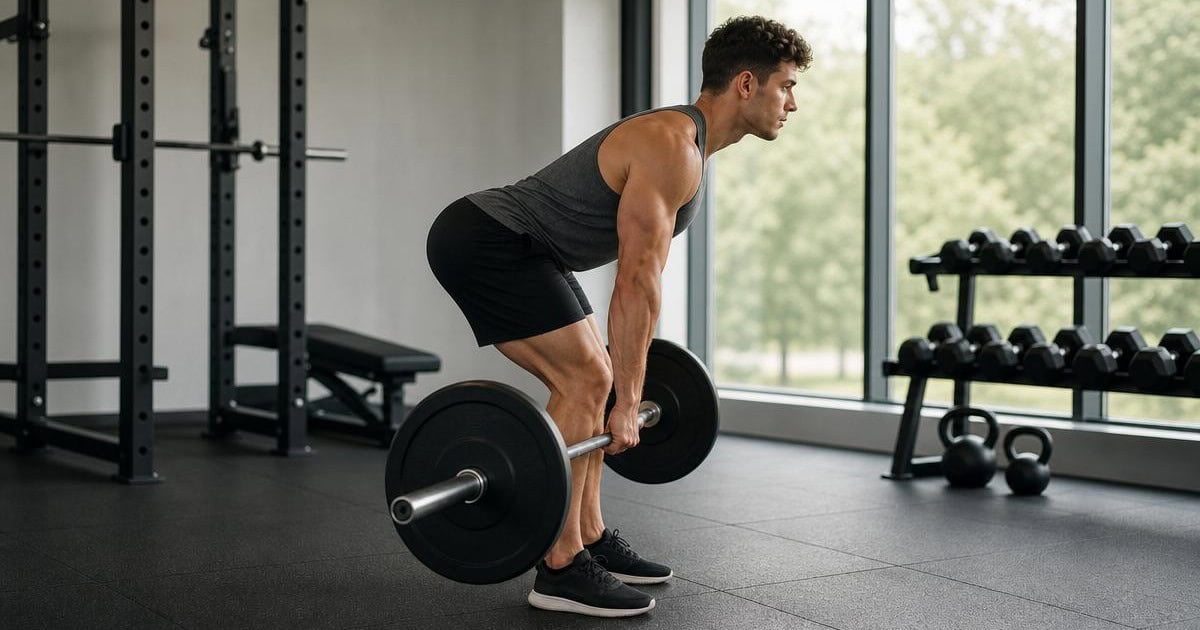
The Barbell Behind The Back Deadlift performs deadlift motion with the barbell held behind the body (rather than in front). The unique grip and positioning produces strong combined forearm grip, trap, and posterior-chain loading.
For barbell forearm training, the behind-the-back deadlift produces strong grip loading combined with full-body strength work. The pattern hits the forearm grip through heavy compound loading. Run it for 4 sets of 6 to 10 reps as combined grip and strength work.
Stand in front of a barbell with the bar positioned behind the heels. Hinge at the hips and reach back to grip the bar with hands behind the body (palms facing back). Drive through the legs and pull the bar up close to the body until standing fully upright with the bar behind the body. Reverse the motion under control.
Barbell Incline Wrist Curl with Chest Support

The Barbell Incline Wrist Curl with Chest Support performs wrist curls with chest supported on an incline bench, which isolates the forearms from upper-body movement. The supported position produces stricter forearm flexor loading.
For barbell forearm training, the incline-supported wrist curl produces stricter forearm loading than free-standing or seated versions. The chest support eliminates upper-body assistance during the curl. Run it for 3 sets of 10 to 12 reps as strict forearm flexor work.
Set up an adjustable bench at roughly 45 degrees and lie face-down with the chest supported. Hold a barbell with palms up and forearms resting on the bench above the chest. Curl the wrists up by flexing at the wrist joint. Lower under control. The chest support eliminates body sway and produces stricter loading.
Barbell Palms Down Wrist Curl Over a Bench
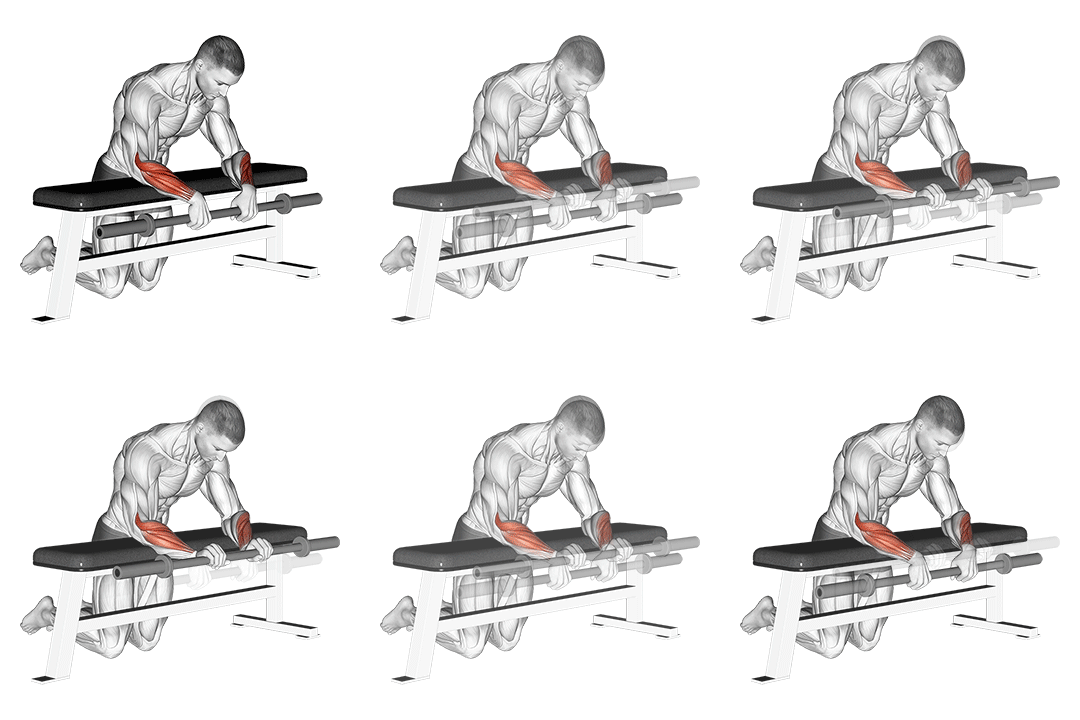

The Barbell Palms Down Wrist Curl Over a Bench rests forearms on a bench with palms facing down and curls the wrists up to extend at the wrist joint. The pattern produces direct forearm extensor loading with stable forearm positioning.
For barbell forearm training, the bench-supported reverse wrist curl produces stable forearm extensor loading with good isolation. The pattern hits the forearm extensors with the forearms locked in stable position. Run it for 3 sets of 10 to 12 reps as direct forearm extensor work.
Kneel on the floor with forearms resting on a bench (palms facing down) and a barbell held in both hands. The wrists hang off the bench. Curl the wrists up by extending at the wrist joint. Lower under control. Use lighter weight due to the forearm extensors being smaller than flexors. Maintain forearm contact with bench throughout.
Barbell Strict Curl

The Barbell Strict Curl performs barbell curls with strict form (no body sway, elbows pinned at the sides) to isolate the biceps and brachialis. The strict form produces stronger forearm grip work than swung curls.
For barbell forearm training, the strict curl produces strong combined bicep and forearm grip loading. The strict form forces the forearms to grip and stabilize the bar throughout. Run it for 3 sets of 8 to 10 reps as combined bicep and forearm grip work.
Stand against a wall (or in front of a wall to prevent body sway) with a barbell held at thigh level with underhand grip. Curl the bar up by flexing at the elbows while keeping the elbows pinned at the sides and the upper body still. Lower under control. The strict form eliminates body sway and forces strong forearm grip throughout.
Barbell Suitcase Carry
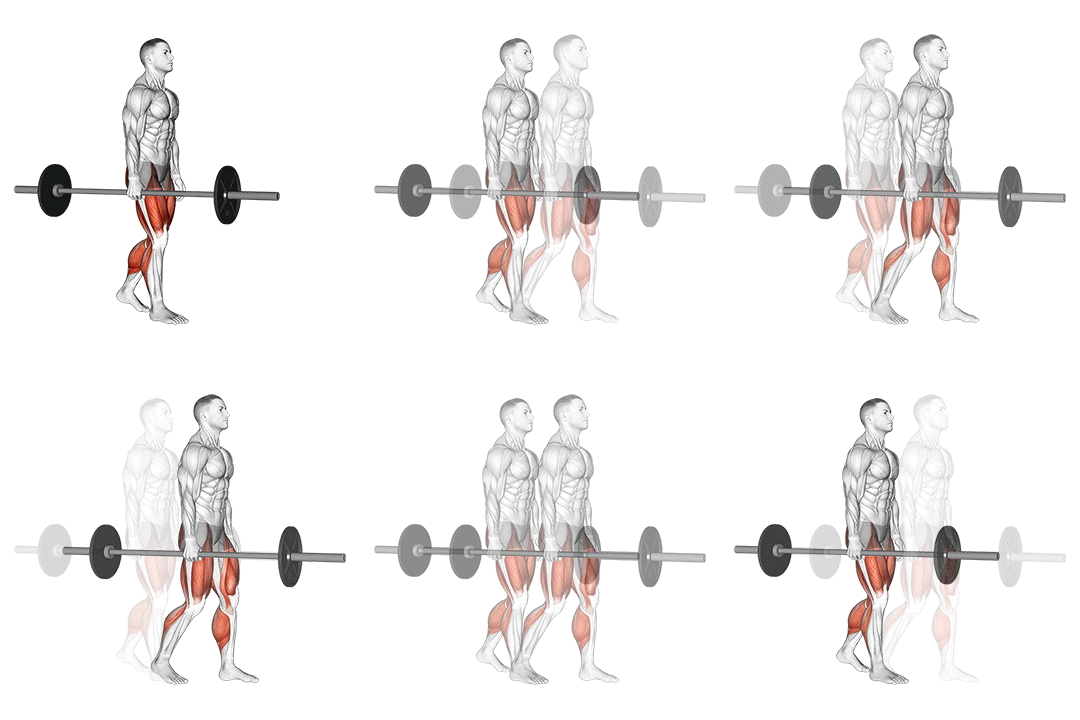
The Barbell Suitcase Carry holds a single barbell at one side (like a suitcase) and walks for distance or time. The unilateral loading produces strong combined forearm grip, oblique, and core stability work.
For barbell forearm training, the suitcase carry produces strong unilateral forearm grip work combined with oblique loading. The pattern hits the forearms through sustained heavy grip loading. Run it for 3 sets of 30 to 60-second walks per side as primary unilateral grip work.
Set up a barbell on the floor. Stand alongside the bar and grip it in the middle with one hand. Stand up with the bar held at one side (like carrying a suitcase). Walk forward at a steady pace while maintaining upright posture and avoiding leaning to either side. Switch sides between sets. Use moderate weight (40 to 60 percent of bodyweight per side).
Barbell Overhead Carry
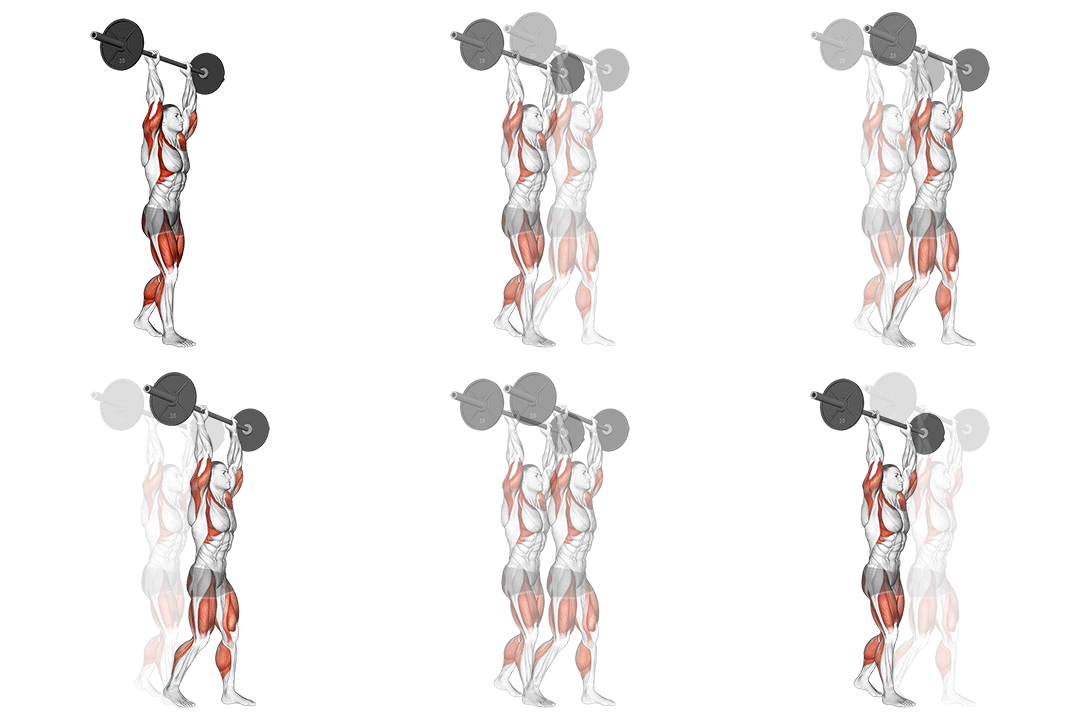
The Barbell Overhead Carry holds a barbell overhead with extended arms and walks for distance or time. The pattern produces strong combined forearm grip, shoulder stability, and core demand.
For barbell forearm training that includes shoulder work, the overhead carry produces strong combined grip and shoulder stability loading. The pattern hits the forearms through sustained grip while challenging shoulder stability. Run it for 3 sets of 20 to 40-second walks as combined grip and shoulder work.
Set up a barbell on the floor. Clean and press the bar overhead until arms are locked out. Walk forward at a steady pace while maintaining the bar overhead and good upright posture. Set the bar down between sets. Use moderate weight (50 to 70 percent of bodyweight) for sustained holds.
Barbell Zercher Squat

The Barbell Zercher Squat performs squats with the barbell held in the crook of the elbows (in front of the body) rather than across the back. The grip position produces strong combined forearm, bicep, and core loading.
For barbell forearm training, the Zercher squat produces strong combined upper-body and squat loading. The arm position challenges the forearms and biceps significantly during heavy squat sets. Run it for 3 to 4 sets of 6 to 10 reps as combined squat and forearm work.
Set up a barbell on a squat rack at chest height. Step under the bar and rest it in the crook of the elbows (with arms bent and crossed in front of the body to support the bar). Step back to clear the rack. Squat down by sitting the hips back while maintaining the bar position. Drive back to standing.
How To Program These Workouts
A productive barbell forearm session pulls 5 to 7 exercises from the list above. A balanced session includes one direct flexor exercise (barbell wrist curl), one direct extensor exercise (barbell reverse wrist curl), one heavy grip compound (behind-the-back deadlift, Zercher squat, or strict curl), one carry exercise (suitcase carry or overhead carry), and one accessory forearm exercise (incline wrist curl). Run direct isolation work for 3 to 4 sets of 10 to 15 reps; heavy compounds for 3 to 4 sets of 6 to 10 reps; carries for 3 sets of 30 to 60 seconds. Total session covers 17 to 22 working sets.
Train barbell forearm sessions 1 to 2 times per week as part of broader arm or full-body programming. The forearms recover within 48 to 72 hours of moderate training. Most successful programs include 1 to 2 weekly dedicated forearm sessions plus incidental forearm loading from heavy deadlifts, rows, and carries during other training days. The format works particularly well as the last 10 to 15 minutes of an arm day, paired with bicep and tricep work for complete arm development.
For broader arm and grip programming, see our best forearm exercises and how to build bigger forearms. For specific forearm work, see our best dumbbell forearm workouts.
Final Thoughts
The best barbell forearm workouts deliver real forearm development through heavy compound loading combined with direct isolation work that hits the forearm flexors, extensors, and grip muscles. The combination of wrist curls, reverse wrist curls, heavy compounds (deadlifts, Zerchers), carries, and strict curls covers every major forearm function and produces broader development than single-modality forearm training. For lifters who want measurable forearm size and strength gains, want stronger grip for compound lifts, or want forearm training that translates to athletic performance, dedicated barbell forearm training is one of the most effective options available.
Stay focused on full range of motion on isolation work. The most common barbell forearm training mistake is using too much weight on wrist curls and reverse wrist curls, which forces partial reps with limited range of motion. The fix: choose weights that allow full wrist flexion and extension through complete range with strict form. Quality reps with full range of motion produce stronger forearm development than heavier weight with shortened range. The forearms respond strongly to time-under-tension through full range, which makes range of motion critical for development.
Frequently Asked Questions
Can you build big forearms with a barbell?
Yes very effectively. The combination of progressive overload on direct flexor and extensor work plus heavy compound grip work (deadlifts, Zerchers, carries) produces real forearm muscle development for most lifters. Most lifters can add 0.5 to 1 inch of forearm circumference within 6 to 12 months of consistent dedicated forearm training combined with appropriate nutrition and recovery.
How often should I train forearms with barbells?
One to two times per week works for most lifters. The forearms recover within 48 to 72 hours of moderate training. Most successful programs include 1 to 2 weekly dedicated forearm sessions plus incidental forearm loading from heavy deadlifts, rows, and carries during other training days. Daily forearm training typically produces accumulated fatigue without proportional gains.
Are barbell wrist curls effective?
Yes effectively. Barbell wrist curls produce direct forearm flexor loading that builds the muscle bulk that gives forearms their visible size. The pattern is one of the most effective forearm flexor exercises available, and most successful forearm programs include barbell wrist curls as primary direct forearm work. The key elements: full range of motion, controlled tempo, and progressive overload over time.
How long should barbell forearm workouts be?
Thirty to forty minutes per session works for most lifters. The format includes 5 to 7 exercises across direct isolation, heavy compounds, and carries, which requires 30 to 40 minutes for proper sets and rest. Shorter sessions (15 to 20 minutes) work well as forearm work added at the end of arm days; longer sessions (45+ minutes) typically produce diminishing returns.
Do farmers carries with barbell build forearms?
Yes very effectively. Barbell suitcase carries and overhead carries produce strong sustained grip loading combined with traps and core work. The pattern hits the forearm grip through heavy held loads over time, which produces strong forearm development complementary to direct wrist curl work. Most successful forearm programs include 1 to 2 carry exercises per week alongside direct isolation work for complete forearm development.