Building a stronger hip thrust requires understanding the muscle groups involved (the hip thrust heavily emphasizes the glute maximus through peak hip extension, with secondary involvement of the hamstrings, quadriceps, and core stabilizers maintaining proper form) and the training principles that develop better hip thrusts: dedicated hip thrust practice as the primary intervention – direct heavy hip thrust training builds hip thrust-specific motor learning, glute strength, and capacity that no other exercise replicates as effectively, foundational compound posterior chain strength (heavy deadlifts, RDLs) for the glute and posterior chain capacity underlying hip thrusts, foundational compound squatting for compound glute loading, dedicated glute isolation (cable kickbacks) for targeted glute development, unilateral hip extension work (single-leg hip thrusts, single-leg glute bridges, Bulgarian split squats) for asymmetry-addressing development, core stability (planks) for proper hip thrust form, and appropriate progression over time. Most lifters who want stronger hip thrusts benefit from combining: 1) dedicated heavy hip thrust practice with appropriate frequency and volume, 2) compound posterior chain work for foundational strength, 3) compound squatting, 4) dedicated glute isolation, 5) unilateral work for asymmetries, and 6) consistent progressive overload over time.
Below are ten of the most effective exercises for building a stronger hip thrust, covering primary hip thrust practice (barbell hip thrust), foundational compound glute (barbell glute bridge), compound posterior chain (barbell deadlift, barbell romanian deadlift), foundational compound squatting (barbell squat), unilateral leg work (dumbbell Bulgarian split squat, dumbbell single-leg glute bridge), direct glute isolation (cable kickback), core stability (front plank), and unilateral hip thrust work (barbell one-leg hip thrust). Together they form a complete hip thrust strength program. A 60 to 75-minute glute-focused session pulled from this list, performed 1 to 2 times per week, produces strong hip thrust development for any lifter focused on building hip thrust strength, increasing hip thrust loading, or developing the integrated glute strength that hip thrusts produce.
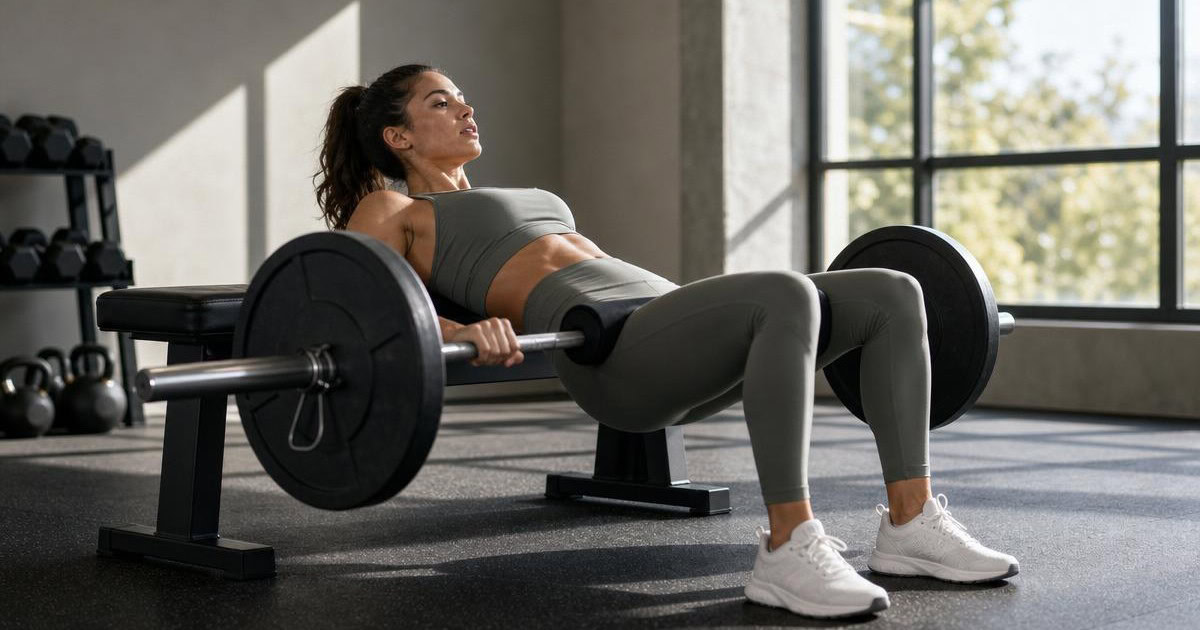
Barbell Hip Thrust

The Barbell Hip Thrust performs barbell hip thrusts. The pattern is foundational for hip thrust development.
For hip thrust development, the hip thrust itself is foundational practice. Run it for 4 to 5 sets of 5 to 8 reps as primary heavy hip thrust work, 1 to 2 times per week.
Position the upper back against a bench with the body flat on the floor. Place a barbell across the hips. Plant the feet on the floor with knees bent. Drive through the heels to lift the hips up by extending the hips. The glutes work hard at peak hip extension. Squeeze hard. Lower under control. The pattern is foundational for hip thrust development – dedicated hip thrust practice with appropriate volume and frequency builds hip thrust-specific motor learning, glute strength, and capacity. Heavy hip thrusts produce the most direct glute loading possible at peak hip extension. The most direct way to improve hip thrusts is consistent heavy practice with progressive overload.
Barbell Glute Bridge
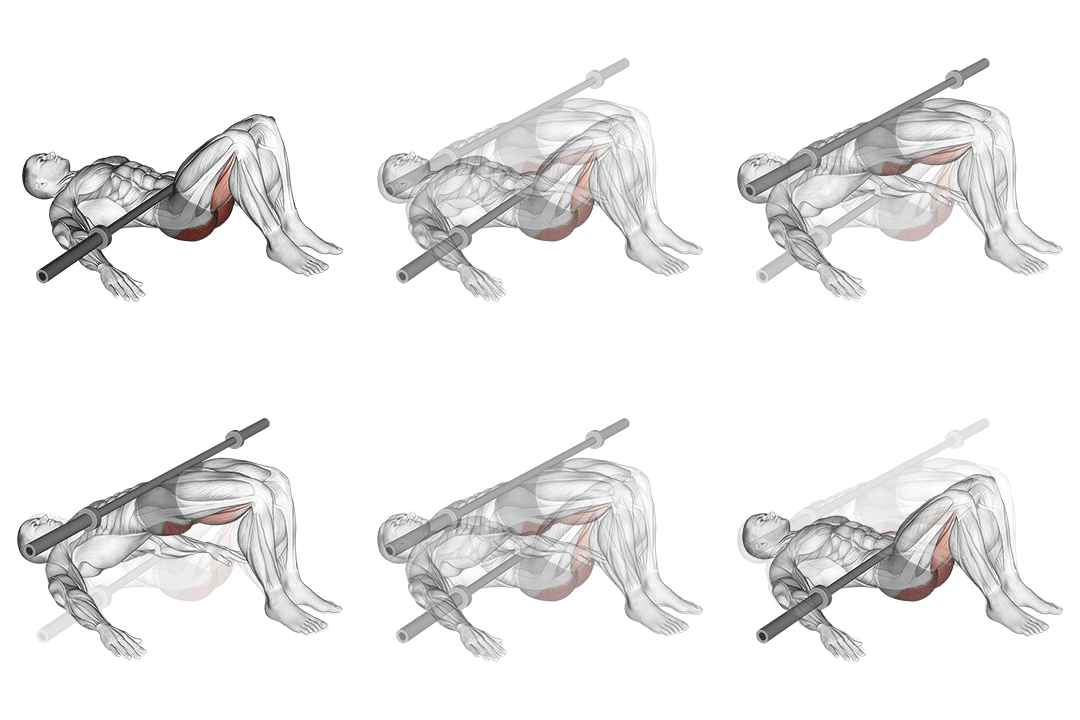
The Barbell Glute Bridge performs glute bridges. The pattern produces compound glute loading.
For hip thrust development, the glute bridge produces compound glute loading. Run it for 3 to 4 sets of 8 to 12 reps as compound glute work.
Lie on the floor with knees bent and feet planted. Position a barbell across the hips. Drive through the heels to lift the hips up by extending the hips. The body forms a straight line from shoulders to knees at the top. The glutes work hard. Squeeze at peak hip extension. Lower under control. The pattern produces compound glute loading – the floor variation of the hip thrust pattern that allows heavy loading with proper hip extension mechanics. Excellent foundational glute exercise alongside hip thrusts for complete hip extension development.
Barbell Deadlift

The Barbell Deadlift performs barbell deadlifts. The pattern produces compound posterior chain strength.
For hip thrust development, the deadlift produces compound posterior chain strength. Run it for 3 sets of 5 to 8 reps as compound posterior chain work.
Stand with feet hip-width with a barbell on the floor over the mid-foot. Hinge at the hips and bend the knees to grip the bar. Drive through the heels while extending the hips and knees to lift the bar from the floor. Stand fully tall at the top. Lower under control. The pattern produces compound posterior chain loading – critical for hip thrust development because deadlifts build foundational posterior chain strength (glutes, hamstrings, lower back) supporting hip thrust performance. Stronger deadlifters typically have stronger hip thrusts through the integrated posterior chain capacity.
Barbell Squat

The Barbell Squat performs back squats. The compound pattern produces foundational glute loading.
For hip thrust development, heavy back squats produce foundational glute loading supporting hip thrust capacity. Run it for 3 sets of 6 to 10 reps as compound glute work.
Set up a barbell on a rack at upper back height. Position the bar across the upper back. Step back with feet shoulder-width. Squat down by bending the knees and hips. Lower until the thighs are parallel to the floor. Drive back up through the heels. The pattern produces foundational glute loading – heavy squats train the glutes substantially through the bottom portion of the squat where the glutes must work to extend the hips. Combined with hip thrusts and dedicated glute work, squats produce complete glute development supporting hip thrust performance.
Barbell Romanian Deadlift

The Barbell Romanian Deadlift performs Romanian deadlifts. The pattern builds posterior chain and glutes.
For hip thrust development, the RDL builds compound glute and hamstring loading. Run it for 3 sets of 8 to 12 reps as posterior chain work.
Stand with feet hip-width holding a barbell at the front of the thighs. Hinge at the hips by sending them backward while keeping the back flat and legs nearly straight. Lower the barbell along the legs until the hamstrings stretch deeply. Drive back to standing by extending the hips. The pattern produces compound posterior chain loading with substantial glute involvement – RDLs train the glutes through the lockout where hip extension drives the movement. Combined with hip thrusts (peak contraction) and squats (foundational), RDLs build complete glute and hamstring development supporting hip thrust strength.
Dumbbell Bulgarian Split Squat
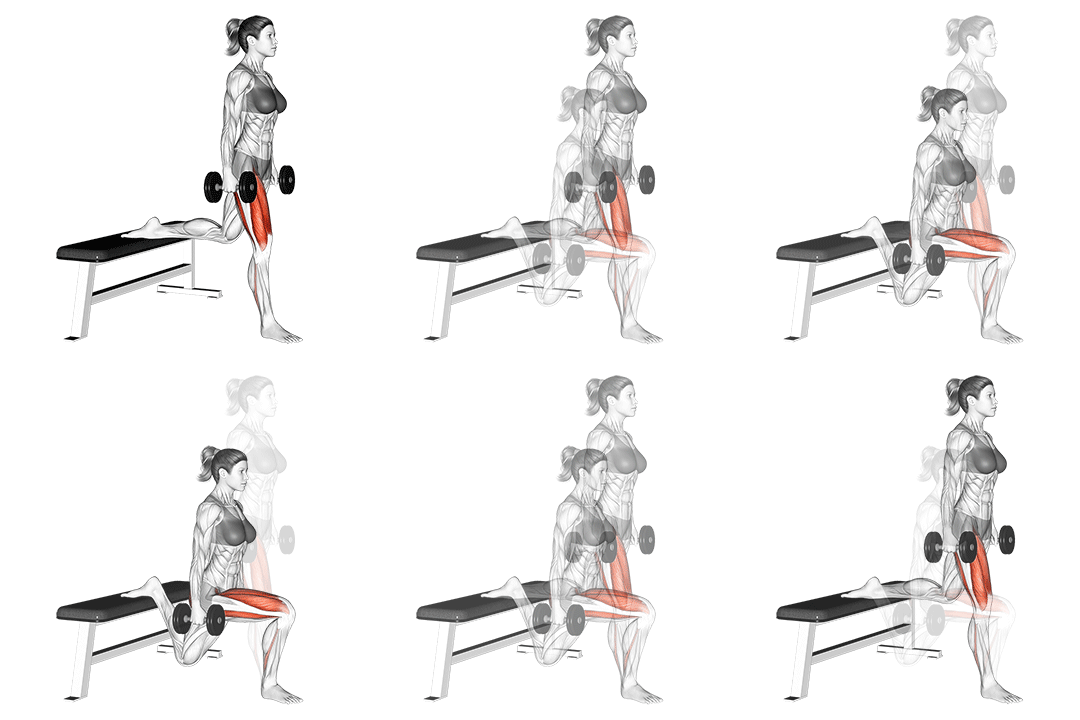
The Dumbbell Bulgarian Split Squat performs Bulgarian split squats. The pattern produces unilateral glute loading.
For hip thrust development, Bulgarian split squats produce unilateral glute loading addressing asymmetries. Run it for 3 sets of 8 to 12 reps per leg as unilateral glute work.
Stand 2 to 3 feet in front of a bench. Place the top of the rear foot on the bench behind. Hold dumbbells in each hand at the sides. Squat down by bending the front knee deeply. Lower until the front thigh is parallel to the floor. Drive back up through the front heel. The pattern produces unilateral glute loading – the deep single-leg position with hip flexion produces substantial glute loading on the front leg. Critical for hip thrust development because addressing left/right asymmetries supports balanced hip thrust performance and prevents the asymmetries that can develop with bilateral-only training.
Dumbbell Single Leg Glute Bridge

The Dumbbell Single Leg Glute Bridge performs unilateral glute bridges. The pattern produces unilateral glute loading.
For hip thrust development, the single-leg glute bridge produces unilateral hip extension loading. Run it for 3 sets of 10 to 12 reps per side as unilateral glute work.
Lie on the floor with one knee bent and the other leg straight (or extended). Hold a dumbbell at the hips. Drive through the heel of the bent leg to lift the hips up. The glute works hard maintaining hip level and extending the hip. Lower under control. Switch sides. The pattern produces unilateral hip extension loading – critical for hip thrust development because addressing unilateral capacity supports bilateral hip thrust performance and identifies asymmetries that limit hip thrust strength.
Cable Kickback

The Cable Kickback performs cable glute kickbacks. The pattern produces direct glute isolation.
For hip thrust development, the cable kickback produces direct glute isolation. Run it for 3 sets of 12 to 15 reps per leg as glute isolation work.
Set up a cable at low position with an ankle attachment. Attach the strap to one ankle. Stand facing the cable with the other foot planted. Extend the loaded leg backward by extending at the hip. The glute works hard through pure hip extension. Squeeze hard at peak. Return under control. Switch sides. The pattern produces direct glute maximus isolation through pure hip extension – excellent isolation work alongside compound glute training. Constant cable tension provides time under tension that supports glute development underlying hip thrust performance.
Front Plank
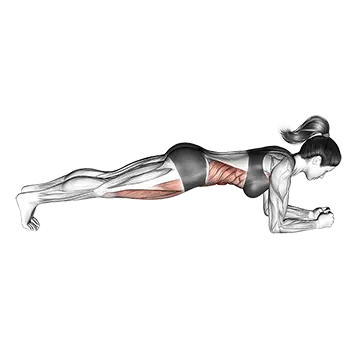
The Front Plank performs forearm plank holds. The pattern produces foundational core for hip thrust form.
For hip thrust development, the plank produces foundational core stability supporting proper hip thrust form. Run it for 3 sets of 30 to 60-second holds as core work.
Lie face-down on the floor. Prop up on the forearms with elbows under the shoulders. Lift the hips so the body forms a straight line from shoulders to ankles. The core works hard isometrically. Hold for the working interval. The pattern builds isometric core strength critical for hip thrust form – proper hip thrust form depends on maintaining controlled rib-down position through the lift, which requires core engagement. Strong core supports proper hip thrust form and prevents the form breakdown that limits hip thrust capacity and increases injury risk.
Barbell One Leg Hip Thrust

The Barbell One Leg Hip Thrust performs single-leg hip thrusts. The pattern produces unilateral hip extension loading.
For hip thrust development, the single-leg hip thrust produces unilateral hip thrust loading addressing asymmetries. Run it for 3 sets of 8 to 10 reps per side as unilateral hip thrust work.
Position the upper back against a bench with the body flat on the floor. Place a barbell across the hips (or use bodyweight for advanced unilateral work). Plant one foot on the floor with the other leg extended or knee held. Drive through the planted heel to lift the hips up by extending the hip. The working glute works hard at peak hip extension. Squeeze hard. Lower under control. Switch sides. The pattern produces unilateral hip thrust loading – critical for hip thrust development because unilateral practice identifies and addresses asymmetries while building unilateral glute strength supporting bilateral hip thrust performance.
How To Program These Workouts
A productive hip thrust strength session pulls 5 to 7 exercises from the list above. A common balanced session: barbell hip thrust (heavy primary practice – 4 to 5 sets), barbell deadlift (compound posterior), barbell squat (foundational compound), barbell one-leg hip thrust (unilateral hip thrust), cable kickback (isolation), front plank (core). For maximum hip thrust strength: prioritize dedicated heavy hip thrust practice (1 to 2 times per week) plus heavy deadlifts and squats (1 time per week each) plus unilateral hip thrust work. For hypertrophy goals: include glute bridges, RDLs, Bulgarian split squats, and isolation work for higher-volume glute training. Run heavy hip thrust practice for 4 to 5 sets of 5 to 8 reps, accessory glute work for 3 sets of 8 to 12 reps, isolation work for 3 sets of 12 to 15 reps.
Train hip thrust strength 1 to 2 times per week as part of complete glute programming. Most successful hip thrust programs include: 1) primary hip thrust day (heavy hip thrusts plus accessories), 2) secondary glute day (variations and unilateral work), 3) integrated glute work in regular leg training, 4) regular mobility work for proper form. Combined with progressive overload (gradually adding weight as form improves) and adequate volume (15 to 20+ weekly working sets focused on glutes and hip extension), dedicated hip thrust training produces measurable improvements within 8 to 12 weeks for most lifters. The hip thrust responds particularly well to high-frequency dedicated practice plus complementary glute work because the glutes are the largest muscle in the body and respond well to dedicated training.
For broader programming, see our how to grow your glutes and how to build a bigger butt. For specific work, see our best glute maximus exercises.
Final Thoughts
Building a stronger hip thrust requires applying the right training principles consistently over time: dedicated heavy hip thrust practice as the primary intervention, foundational compound posterior chain strength, foundational compound squatting, unilateral hip extension work for asymmetries, direct glute isolation for targeted stimulus, core stability for proper form, and appropriate progression. The combination of hip thrusts, glute bridges, deadlifts, squats, RDLs, Bulgarian split squats, single-leg glute bridges, cable kickbacks, planks, and single-leg hip thrusts covers every functional pattern of hip thrust development and produces broader glute strength and athletic capacity than partial training would suggest. Most lifters who consistently apply these principles see measurable hip thrust improvement within 8 to 12 weeks – including more hip thrust weight, better hip thrust form, more developed glutes, addressed asymmetries through unilateral work, and the integrated lower-body strength that translates to other glute-dominant patterns and athletic performance. For lifters seeking stronger hip thrusts, dedicated combination of practice plus accessory work is the most effective approach.
Stay focused on dedicated heavy practice as the priority for hip thrust development. The most common mistake lifters make in hip thrust training is doing only general glute work without dedicated heavy hip thrust practice with progressive overload. The fix: prioritize dedicated heavy hip thrust practice (1 to 2 sessions per week with 4 to 5 sets of 5 to 8 reps with progressive weight) as the foundation of hip thrust development. Combined with appropriate accessory work (deadlifts for posterior chain, squats for compound glute, glute bridges for similar pattern, cable kickbacks for isolation), heavy progressive practice produces the hip thrust strength that general glute training never achieves. Hip thrust strength is built through dedicated practice with progressive overload.
Frequently Asked Questions
How can I make my hip thrust heavier?
Dedicated heavy hip thrust practice plus compound posterior chain work plus unilateral work. Heavy hip thrust practice (4 to 5 sets of 5 to 8 reps, 1 to 2 times per week with progressive overload) builds hip thrust-specific strength. Heavy deadlifts and RDLs build foundational posterior chain. Squats build compound glute loading. Combined with single-leg hip thrusts (unilateral asymmetry work), Bulgarian split squats (unilateral), cable kickbacks (isolation), planks (core), this comprehensive approach produces measurable hip thrust improvement within 8 to 12 weeks. Most failures result from inadequate progressive overload.
Why is my hip thrust weak?
Multiple contributing factors. Most weak hip thrusts result from: 1) inadequate dedicated practice (only doing hip thrusts occasionally vs regular practice), 2) poor form (incomplete hip extension, insufficient glute squeeze), 3) lack of progressive overload, 4) underdeveloped supporting muscle groups (posterior chain, core), 5) left/right asymmetries limiting bilateral capacity, 6) limited mobility affecting form. The fix: prioritize dedicated heavy practice with proper form, progressive overload, supporting muscle development, unilateral asymmetry work, and consistent practice over weeks.
How often should I hip thrust?
1 to 2 times per week as part of complete glute programming. The hip thrust responds well to dedicated practice 1 to 2 times per week. Most successful programs include: 1) primary hip thrust day (heavy practice plus accessories), 2) secondary glute day (variations and unilateral work), 3) integrated glute work in regular leg training. More frequent hip thrust practice (3+ times per week) typically produces excessive recovery demand for most lifters. Quality consistent practice produces better results than excessive frequency.
What’s the best accessory for hip thrust?
Deadlifts plus single-leg hip thrusts plus cable kickbacks. Heavy deadlifts build the foundational posterior chain strength supporting hip thrust performance. Single-leg hip thrusts address the unilateral asymmetries that limit bilateral hip thrust capacity. Cable kickbacks provide direct glute isolation that supports overall glute development. Combined with compound squatting (squat), Romanian deadlifts (posterior chain), Bulgarian split squats (unilateral), glute bridges (similar pattern), planks (core), and consistent practice, deadlifts plus single-leg work plus isolation form the foundation of hip thrust accessory training.
How long does it take to build a stronger hip thrust?
8 to 12 weeks for measurable improvement, ongoing for substantial gains. Most lifters who consistently apply dedicated heavy hip thrust practice plus accessory work see measurable hip thrust improvement within 8 to 12 weeks. Beginners often see initial gains within 4 to 8 weeks (technique gains plus rapid early strength gains). Substantial hip thrust development requires 6 to 12+ months of consistent training. The hip thrust is highly responsive to dedicated training when properly progressively overloaded – patience and consistent practice produce results.