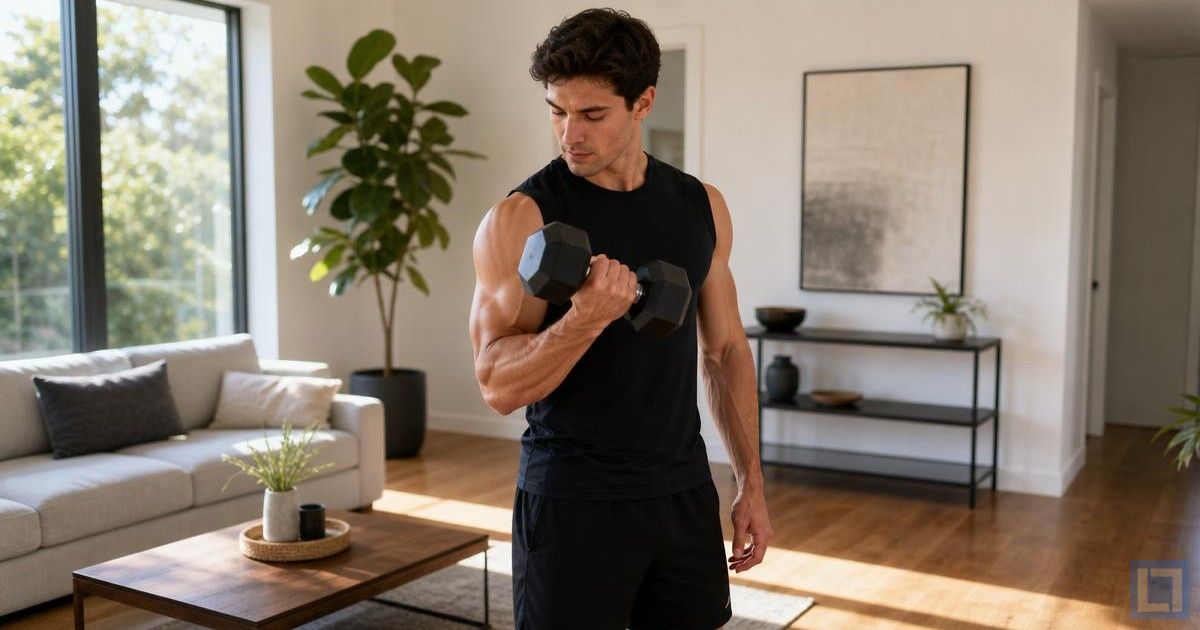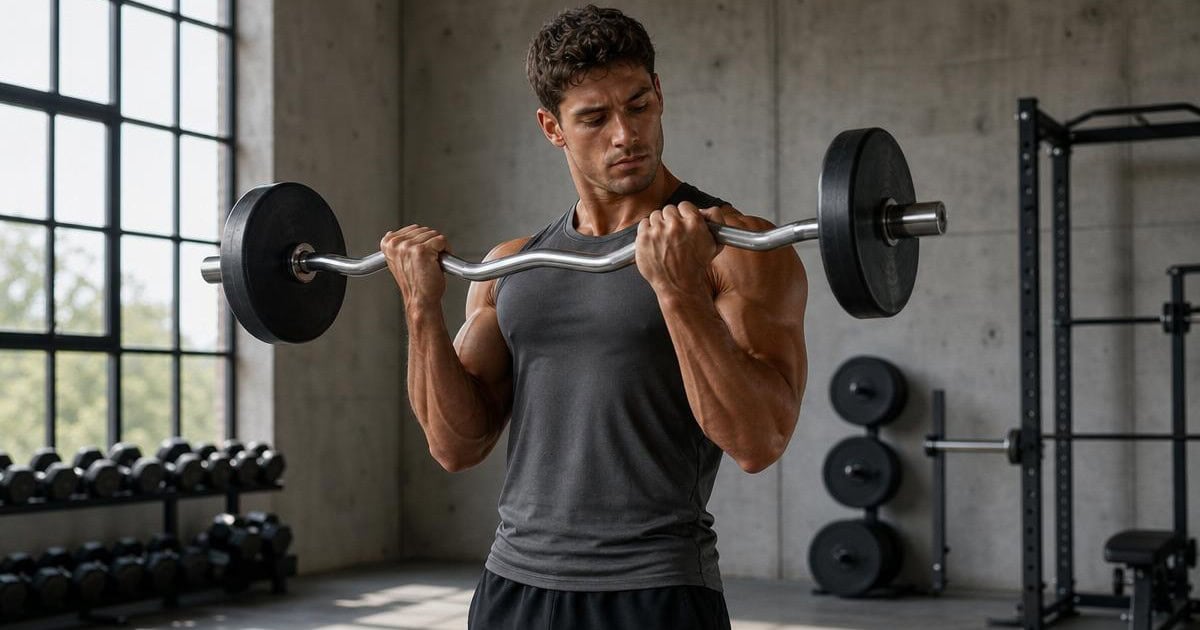
Building substantial arm size requires balanced biceps and triceps development through consistent heavy work over months and years. The triceps comprise roughly two-thirds of upper arm mass when fully developed, making triceps emphasis critical for arm size despite the cultural focus on biceps. Complete arm development addresses the biceps (long head, short head, brachialis), triceps (long head, lateral head, medial head), and the supporting forearm muscles that contribute to arm thickness and grip strength.
These ten exercises cover the complete arm-building toolkit. Heavy compound biceps work (barbell curls, dumbbell curls, hammer curls) builds biceps mass through progressive heavy loading. Heavy compound triceps work (close grip bench press, skullcrushers) builds triceps mass through compound and direct heavy loading. Specialized variations (incline curls, preacher curls, overhead extensions) target specific portions of the arm muscles for complete development. Isolation work (cable extensions, prone kickbacks) provides targeted hypertrophy work. Together they produce the comprehensive arm development that quality lifting demands.
Barbell Curl

The Barbell Curl performs barbell biceps curls. The pattern is foundational for biceps mass development.
For arm growth, barbell curls allow the heaviest direct biceps loading. Run it for 3 to 4 sets of 6 to 10 reps as primary biceps work.
Stand with a barbell held at the front of the thighs, hands shoulder-width, palms facing forward. Curl the barbell up to chest height by flexing the elbows. Lower under control to start. The pattern allows heavy progressive loading on the biceps – foundational for arm development because heavy biceps work drives substantial mass gain. Strong barbell curls provide the foundation that quality biceps development requires. Foundational arm exercise.
Dumbbell Biceps Curl

The Dumbbell Biceps Curl performs alternating or simultaneous dumbbell curls. The pattern allows per-arm loading for balanced development.
For arm growth, dumbbell curls address per-arm asymmetries. Run it for 3 sets of 8 to 12 reps as variation work.
Stand with dumbbells in each hand at the sides, palms facing forward. Curl the dumbbells up to shoulder height by flexing the elbows. Lower under control to start. The pattern develops the biceps with per-arm loading – critical for addressing left/right asymmetries that bilateral barbell work can mask. Excellent variation alongside barbell curls because the unilateral loading ensures both arms receive equal stimulation, supporting balanced arm development.
Dumbbell Hammer Curl

The Dumbbell Hammer Curl performs neutral-grip dumbbell curls. The pattern targets the brachialis and brachioradialis alongside biceps.
For arm growth, hammer curls develop the brachialis for arm thickness. Run it for 3 sets of 8 to 12 reps as compound arm work.
Stand with dumbbells in each hand at the sides, palms facing each other (neutral grip). Curl the dumbbells up to shoulder height while maintaining the neutral grip. Lower under control. The pattern develops the biceps, brachialis (the muscle underneath the biceps), and brachioradialis (forearm muscle) – critical for arm thickness because the brachialis sits beneath the biceps and pushes the biceps up when developed. Hammer curls add the arm thickness that biceps-focused work alone cannot produce.
EZ Bar California Skullcrusher

The EZ Bar California Skullcrusher performs lying triceps extensions. The pattern is foundational for triceps mass development.
For arm growth, skullcrushers allow heavy triceps isolation. Run it for 3 to 4 sets of 8 to 12 reps as primary triceps work.
Lie on a bench with an EZ bar held overhead, arms straight. Lower the bar by bending the elbows, bringing the bar toward the forehead. Reverse to extend the arms back to the start. The pattern isolates the triceps through pure elbow extension – foundational for triceps development because the long head of the triceps stretches under load in this position, producing substantial growth stimulation. The EZ bar reduces wrist stress compared to straight bar variations. Foundational triceps exercise.
Cable High Triceps Extension

The Cable High Triceps Extension performs cable triceps work. The pattern provides constant tension throughout the triceps movement.
For arm growth, cable triceps work provides constant tension loading. Run it for 3 sets of 10 to 15 reps as triceps hypertrophy work.
Stand at a cable station with the cable set high. Grip the handle or rope. Press the handle down by extending the elbows while keeping the upper arms still. Squeeze the triceps at full extension. Return under control. The cable provides constant tension throughout the movement – the triceps work continuously because the cable resistance does not lighten at any point in the range. Excellent variation alongside skullcrushers because the constant tension produces different stimulation than free weight variations.
Barbell Standing Overhead Triceps Extension

The Barbell Standing Overhead Triceps Extension performs overhead triceps work. The pattern emphasizes the long head of the triceps.
For arm growth, overhead extensions emphasize the long head of the triceps. Run it for 3 sets of 8 to 12 reps as overhead triceps work.
Stand with a barbell held overhead, arms straight, hands shoulder-width or slightly closer. Lower the bar behind the head by bending the elbows. Reverse to extend the arms back to the overhead position. The pattern emphasizes the long head of the triceps because the overhead position stretches the long head fully under load. Critical for arm development because the long head provides much of the visible triceps mass when developed. Excellent variation that complements skullcrushers and pushdowns by targeting the long head emphasis.
Dumbbell Incline Curl

The Dumbbell Incline Curl performs dumbbell curls on an incline bench. The pattern stretches the long head of the biceps under load.
For arm growth, incline curls emphasize the long head of the biceps. Run it for 3 sets of 10 to 12 reps as biceps stretch work.
Sit on an incline bench set at 45 to 60 degrees. Hold dumbbells in each hand with arms hanging straight down. Curl the dumbbells up to shoulder height while keeping the upper arms perpendicular to the floor. Lower under control. The incline position pulls the arms behind the body, stretching the long head of the biceps – critical for biceps development because the long head provides much of the visible biceps mass and responds well to stretched-position work. Foundational biceps variation for complete arm development.
Dumbbell Preacher Curl

The Dumbbell Preacher Curl performs preacher curls with dumbbells. The pattern isolates the biceps through arm support.
For arm growth, preacher curls isolate the biceps through removed momentum. Run it for 3 sets of 8 to 12 reps per arm as biceps isolation work.
Sit at a preacher curl bench with the chest against the pad and the upper arm fully supported on the pad. Hold a dumbbell at arm’s length, palm facing up. Curl the dumbbell up by flexing the elbow. Lower under control. The pattern isolates the biceps with the arm fully supported – the elbow position forward of the body emphasizes the short head of the biceps and removes momentum. Excellent isolation variation that targets the biceps differently than standing curl variations.
Barbell Close Grip Bench Press

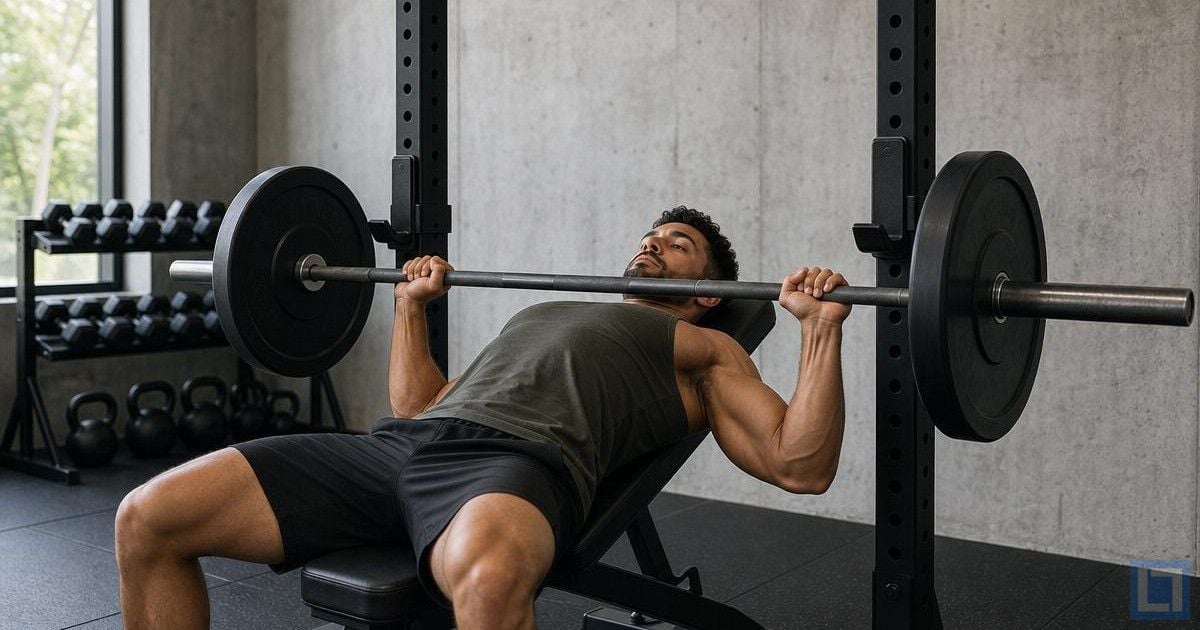
The Barbell Close Grip Bench Press performs narrow-grip bench press. The pattern is foundational for triceps mass through compound loading.
For arm growth, close grip bench press provides heavy triceps loading. Run it for 3 to 4 sets of 6 to 10 reps as compound triceps work.
Lie on a bench with a barbell held above the chest, hands shoulder-width or slightly closer. Lower the bar to the chest while keeping the elbows tucked close to the body. Press back up to extend the arms. The narrow grip emphasizes triceps work over chest work – excellent for arm development because the heavy compound loading drives triceps growth in ways that isolation work alone cannot match. Strong close grip bench press provides the foundational triceps strength that drives arm size.
Dumbbell Prone Triceps Kickback

The Dumbbell Prone Triceps Kickback performs face-down triceps kickbacks. The pattern isolates the triceps through removed momentum.
For arm growth, prone kickbacks isolate the triceps without momentum. Run it for 3 sets of 12 to 15 reps as triceps isolation work.
Lie face-down on an incline bench. Hold dumbbells with arms bent at 90 degrees, upper arms parallel to the floor. Extend the elbows to bring the dumbbells back behind the body. Squeeze the triceps at full extension. Return under control. The face-down position eliminates momentum and isolates the triceps purely – excellent for triceps development because removing momentum forces the triceps to do all the work. Pure isolation variation that complements compound triceps work for complete development.
How To Program These Workouts
Arm development works best with 2 to 3 dedicated arm sessions per week, often split as biceps-focused and triceps-focused or combined arm sessions. Total weekly volume of 12 to 20 working sets per muscle group (biceps, triceps) drives substantial growth for most lifters when distributed across compound and isolation work.
Structure arm work strategically. Sample week: Day 1 (Pull/Biceps) – barbell curl, dumbbell hammer curl, dumbbell incline curl. Day 2 (Push/Triceps) – close grip bench press, skullcrushers, cable triceps extension, overhead triceps extension. Add isolation variation: preacher curls, prone kickbacks. Use 3 to 4 sets of 6 to 10 reps for heavy compound work, 3 sets of 10 to 15 reps for hypertrophy work, 3 sets of 12 to 15 reps for isolation work.
Progressive overload drives arm growth – add weight or reps when current loading becomes manageable. The arms respond well to varied rep ranges combined with consistent progressive loading. Tracking lift loads in a log ensures consistent progress. Visible arm development requires consistent dedicated work over 12 to 24 weeks – arm size is driven by total volume and progressive loading over months, not by intensive but sporadic effort.
Final Thoughts
These ten exercises cover the complete arm development toolkit. The heavy compound biceps work builds biceps mass through progressive loading. The heavy compound triceps work (close grip bench, skullcrushers) drives triceps mass through compound and isolation patterns. The specialized variations target specific muscle portions for complete development. The isolation work provides targeted hypertrophy stimulation. Together they produce comprehensive arm development.
Building bigger arms requires consistent volume and progressive overload over months and years. Most lifters underestimate the volume required for substantial arm growth – meaningful arm development requires substantial dedicated work, not just incidental stimulation from compound lifts. The combination of heavy compound work, varied isolation patterns, and progressive overload produces the arm development that distinguishes serious lifters from those who train arms casually.
Frequently Asked Questions
How long does it take to build bigger arms?
Initial arm growth appears within 8 to 12 weeks of consistent dedicated work. Substantial visible arm development typically takes 6 to 12 months of consistent training with progressive overload. Major arm transformations (1-2+ inches added to arm circumference) require 12 to 24 months of dedicated training, sometimes longer. Arm growth is gradual – patience and consistency drive results.
Should arms be trained more frequently for faster growth?
2 to 3 arm sessions per week works well for most lifters. More frequent training (4+ sessions per week) can produce overtraining for many people. The arms recover quickly between sessions but sustained high-frequency training without adequate recovery can plateau or reverse progress. Quality over quantity drives arm growth.
Are biceps or triceps more important for arm size?
Triceps – the triceps comprise roughly two-thirds of upper arm mass when fully developed. While biceps work gets cultural emphasis, substantial triceps work is essential for impressive arm size. Most lifters underemphasize triceps work relative to biceps and would benefit from increased triceps volume and intensity for arm size goals.
Do compound exercises build arm size?
Compound exercises (bench press, rows, pull-ups, overhead press) provide foundational arm stimulation through their compound demand on biceps and triceps. However, dedicated arm isolation work produces significantly more arm-specific growth than compound work alone for most lifters. Combining compound foundation with dedicated arm isolation produces the best arm development.
Should arm training emphasize heavy weight or high volume?
Both – arms respond well to heavy compound loading (6 to 10 reps for compound lifts) AND high-volume hypertrophy work (10 to 15 reps for isolation work). Variety in rep ranges across the week typically produces better arm growth than emphasizing only one approach. The arms tolerate frequent moderate-volume work better than infrequent maximal effort.