The forearm extensors are a group of muscles running along the back of the forearm that produce wrist extension and contribute to grip strength. While forearm flexors get more attention through standard curling work, the extensors play critical roles in grip strength balance, wrist health, and the visible forearm thickness that distinguishes well-developed arms. Underdeveloped extensors contribute to grip imbalance, wrist pain, and the thin-looking forearms that excessive flexor-only training can produce.
These ten exercises cover complete forearm extensor development. Reverse curl variants (barbell, cable, dumbbell) develop the extensors and brachioradialis through compound loading. Reverse wrist curl variants (barbell, cable, dumbbell, band) directly isolate the extensors through pure wrist extension. Hammer curls develop the brachioradialis through neutral-grip loading. Loaded carries (farmers walks) and dead hangs build grip-based forearm size through sustained loading. Together they produce balanced forearm development that supports both performance and aesthetics.
Barbell Reverse Curl

The Barbell Reverse Curl performs reverse-grip barbell curls. The pattern targets the forearm extensors and brachioradialis through palms-down loading.
For forearm extensor development, barbell reverse curls allow the heaviest direct loading. Run it for 3 to 4 sets of 8 to 12 reps as primary forearm extensor work.
Stand with a barbell held at the front of the thighs, hands shoulder-width, palms facing the body (overhand grip). Curl the barbell up to chest height by flexing the elbows while keeping the wrists straight. Lower under control. The reverse grip targets the forearm extensors, brachioradialis, and biceps differently than supinated curls – the pronated grip forces the brachioradialis and forearm extensors to do most of the work. Foundational forearm extensor exercise that allows progressive loading for substantial development.
Cable Reverse Curl

The Cable Reverse Curl performs reverse curls with cable resistance. The pattern provides constant tension throughout the range.
For forearm extensor development, cable reverse curls provide constant tension loading. Run it for 3 sets of 10 to 15 reps as constant tension work.
Stand at a low cable with a straight bar attachment, palms facing down (overhand grip). Curl the bar up to chest height while keeping the wrists straight and elbows tucked. Lower under control. The cable provides constant tension throughout the movement – the forearm extensors and brachioradialis work continuously because the resistance does not lighten at any point. Excellent variation alongside barbell reverse curls because the constant tension produces different stimulation than free weight variations.
Dumbbell Standing Alternate Reverse Curl

The Dumbbell Standing Alternate Reverse Curl performs alternating reverse curls with dumbbells. The pattern allows per-arm loading.
For forearm extensor development, alternating reverse curls address per-arm asymmetries. Run it for 3 sets of 8 to 12 reps per arm as variation work.
Stand with dumbbells in each hand at the sides, palms facing back (overhand grip). Curl one dumbbell up to shoulder height while keeping the wrist straight, then lower and alternate to the other arm. The alternating pattern develops forearm extensors with per-arm loading – critical for addressing left/right asymmetries that bilateral barbell work can mask. Excellent variation alongside barbell reverse curls because the unilateral loading ensures both forearms receive equal stimulation.
Barbell Reverse Wrist Curl

The Barbell Reverse Wrist Curl performs reverse wrist curls with a barbell. The pattern directly isolates the forearm extensors through wrist extension.
For forearm extensor development, reverse wrist curls directly isolate the extensors. Run it for 3 to 4 sets of 12 to 15 reps as primary isolation work.
Sit on a bench with the forearms resting on the thighs, hands hanging off the knees. Hold a barbell with palms facing down. Lower the barbell by allowing the wrists to flex down. Curl the barbell up by extending the wrists. Lower under control. The pattern directly isolates the forearm extensors through pure wrist extension – the foundational isolation lift for the forearm extensor muscles on the back of the forearm. Direct wrist work develops the forearm thickness and strength that grip-based work alone cannot fully produce.
Cable Reverse Wrist Curl

The Cable Reverse Wrist Curl performs reverse wrist curls with cable resistance. The pattern provides constant tension on the extensors.
For forearm extensor development, cable reverse wrist curls provide constant tension. Run it for 3 sets of 12 to 15 reps as constant tension isolation work.
Set up at a low cable with a straight bar attachment. Sit on a bench with forearms resting on the thighs, palms facing down, hands gripping the bar. Lower the bar by flexing the wrists down, then curl back up by extending the wrists. The cable provides constant tension throughout – the forearm extensors work continuously because the resistance does not lighten. Excellent variation alongside barbell reverse wrist curls for varied loading patterns and complete extensor development.
Dumbbell Reverse Wrist Curl

The Dumbbell Reverse Wrist Curl performs reverse wrist curls with dumbbells. The pattern allows per-side loading for the extensors.
For forearm extensor development, dumbbell reverse wrist curls allow per-arm work. Run it for 3 sets of 12 to 15 reps per arm as unilateral work.
Sit on a bench with one forearm resting on the thigh, hand hanging off the knee. Hold a dumbbell with palm facing down. Lower the dumbbell by flexing the wrist down, then curl back up by extending the wrist. Switch arms. The unilateral pattern allows focused extensor work on each forearm – critical for addressing per-side asymmetries. Excellent variation that complements bilateral barbell and cable work for complete forearm extensor development.
Dumbbell Hammer Curl

The Dumbbell Hammer Curl performs neutral-grip dumbbell curls. The pattern develops the brachioradialis alongside the biceps.
For forearm extensor development, hammer curls develop the brachioradialis through neutral grip. Run it for 3 sets of 8 to 12 reps as compound forearm work.
Stand with dumbbells in each hand at the sides, palms facing each other (neutral grip). Curl the dumbbells up to shoulder height while maintaining the neutral grip. Lower under control. The pattern develops the brachioradialis (forearm muscle on the thumb side) and brachialis along with the biceps – critical for forearm extensor development because the brachioradialis contributes substantially to forearm thickness and works synergistically with the extensor muscles. Foundational forearm exercise that complements direct extensor work.
Farmers Walk
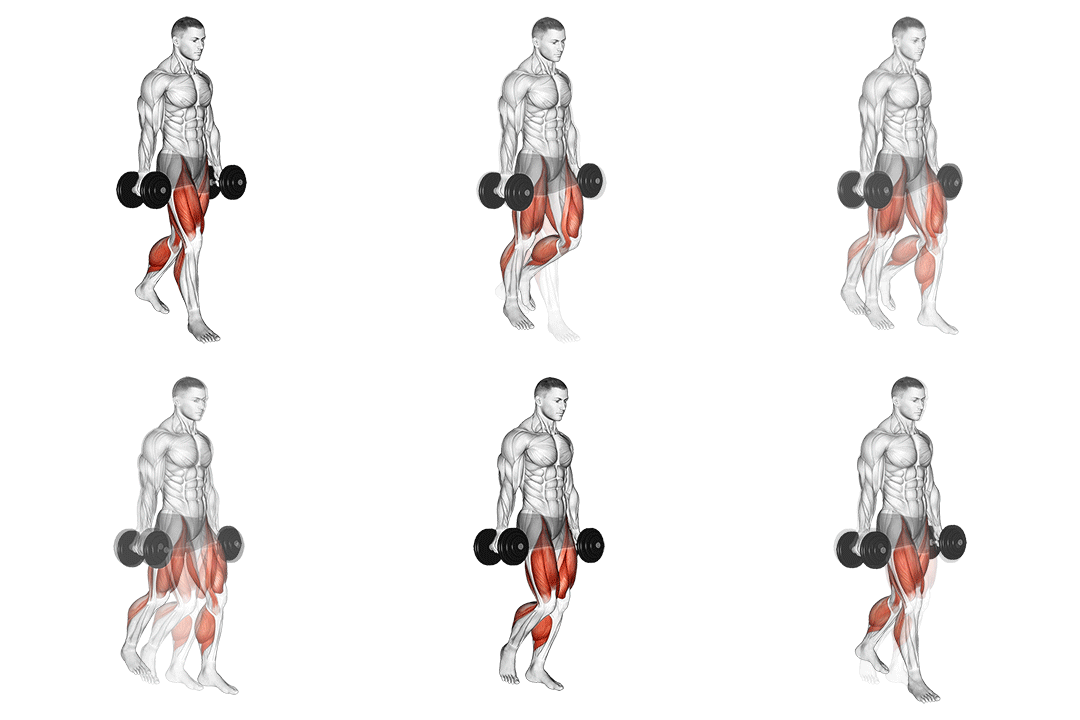
The Farmers Walk performs loaded carries. The pattern produces extreme grip and forearm loading through sustained heavy holds.
For forearm extensor development, farmers walks build forearm size through sustained loading. Run it for 3 to 4 sets of 30 to 60 second carries as isometric work.
Stand with heavy dumbbells, kettlebells, or trap bar held at the sides. Walk forward with controlled strides while maintaining upright posture. The forearms must work isometrically to support the heavy weight throughout the carry. Continue walking for time or distance. The carry produces sustained heavy isometric forearm loading – both flexors and extensors work intensely to maintain the heavy grip. Often the loading exceeds what can be used in direct forearm work, providing a different stimulus that builds forearm thickness through sustained tension.
Dead Hang Stretch

The Dead Hang Stretch performs passive hangs from a pull-up bar. The pattern produces sustained forearm and grip loading.
For forearm extensor development, dead hangs build grip endurance and forearm size. Run it for 3 sets of 30 to 60 second hangs as grip and forearm work.
Hang from a pull-up bar with arms fully straight, hands shoulder-width. Allow the body to hang relaxed while gripping firmly. Continue hanging for time, breathing throughout. The hang provides sustained heavy grip loading – the forearms work intensely to maintain the bodyweight grip on the bar. Builds the forearm endurance and size that supports all pulling movements. Excellent grip-specific exercise that complements direct forearm work for complete forearm development.
Band Reverse Wrist Curl

The Band Reverse Wrist Curl performs reverse wrist curls with band resistance. The pattern provides accessible extensor work.
For forearm extensor development, band reverse wrist curls provide accessible loaded extensor work. Run it for 3 sets of 15 to 20 reps as accessible work.
Stand on a resistance band with hands holding the band, palms facing down. Position arms in front of the body. Extend the wrists by curling the hands up against the band resistance. Lower under control. The band provides progressive resistance through the extension range – the resistance increases as the wrists extend, peaking at full extension. Accessible variation that can be performed anywhere with a band, providing extensor work for travel or home training without equipment access.
How To Program These Workouts
Forearm extensor development works best with 2 to 3 dedicated sessions per week, often integrated with arm or pull training. Total weekly extensor volume of 6 to 12 working sets drives substantial growth for most lifters when combined with the heavy compound work that provides additional grip stimulation.
Structure extensor work after main lifts when the arms are warm. Sample integration: heavy compound work first (deadlifts, rows, pull-ups for inherent grip stimulation), then direct extensor work (reverse curls, reverse wrist curls), finishing with grip-based work (farmers walks, dead hangs). Use 3 to 4 sets of 8 to 12 reps for reverse curls, 3 sets of 12 to 15 reps for wrist curls, 3 sets of 30 to 60 second carries.
Progressive overload drives extensor growth – add weight or reps when current loading becomes manageable. The forearm extensors respond well to varied rep ranges combined with consistent progressive loading. Visible forearm development typically takes 12 to 24 weeks of consistent dedicated work alongside the indirect stimulation from heavy pulling lifts.
Final Thoughts
These ten exercises cover the complete forearm extensor development toolkit. The reverse curl variants build the brachioradialis and extensors through compound loading. The reverse wrist curl variants directly isolate the extensors. The hammer curls support the brachioradialis through neutral-grip work. The loaded carries and hangs build grip-based forearm size. Together they produce balanced forearm development.
Building substantial forearm extensor development requires consistent direct work alongside heavy compound lifting. The forearms respond well to frequent moderate-volume work and tolerate substantial weekly volume when distributed across multiple sessions. Lifters who train forearms with the same dedication they apply to other muscle groups typically develop the forearm thickness that distinguishes well-built arms from those built primarily through flexor-only training.
Frequently Asked Questions
What are the forearm extensors?
The forearm extensors are a group of muscles running along the back of the forearm that produce wrist extension (lifting the back of the hand toward the forearm) and contribute to grip strength. They include extensor carpi radialis, extensor carpi ulnaris, extensor digitorum, and several others. They work synergistically with the brachioradialis and forearm flexors for complete forearm function.
Are forearm extensors important for grip strength?
Yes – balanced grip strength requires both forearm flexors (which close the hand) and forearm extensors (which open the hand and stabilize the wrist). Underdeveloped extensors contribute to grip imbalance, wrist pain, and reduced grip endurance. Strong extensors support the wrist position required for heavy gripping and improve overall grip strength.
How often should forearm extensors be trained?
2 to 3 dedicated sessions per week works well for most lifters. The forearms recover quickly between sessions and tolerate frequent moderate-volume work. Integration with arm or pull training works well – the forearms get inherent stimulation from heavy pulling, and dedicated extensor work can be added at the end of these sessions.
Should reverse curls or reverse wrist curls take priority?
Both have value – reverse curls develop the extensors and brachioradialis through compound loading, while reverse wrist curls directly isolate the extensors through pure wrist extension. Including both produces more complete development than emphasizing only one. Most lifters benefit from heavy reverse curl work as the foundation with reverse wrist curls as supplementary isolation.
Do farmers walks develop the forearm extensors?
Yes substantially – the heavy isometric grip loading of farmers walks works both forearm flexors and extensors intensely. The extensors must work continuously to stabilize the wrist position during the heavy carry. Farmers walks build forearm size and grip endurance that direct isolation work alone cannot match. Excellent compound forearm exercise.