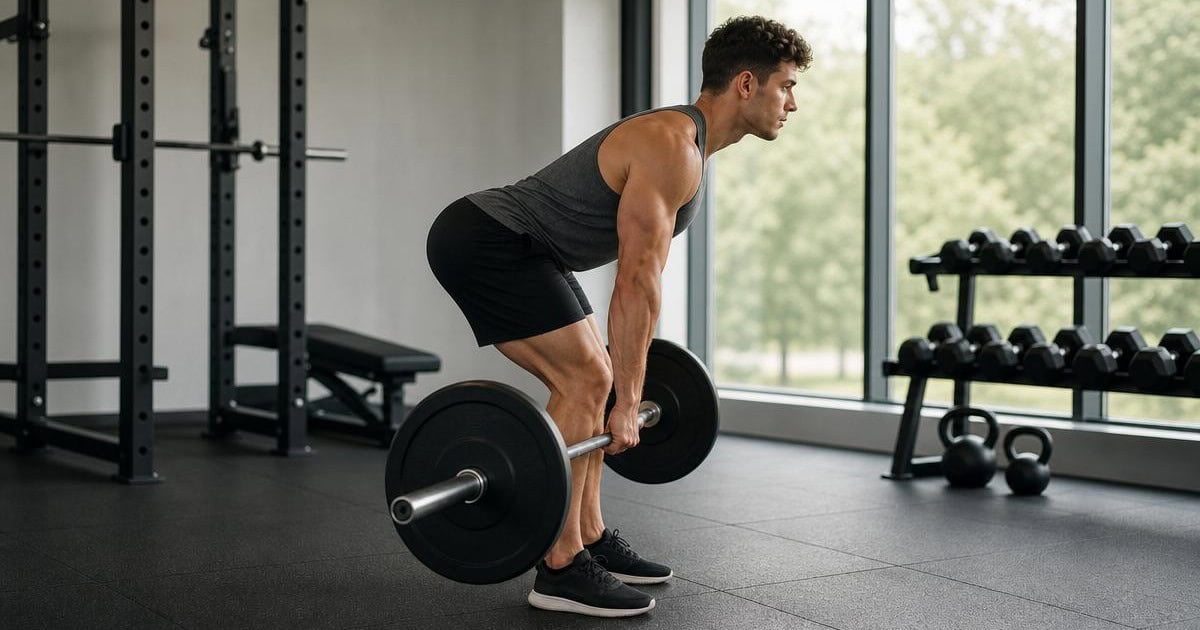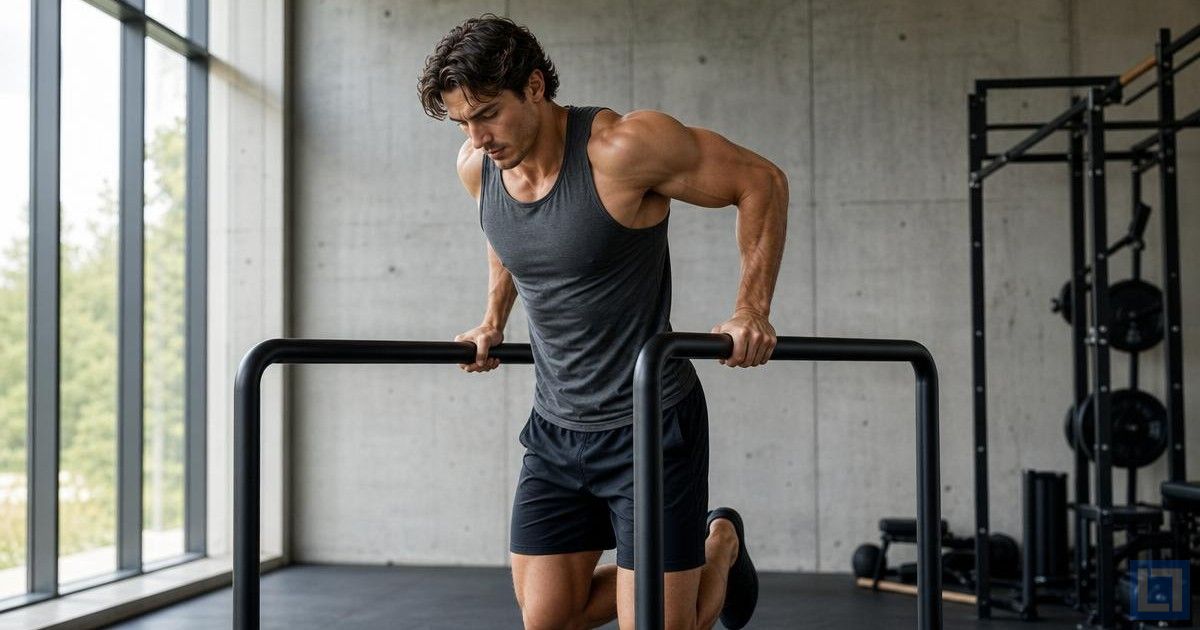
Calisthenics chest training produces real chest development through bodyweight exercises that scale from beginner to advanced through progressive variations. The format works particularly well for chest training because the chest responds to high-volume training with various pressing angles, all of which can be achieved through push-up variations and dips. The combination of standard push-ups (foundational chest), wide push-ups (chest emphasis), close-grip variations (inner chest and triceps), angle variations (decline for upper chest, incline for lower chest), unilateral work (archer push-ups), explosive variations (plyo and clap push-ups), and dips (lower chest) covers every major chest function and produces complete development from every angle.
Below are ten effective calisthenics chest exercises that cover foundational push-ups (push-up, wide-hand, close-grip, diamond), angle variations (decline, incline), advanced unilateral work (archer push-up), explosive power (plyo push-up, clap push-up), and dipping (chest dip). Together they form a complete calisthenics chest training program that fits in any setting from home gym to travel hotel rooms. A 30 to 45-minute session pulled from this list produces strong chest stimulus across every major chest function.
Push Ups

The Push Ups lower the body to within an inch of the floor by bending the elbows, then press back to lockout. The exercise is the foundational calisthenics chest movement and the cornerstone of any productive bodyweight chest program.
For calisthenics chest training, the standard push-up is non-negotiable. The pattern hits the chest, shoulders, and triceps simultaneously through bilateral pressing mechanics. Run them for 4 to 5 sets of 10 to 20 reps as the foundational push exercise in every calisthenics chest session.
Set up in a high plank position with hands shoulder-width apart and body in a straight line from head to heels. Lower the chest to within an inch of the floor by bending the elbows. Press back to lockout. Maintain tight body position throughout; avoid letting the hips sag or pike.
Wide Hand Push Up

The Wide Hand Push Up performs push-ups with hands significantly wider than shoulder-width. The wider grip emphasizes the chest more heavily by reducing tricep involvement.
For calisthenics chest training that biases toward the chest specifically, the wide-hand push-up produces stronger chest stretching at the bottom and reduced tricep loading. Run it for 3 to 4 sets of 10 to 15 reps as chest-focused push work.
Set up in a push-up position with hands wider than shoulder-width (roughly 1.5 times shoulder-width). Lower the chest to the floor by bending the elbows. The wider grip naturally widens the elbow path. Press back to lockout. Keep the body straight throughout.
Close Grip Push Up

The Close Grip Push Up performs push-ups with hands placed close together (roughly shoulder-width or narrower). The narrower grip biases loading toward the inner chest and triceps more heavily than standard push-ups.
For calisthenics chest training that includes inner-chest work, the close-grip push-up produces inner-chest loading along with strong tricep development. The pattern hits the inner chest more directly than wide variations. Run it for 3 to 4 sets of 8 to 12 reps as inner-chest specific work.
Set up in a push-up position with hands placed close together (shoulder-width or narrower). Lower the chest to the floor by bending the elbows; keep the elbows tucked close to the body throughout. Press back to lockout. Keep the body straight.
Diamond Push Up

The Diamond Push Up performs push-ups with hands placed close together so the thumbs and index fingers form a diamond shape. The extreme close-grip position maximizes inner-chest and tricep loading.
For maximum bodyweight inner-chest loading, the diamond push-up is one of the most demanding bodyweight chest exercises that exists. The pattern hits the inner chest with extreme intensity. Run it for 3 sets of 8 to 12 reps as advanced inner-chest work.
Set up in a push-up position with hands placed together so the thumbs and index fingers form a diamond shape directly under the chest. Lower the chest to the diamond by bending the elbows. Press back to lockout. The extreme close-grip position increases tricep and inner-chest loading.
Decline Push Up

The Decline Push Up performs push-ups with the feet elevated on a bench or step, which shifts loading toward the upper chest and front delts. The elevated feet increase the difficulty significantly.
For calisthenics chest training that includes upper-chest work, the decline push-up biases loading toward the upper chest the same way that incline barbell pressing does. The pattern produces strong upper-chest development. Run it for 3 to 4 sets of 8 to 12 reps as upper-chest specific work.
Place the feet on a bench, step, or sturdy elevated surface. Set up in a push-up position with the body angled so the upper body is lower than the feet. Lower the chest to the floor by bending the elbows. Press back to lockout. The body remains straight throughout.
Incline Push Up

The Incline Push Up performs push-ups with the hands elevated on a bench, box, or wall, which reduces the loading and biases work toward the lower chest. The elevated hand position also makes the exercise more accessible for beginners.
For calisthenics chest training that includes lower-chest work, the incline push-up biases loading toward the lower chest while reducing total body weight loading. The reduced demand makes it ideal for beginners or as a higher-rep finisher. Run it for 3 sets of 12 to 20 reps.
Place the hands on a bench, box, or sturdy elevated surface. Set up in a push-up position with the body angled so the upper body is higher than the feet. Lower the chest to the elevated surface by bending the elbows. Press back to lockout. The body remains straight throughout.
Archer Push-up

The Archer Push Up performs push-ups with most of the body weight loaded on one arm at a time, with the other arm extended out to the side for balance. The pattern produces near-unilateral chest loading.
For advanced calisthenics chest training, the archer push-up is one of the most direct unilateral chest exercises that exists. The pattern produces 70 to 80 percent unilateral loading without requiring full one-arm push-up strength. Run it for 3 sets of 6 to 8 reps per side as advanced chest work.
Set up in a wide push-up position with hands significantly wider than shoulder-width. Lower toward one hand by bending that elbow while keeping the other arm relatively straight (acting as a brace). Press back to the start. Lower toward the opposite hand on the next rep. Continue alternating.
Plyo Push Up

The Plyo Push Up performs push-ups with explosive enough force at the top to lift the hands off the floor briefly. The plyometric loading produces strong fast-twitch chest fiber recruitment.
For calisthenics chest training that includes power development, the plyo push-up produces strong explosive chest loading that translates to athletic pressing power. The pattern works as advanced chest training for established practitioners. Run it for 3 sets of 5 to 8 reps as explosive chest work.
Set up in a standard push-up position. Lower the chest to within an inch of the floor by bending the elbows. Press explosively upward with enough force to lift the hands off the floor briefly. Land softly back into the next rep. Continue with controlled but explosive tempo.
Clap Push Up

The Clap Push Up performs an explosive push-up with enough force to lift the hands off the floor and clap them together before landing. The exercise is one of the most demanding bodyweight chest power exercises that exists.
For advanced calisthenics chest power training, the clap push-up requires significant existing chest strength to perform safely. The pattern produces extreme explosive chest loading and impressive athletic display. Run it for 3 sets of 3 to 6 reps with full recovery between sets as advanced chest power work.
Set up in a standard push-up position. Lower the chest to within an inch of the floor by bending the elbows. Press explosively upward with maximum force to lift the hands off the floor. Clap the hands together briefly, then return to the floor and absorb the landing softly. Reset before the next rep.
Chest Dip

The Chest Dip supports the body between two parallel bars and lowers the body by bending the elbows while leaning forward to bias loading toward the chest. The forward lean shifts loading from triceps to chest.
For calisthenics chest training that complements push-up variations, the chest dip is one of the most effective chest-builders that exists. The forward-lean position emphasizes the lower chest specifically. Run it for 3 to 4 sets of 6 to 12 reps as primary calisthenics chest work.
Support the body between parallel bars with arms locked out. Lean forward at the hips so the body angles forward (this biases loading toward the chest). Lower the body by bending the elbows until the upper arms are parallel to the floor. Press back to lockout while maintaining the forward lean.
How To Program These Workouts
A productive calisthenics chest session pulls six to eight exercises from the list above. A balanced session includes one foundational push-up (standard), one chest-biased variation (wide-hand or decline), one inner-chest exercise (close-grip or diamond), one angle variation (incline or decline), one unilateral or advanced exercise (archer push-up), one explosive exercise (plyo or clap push-up), and one dip variation (chest dip). Run standard push-up variations for 3 to 4 sets of 10 to 20 reps; advanced variations for 3 sets of 5 to 8 reps; dips for 3 to 4 sets of 6 to 12 reps.
Train calisthenics chest sessions 2 to 3 times per week. The bodyweight format produces moderate joint stress, which allows higher frequency than barbell-heavy chest training. Most lifters do well with 2 to 3 dedicated chest sessions per week alongside back, leg, and other body part training. The format works particularly well as a daily morning practice for advanced calisthenics practitioners who can manage the recovery demands.
For broader calisthenics programming, see our best calisthenics workouts and best bodyweight chest workouts. For specific push-up technique, see our how to do a push up properly.
Final Thoughts
The best calisthenics chest workouts deliver real chest development through bodyweight training that scales from beginner to advanced through progressive variations. The combination of foundational push-ups, angle variations, unilateral work, explosive exercises, and dips covers every major chest function and produces complete development from every angle. For lifters who want serious chest training without weights, want to supplement weighted training with calisthenics, or need effective chest workouts in any setting, the calisthenics chest format is one of the most effective options available.
Stay focused on full range of motion with chest contact at the bottom. The most common calisthenics chest training mistake is performing partial-range push-ups that stop several inches above the floor, which significantly reduces the actual chest stimulus. The fix: chest to floor (or chest to elevated surface for incline variations) on every rep. Quality reps with full range produce stronger chest development than higher-rep counts with cut-short ranges. The progressive variations work because of strict execution; that execution is what drives the development.
Frequently Asked Questions
Can I build a big chest with calisthenics?
Yes for general chest development. The combination of progressive push-up variations, dips, and consistent training produces real chest development for years of consistent practice. Advanced lifters chasing maximum chest size eventually benefit from heavy bench pressing that allows loads bodyweight cannot match, but consistent calisthenics chest training produces measurable development at every level. Many advanced calisthenics practitioners develop impressive chest size through bodyweight training alone.
How often should I do calisthenics chest workouts?
Two to three times per week works for most lifters. The bodyweight format produces moderate joint stress, which allows higher frequency than barbell-heavy training. Most successful programs include 2 to 3 calisthenics chest sessions per week alongside back, legs, and other body part training. Advanced practitioners often train chest 3 to 4 times per week with appropriate exercise variety.
How do I progress past push-ups?
Most lifters progress through three primary methods: harder variations (push-ups → decline push-ups → archer push-ups → one-arm push-ups), explosive variations (plyo push-up, clap push-up, double-clap push-up), and added load (weighted vest, weight plate on the back, or weighted dips). The combination of all three methods produces sustainable progression for years of consistent training. Most advanced calisthenics practitioners eventually progress to one-arm push-ups and weighted dips.
Are dips or push-ups better for chest?
Different exercises serve different purposes. Push-ups train the chest through horizontal pressing and produce broader chest development per rep. Dips train the chest through vertical pressing with deeper range of motion and produce stronger lower-chest development. Both are required for complete chest development. Most successful calisthenics chest programs include both as foundational exercises.
Why aren’t my push-ups building chest?
The most common reasons push-ups fail to build chest are insufficient volume (under 30 weekly reps), insufficient progressive overload (same rep counts week after week with no variation increase), or partial range of motion (chest not reaching the floor). The fix usually involves increasing weekly volume to 50 to 100+ reps across multiple sessions, progressing to harder variations every 4 to 6 weeks, and ensuring full chest-to-floor range on every rep.