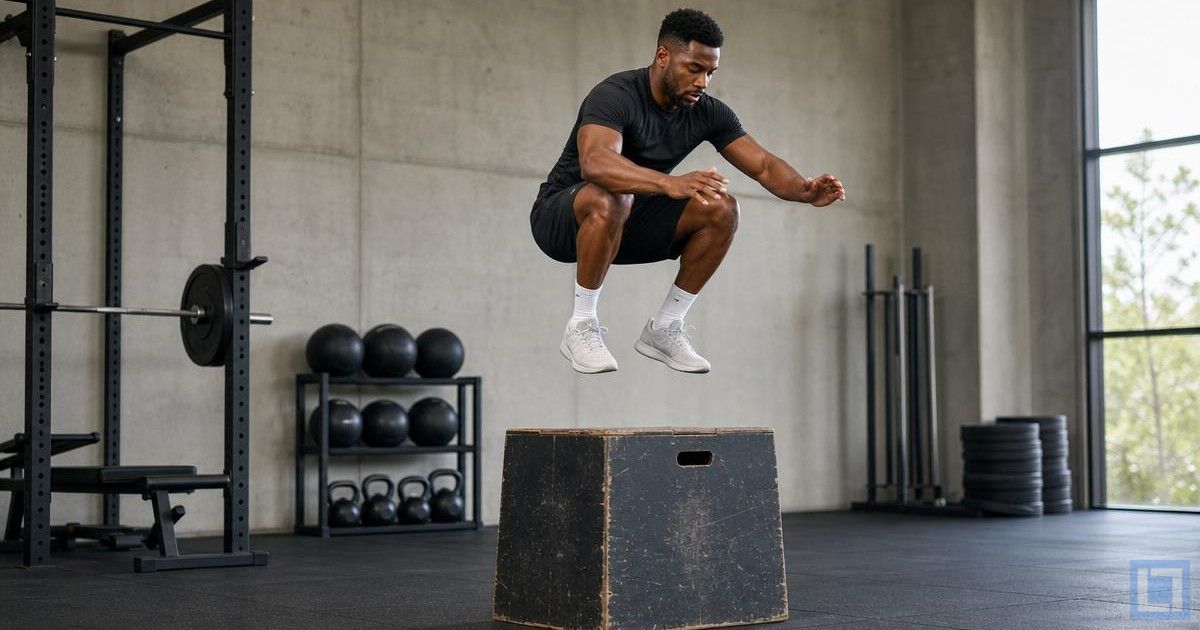
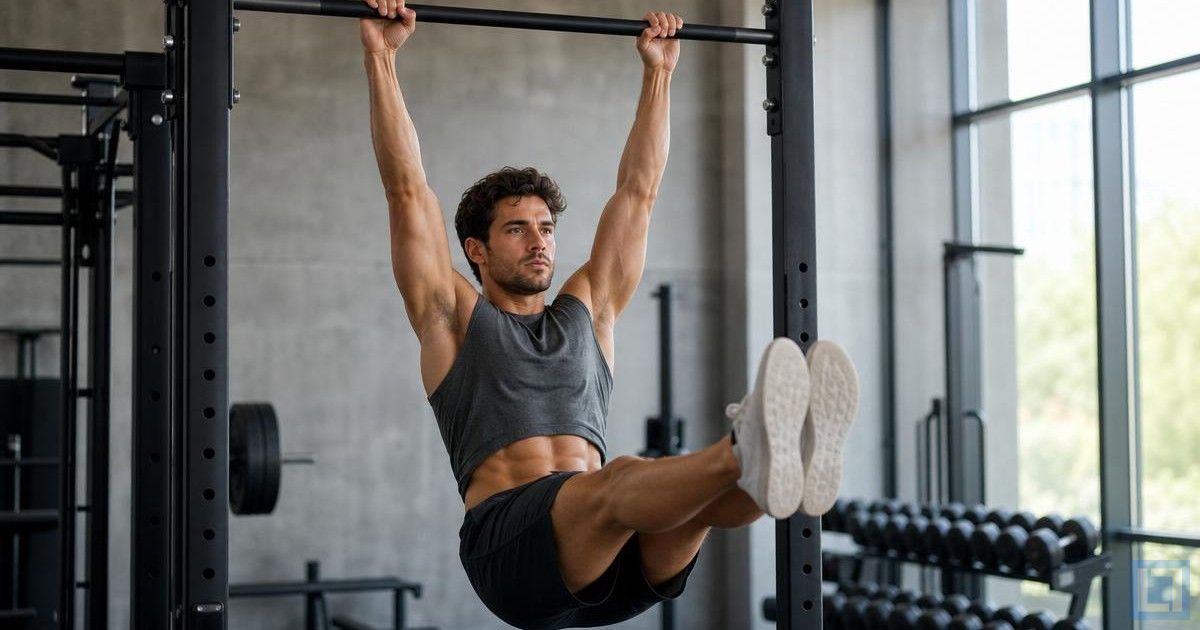
Bodyweight forearm training produces real forearm development and grip strength through patterns that load the forearms effectively without weights: hangboard and dead hang variations for sustained grip endurance, one-handed hangs for extreme unilateral loading, finger push-ups for direct finger and extensor work, climbing-style traversing for dynamic grip transitions, and combined hanging exercises like leg raises and toes-to-bar for grip work integrated with core training. The format works particularly well for forearms because grip and forearm strength is largely an isometric quality (sustained holds under load), which bodyweight hangs deliver more effectively than nearly any other modality, and bodyweight progressions allow continuous difficulty increases through duration, unilateral work, finger reduction, and weighted progressions later. Most lifters who consistently train bodyweight forearm work 1 to 2 times per week alongside compound pulling movements see measurable forearm development, dramatically improved grip strength, better climbing/pulling performance, and reduced grip-limited deadlift weaknesses within 8 to 16 weeks. The combination of dead hangs, finger work, climbing patterns, and combined grip-and-core exercises produces broader forearm and grip development than dumbbell wrist curls alone for many lifters.
Below are ten effective bodyweight forearm exercises that cover grip endurance (handboard hang with 90 degree elbow, handboard hang with 135 degree elbow), unilateral grip work (one-handed hang), direct finger and extensor loading (finger push-up), dynamic grip transitions (climbing monkey bars), advanced hand balance (peacock pose, crane pose), and combined grip-and-core work (hanging toes to bar, hanging leg raise, hanging knees to elbows). Together they form a complete bodyweight forearm program that hits the forearms and grip through every available bodyweight pattern. A 20 to 30-minute session pulled from this list, performed 1 to 2 times per week, produces strong forearm and grip development for climbing, pulling sports, and general strength.
Hangboard Hang with 90 Degree Elbow
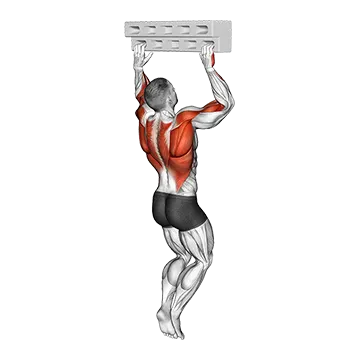
The Hangboard Hang with 90 Degree Elbow holds a bent-arm hang from a hangboard or pull-up bar with the elbows at 90 degrees. The pattern produces strong combined grip, forearm, and isometric upper-body loading.
For bodyweight forearm training, the 90-degree elbow hang is one of the most effective grip and forearm exercises that exists. The pattern hits the forearms through sustained isometric grip work plus the arm flexors. Run it for 3 sets of 20 to 40-second holds as primary grip and forearm work.
Reach up and grip a hangboard or pull-up bar with both hands at shoulder-width. Pull up to position the elbows at 90 degrees (forearms vertical, upper arms parallel to the floor). Hold this position by sustained grip and arm flexor contraction. The forearms work hard to maintain grip on the bar. Build duration progressively from 15 seconds up to 40+ seconds.
Hangboard Hang with 135 Degree Elbow
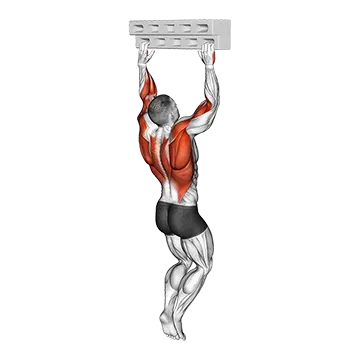
The Hangboard Hang with 135 Degree Elbow holds a slightly-bent-arm hang with the elbows at about 135 degrees. The pattern produces strong combined grip, forearm, and stretched-position upper-body loading.
For bodyweight forearm training, the 135-degree hang produces strong forearm and grip loading through stretched-position hold. The position challenges the forearms differently than 90-degree variations. Run it for 3 sets of 20 to 40-second holds as variation grip work.
Reach up and grip a hangboard or pull-up bar with both hands. Pull up slightly so the elbows form a 135-degree angle (only slightly bent, with most of the arms straight). Hold this position by sustained grip and forearm contraction. The semi-stretched position produces unique forearm loading. Build duration progressively.
One Handed Hang
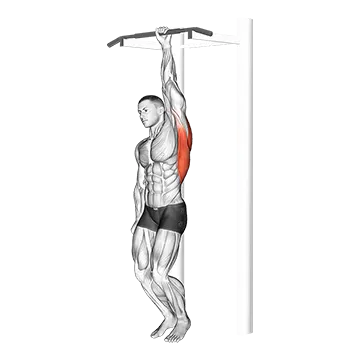
The One Handed Hang holds a dead hang from a pull-up bar using only one hand. The pattern produces extreme unilateral grip and forearm loading.
For bodyweight forearm training, the one-handed hang is one of the most demanding grip and forearm exercises that exists. The pattern produces extreme unilateral grip loading at full bodyweight. Run it for 3 sets of 10 to 30-second holds per arm as advanced unilateral grip work.
Hang from a pull-up bar with one hand using either an overhand or neutral grip. The other hand can hang at the side or grip the wrist of the working arm for slight assistance (for assisted variations). The working forearm and grip support the full bodyweight. Build duration progressively from 5 to 10 seconds (assisted) up to 30+ seconds (unassisted) over months. The exercise is a foundation for one-arm pull-up training.
Finger Push-up

The Finger Push Up performs push-ups balanced on the fingertips rather than the palms. The pattern produces direct finger and forearm extensor loading combined with the pressing work of standard push-ups.
For bodyweight forearm training, the finger push-up is one of the most direct finger flexor and forearm extensor exercises that exists. The pattern hits the forearms and fingers through pressing work on the fingertips. Run it for 3 sets of 5 to 10 reps as advanced finger and forearm work.
Set up in a push-up position but balanced on the fingertips of both hands rather than the palms. Start with all five fingers down for the easiest variation. Lower the body by bending the elbows while maintaining the fingertip support. Drive back up by extending the elbows. Build progressively from kneeling fingertip push-ups (easier) to standard fingertip push-ups (intermediate) to fewer-finger variations (advanced). The pattern produces strong finger and forearm loading.
Climbing Monkey Bars

The Climbing Monkey Bars performs hanging hand-over-hand traversing motion across monkey bars or a pull-up bar setup. The pattern produces dynamic grip, forearm, and combined upper-body loading.
For bodyweight forearm training, monkey bar climbing produces dynamic combined grip, forearm, and upper-body work. The pattern hits the forearms through repeated grip transitions plus dynamic motion. Run it for 3 sets of 30 to 60-second traverses as combined grip and dynamic upper-body work.
Set up under a monkey bar setup, ladder, or series of horizontal pull-up bars. Hang from the first bar with both hands. Reach forward to the next bar with one hand and shift the body weight forward. Continue alternating hands to traverse forward across the bars. The dynamic grip transitions produce strong forearm work plus athletic upper-body coordination. Continue for the working interval.
Peacock Pose Mayurasana

The Peacock Pose Mayurasana holds a balance on the hands with the body horizontal, supported by the elbows pressing into the abdomen. The pattern produces extreme forearm, wrist, and core stability loading.
For bodyweight forearm training, the peacock pose is an elite-level forearm and wrist exercise. The pattern produces extreme forearm extensor loading through the hand balance position. Run it for 3 sets of 10 to 30-second holds as advanced forearm and balance work.
Kneel on the floor and place both hands on the floor with palms down and fingers pointing back toward the body. The hands should be close together (within 6 inches of each other). Lean forward and rest the abdomen on the elbows (the elbows tuck into the abdomen). Carefully extend the legs back and lift the body off the floor, balancing horizontally on the hands with the abdomen supported by the elbows. Hold the position. The pattern produces extreme forearm loading. Build progressively from kneeling balance preparation.
Crane Pose Bakasana

The Crane Pose Bakasana holds a balance on the hands with the knees resting on the upper arms. The pattern produces strong forearm, wrist, and core stability loading.
For bodyweight forearm training, the crane pose produces combined forearm, wrist, and core loading. The pattern is a foundational hand balance exercise. Run it for 3 sets of 10 to 30-second holds as combined forearm and balance work.
Squat down with feet hip-width and place both hands on the floor in front. Lean forward and place the knees on the upper arms (just above the elbows). Slowly shift weight forward onto the hands while lifting the feet off the floor. Balance on the hands with the knees resting on the upper arms and the body in a tucked position. Hold the position. The forearms and wrists work hard to maintain balance. Build progressively over weeks.
Hanging Toes to Bar

The Hanging Toes to Bar performs hanging leg raises bringing the toes all the way up to touch the bar. The pattern produces strong combined hip flexor, abs, and grip/forearm loading.
For bodyweight forearm training, the toes to bar produces combined grip, abs, and hip flexor loading. The hanging position requires strong sustained grip throughout. Run it for 3 sets of 5 to 10 reps as combined grip and abs work.
Hang from a pull-up bar with an overhand grip. Lift the legs up by flexing the hips while keeping them straight (or with slight knee bend for easier variation). Continue lifting until the toes touch the bar above the hands. The grip works hard to maintain bar contact throughout the motion. Lower under control. Maintain strong grip and avoid swinging. The pattern produces combined grip and abs loading.
Hanging Leg Raise

The Hanging Leg Raise performs hanging knee or leg raises from a pull-up bar. The hanging position requires sustained grip throughout, producing combined grip and abs loading.
For bodyweight forearm training, the hanging leg raise produces combined grip, forearm, and abs work. The hanging position requires strong sustained grip. Run it for 3 sets of 8 to 12 reps as combined grip and abs work.
Hang from a pull-up bar with an overhand grip. Lift the legs up by flexing the hips while keeping them straight (or bend the knees for easier variation). Continue lifting until the legs are parallel to the floor (or higher for advanced). The grip works hard to maintain bar contact throughout. Lower under control. Maintain strong grip and avoid swinging. The pattern produces strong combined grip and abs loading.
Hanging Knees to Elbows

The Hanging Knees to Elbows performs hanging leg raises bringing the knees up to touch the elbows. The pattern produces strong combined grip, abs, and hip flexor loading with full range of motion.
For bodyweight forearm training, the knees to elbows produces strong combined grip and abs loading. The pattern requires sustained grip through extreme range of motion. Run it for 3 sets of 6 to 10 reps as combined grip and abs work.
Hang from a pull-up bar with an overhand grip. Lift the knees up by flexing the hips and bending the knees. Continue lifting until the knees touch the elbows at the top. The grip works hard to maintain bar contact during this extreme range of motion. Lower under control. The pattern produces strong combined grip, abs, and hip flexor loading.
How To Program These Workouts
A productive bodyweight forearm session pulls 4 to 6 exercises from the list above based on training goals. A common balanced session: handboard hang with 90 degree elbow (3 sets x 20 to 40 sec), one-handed hang (3 sets x 10 to 20 sec per arm), finger push-up (3 sets x 5 to 10), hanging leg raise (3 sets x 8 to 12), hanging toes to bar (3 sets x 5 to 10). For advanced focus: peacock pose, crane pose, climbing monkey bars, advanced hangboard variations. Run hang work for 3 sets of 20 to 40-second holds, finger work for 3 sets of 5 to 10 reps, hand balance work for 3 sets of 10 to 30-second holds, and combined grip-and-core work for 3 sets of 8 to 15 reps. Total session covers 12 to 18 working sets focused on forearm and grip development.
Train bodyweight forearm work 1 to 2 times per week as part of broader pulling-day, climbing-prep, or grip-strength programming. The forearms are highly fatigue-resistant due to their use in daily activities and compound pulling work, so they recover quickly between sessions. Most successful programs include bodyweight forearm work either: 1) at the end of a back day after compound pulls, 2) on a dedicated grip strength or climbing-prep day, or 3) integrated into warm-ups before pulling sessions. Keep training time under 25 to 30 minutes per session. Climbers often train more frequently (3 to 5 times per week) but with carefully managed volume.
For broader forearm programming, see our best forearm workouts and how to grow your forearms. For specific grip work, see our best grip strength workouts.
Final Thoughts
The best bodyweight forearm workouts deliver real forearm development and grip strength through patterns that effectively load the forearms and grip without weights. The combination of dead hangs, one-handed hangs, finger work, climbing patterns, hand balances, and combined grip-and-core work covers every functional pattern of the forearm and produces broader grip strength development than wrist curls alone for many lifters. For lifters who want measurable grip strength improvements, want to support climbing or pulling sport performance, want to break through deadlift hold strength plateaus, or want to develop forearms and grip without specialized equipment, dedicated bodyweight forearm work is one of the most effective options available.
Stay focused on duration progression and proper grip mechanics. The most common bodyweight forearm training mistakes include rushing through hang holds with poor positioning (which limits grip loading) and skipping progressive duration increases (which limits strength gains). The fix: focus on quality hang positions with active shoulder engagement (avoid hanging passively from the joints), and progressively increase hold duration weekly (start at 15 to 20 seconds and build to 40+ seconds over weeks). Quality holds with proper positioning produce stronger forearm and grip development than rushed work.
Frequently Asked Questions
Are dead hangs effective for forearms?
Yes very effectively. Dead hangs produce strong combined grip and forearm loading through sustained isometric work. The pattern hits the forearms through their primary function (sustained grip under load). Most successful grip strength programs include dead hangs as primary work, typically in 20 to 60-second holds. Variations like 90-degree elbow hangs, one-handed hangs, and finger-grip hangs progressively increase difficulty. Dead hangs are also excellent for shoulder mobility and decompression.
How long should I dead hang?
Build progressively from 15 to 60+ seconds. Beginners typically start at 15 to 20-second holds. Most successful grip programs target 30 to 60-second hangs as a working set. Climbers and grip strength specialists often work up to 90+ second holds with both hands or 30+ second holds with one hand. Build duration weekly by adding 5-second increments as form quality allows. If holds become too easy, progress to harder variations like one-handed hangs or weighted hangs.
Can finger push-ups hurt my fingers?
Possibly if progressed too quickly. Finger push-ups produce significant loading on the finger flexors and tendons. Most successful programs progress gradually: 1) start with kneeling fingertip push-ups for weeks, 2) progress to standard fingertip push-ups, 3) reduce finger contact (4 fingers, then 3, etc.) only after months of training. Skipping progression steps can cause finger or tendon injuries. Stop and reduce difficulty if you feel pain (not just fatigue) in the fingers or wrists.
How often should I train forearms with bodyweight?
One to two sessions per week works for most lifters. The forearms recover quickly between sessions but accumulate fatigue from compound pulling work that activates them substantially. Most successful programs include bodyweight forearm work either at the end of a back day, on a dedicated grip day, or integrated into warm-ups. Climbers often train 3 to 5 times per week with carefully managed volume per session. General lifters benefit from 1 to 2 dedicated forearm sessions plus the indirect work from pulling movements.
Will bodyweight forearm training help my deadlift?
Yes substantially. Many deadlifts are limited by grip strength rather than back or leg strength. Bodyweight forearm training builds the sustained isometric grip strength that deadlifts require. Most successful deadlift programs include grip-specific work (dead hangs, one-handed hangs, farmer carries when available) as part of overall programming. Lifters who add 1 to 2 weekly grip strength sessions typically see deadlift hold capacity improve substantially within 6 to 10 weeks, often translating to 10 to 30+ pound improvements in maximum deadlifts.