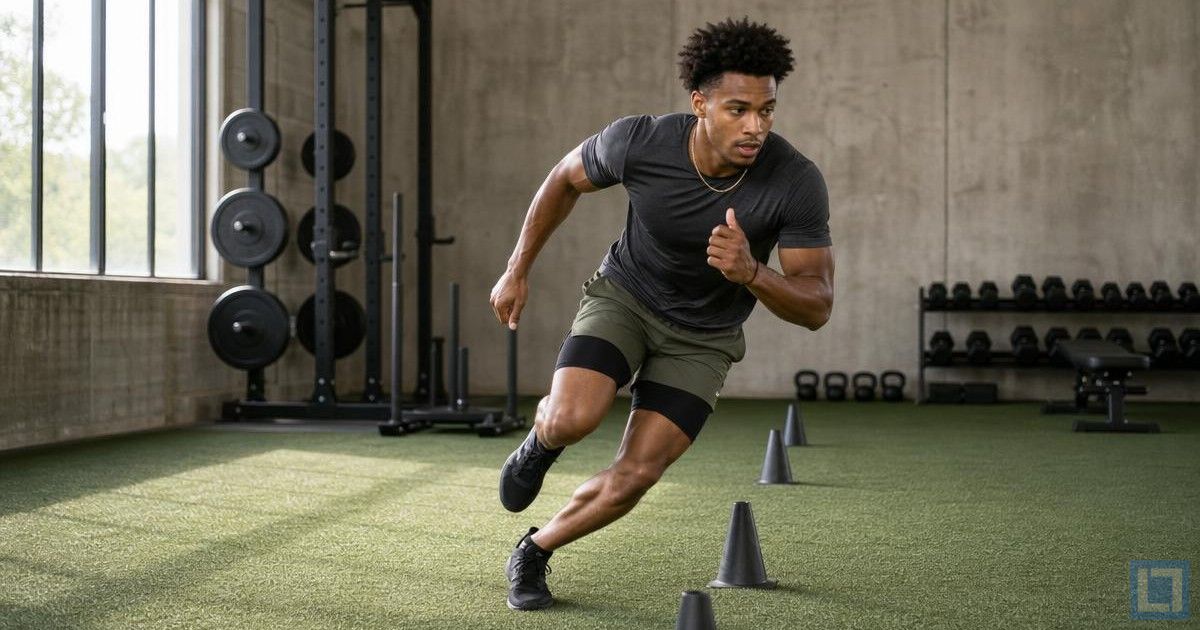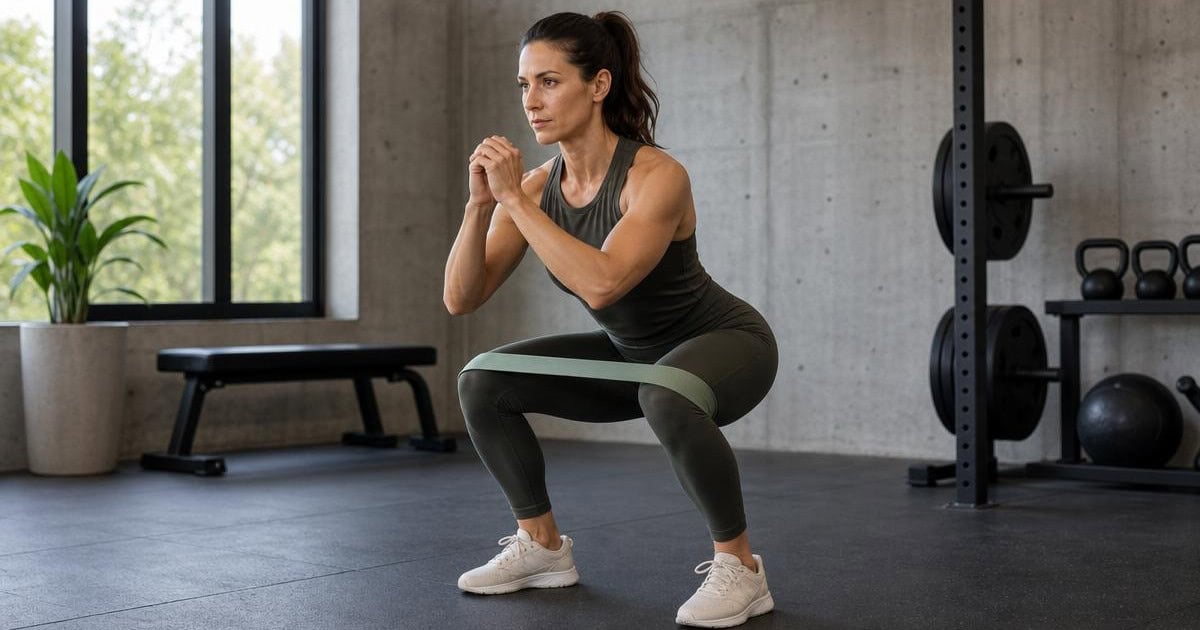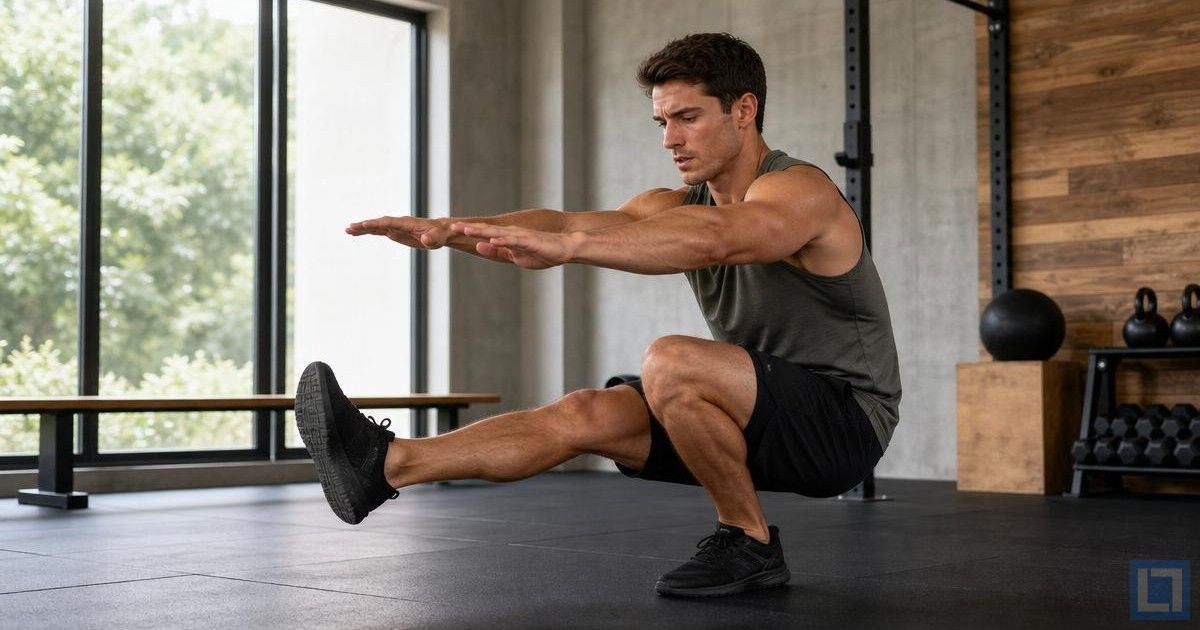
Bodyweight conditioning produces real cardiovascular fitness and muscular endurance development through equipment-free exercises that combine sustained heart rate elevation with moderate muscular loading. The format works particularly well for combined fitness goals because the continuous movement produces strong cardiovascular adaptations while the bodyweight loading builds muscular endurance simultaneously. Most lifters who consistently train bodyweight conditioning 3 to 5 times per week see measurable cardiovascular fitness and muscular endurance improvements within 4 to 6 weeks. The format requires zero equipment investment, fits any setting (home, hotel room, park, beach), and scales naturally based on intensity rather than equipment limits.
Below are ten effective bodyweight conditioning exercises that cover cardiovascular work (bodyweight skipping), glute and hip activation (frog pump, swing), upper-body conditioning (svend press, standing fly, standing row), leg conditioning (pulse squat, overhead squat, bench squat), and combined upper and lower body work (squatting row). Together they form a complete bodyweight conditioning training program. A 25 to 35-minute session pulled from this list produces strong combined cardiovascular and muscular endurance stimulus across every major movement pattern.
Bodyweight Skipping

The Bodyweight Skipping performs imaginary jump rope motion (without an actual rope) by hopping on the balls of the feet while rotating the wrists. The pattern produces strong cardiovascular demand at low joint impact.
For bodyweight conditioning, skipping is one of the most efficient cardio exercises that exists. The pattern produces strong heart rate elevation at relatively low joint impact compared to running or burpees. Run it for 60 to 90-second intervals as foundational conditioning station.
Stand tall with feet hip-width and arms at the sides. Hop on the balls of the feet in small jumps while rotating the wrists in a jump-rope motion. Stay light and bouncy throughout the work interval. Maintain steady tempo at sustainable intensity.
Bodyweight Frog Pump

The Bodyweight Frog Pump lies on the back with the soles of the feet pressed together and knees bent out to the sides, then drives the hips up by contracting the glutes. The frog stance produces strong glute medius and maximus loading.
For bodyweight conditioning, the frog pump is one of the most direct glute activation exercises that exists. The pattern hits the glutes through full hip extension at high reps. Run it for 3 sets of 15 to 25 reps as glute activation work within conditioning circuits.
Lie flat on the back with the soles of the feet pressed together and knees bent out to the sides (frog stance). Drive the hips up by contracting the glutes hard. Squeeze the glutes at the top. Lower under control to the floor. Continue for the work interval.
Bodyweight Svend Press

The Bodyweight Svend Press stands tall and presses the hands together at chest level while extending the arms forward. The pattern produces strong inner-chest activation through pure adduction without external load.
For bodyweight conditioning, the svend press provides upper-body activation work that complements lower-body conditioning stations. The pattern hits the inner chest through pure isometric adduction. Run it for 3 sets of 30 to 45-second intervals as upper-body conditioning station.
Stand tall with feet hip-width. Press the palms together at chest level with elbows bent to the sides. Extend the arms forward while maintaining hand pressure throughout the motion. Return the hands to the chest position. Continue at controlled tempo throughout the interval.
Bodyweight Pulse Squat

The Bodyweight Pulse Squat performs squats with small pulsing motions at the bottom of each rep instead of returning fully to standing. The continuous tension produces extreme quad and glute fatigue per set.
For bodyweight conditioning, the pulse squat is one of the most demanding leg exercises that exists at bodyweight. The continuous tension produces strong cumulative leg fatigue. Run it for 3 sets of 30 to 60-second intervals as primary leg conditioning station.
Stand with feet shoulder-width and toes pointed slightly out. Squat down to a position roughly halfway between standing and full squat depth. Pulse the body up and down in small motions (4 to 6 inches) within the lower half of the squat range. Continue pulsing throughout the work interval.
Bodyweight Overhead Squat

The Bodyweight Overhead Squat performs squats while holding the arms extended straight overhead. The overhead arm position challenges shoulder mobility and core stability throughout the squat motion.
For bodyweight conditioning, the overhead squat produces combined lower-body conditioning with mobility and stability demands. The arm position keeps the upper body engaged throughout the squat motion. Run it for 3 sets of 12 to 15 reps as combined mobility and conditioning work.
Stand with feet shoulder-width and arms extended straight overhead with palms facing each other. Squat down by sitting the hips back while maintaining the overhead arm position. Drive back to standing. Keep the arms locked overhead throughout. Maintain upright torso position.
Bodyweight Standing Fly

The Bodyweight Standing Fly stands tall and performs fly motion by opening and closing the arms in front of the chest. The pattern produces moderate chest activation through repetitive fly motion at high reps.
For bodyweight conditioning, the standing fly provides upper-body activation work between leg-dominant stations. The pattern keeps the chest engaged while allowing the legs brief recovery. Run it for 3 sets of 30 to 45-second intervals as upper-body conditioning station.
Stand tall with feet hip-width. Open the arms out to the sides at chest level with palms facing forward. Bring the arms together in front of the chest in a fly motion. Open back out to the sides. Continue at moderate tempo throughout the work interval.
Bodyweight Standing Row

The Bodyweight Standing Row stands tall and performs rowing motion by pulling the elbows back behind the body. The pattern produces moderate back activation through repetitive rowing motion.
For bodyweight conditioning, the standing row provides upper-body pulling activation between forward-pressing exercises. The pattern keeps the upper back engaged for posture and balance. Run it for 3 sets of 30 to 45-second intervals as upper-body conditioning station.
Stand tall with feet hip-width. Extend the arms forward at chest level. Pull both elbows back behind the body in a rowing motion while squeezing the shoulder blades together. Extend the arms forward to the start position. Continue at moderate tempo throughout the work interval.
Bodyweight Squatting Row

The Bodyweight Squatting Row combines a squat motion with a rowing motion by squatting down and pulling the arms back as the body lowers. The pattern produces combined lower body and upper body conditioning per rep.
For bodyweight conditioning, the squatting row is one of the most efficient combined upper and lower body exercises that exists. The pattern hits multiple muscle groups in single reps. Run it for 3 sets of 12 to 15 reps as combined upper and lower body conditioning work.
Stand tall with feet shoulder-width and arms extended forward at chest level. Squat down by sitting the hips back while simultaneously pulling the elbows back in a rowing motion. Drive back to standing while extending the arms forward. Continue at controlled tempo throughout the interval.
Bodyweight Swing

The Bodyweight Swing mimics a kettlebell swing motion using only bodyweight, hinging at the hips and swinging the arms up to chest level using hip drive. The pattern produces moderate posterior-chain activation alongside cardiovascular demand.
For bodyweight conditioning, the bodyweight swing is foundational hip-hinge conditioning work. The pattern teaches hip-hinge mechanics while producing cardiovascular demand. Run it for 3 sets of 15 to 25 reps as hip-hinge conditioning work.
Stand with feet shoulder-width and arms at the sides. Hinge at the hips while bending the knees slightly. Drive the hips forward explosively while swinging both arms up to chest level. Let the arms swing back down between the legs as the hips hinge. Continue the swinging motion at controlled tempo.
Bodyweight Bench Squat

The Bodyweight Bench Squat performs squats touching the glutes briefly to a bench at the bottom of each rep. The bench provides a depth target that ensures consistent squat depth across reps.
For bodyweight conditioning, the bench squat ensures consistent depth throughout high-rep squat sets. The pattern produces strong leg conditioning at controlled depth. Run it for 3 sets of 15 to 25 reps as controlled-depth leg conditioning work.
Stand in front of a bench or box at knee height with feet shoulder-width. Squat down by sitting the hips back, briefly touching the glutes to the bench at the bottom. Drive back to standing through the whole foot. Continue at controlled tempo throughout the set.
How To Program These Workouts
A productive bodyweight conditioning session pulls 8 to 10 exercises from the list above into a circuit format. A balanced 25-minute circuit: 8 exercises performed for 40 seconds with 20 seconds of rest between, repeated for 3 rounds. Standard exercise order alternates between leg-dominant and upper-body stations: bodyweight skipping (warm-up), pulse squat, standing row, frog pump, svend press, bench squat, standing fly, swing. The alternating pattern allows local muscular recovery between similar exercises while maintaining elevated heart rate throughout the session.
Train bodyweight conditioning sessions 3 to 5 times per week alongside dedicated strength training. The format produces moderate fatigue that recovers within 24 hours, which sustains higher training frequency than heavy strength training. Most successful programs include 3 to 5 weekly conditioning sessions for lifters prioritizing cardiovascular fitness, or 2 to 3 weekly sessions for lifters balancing conditioning with strength training. The format also works well as daily 10 to 15-minute sessions for lifters preferring shorter daily practice over fewer longer sessions.
For broader bodyweight programming, see our best calisthenics workouts and best bodyweight cardio workouts. For HIIT-specific conditioning, see our best bodyweight hiit workouts.
Final Thoughts
The best bodyweight conditioning workouts deliver real cardiovascular fitness and muscular endurance development through equipment-free exercises that combine sustained heart rate elevation with moderate muscular loading. The combination of cardiovascular work, glute activation, upper-body conditioning, leg conditioning, and combined movement patterns covers every major fitness function and produces broader development than single-modality training. For lifters who want combined fitness goals, want training that fits any setting without equipment, or need varied training stimulus alongside traditional strength work, bodyweight conditioning is one of the most versatile options available.
Stay focused on intensity progression over time. The most common bodyweight conditioning mistake is performing the same exercises at the same intensity week after week, which produces fitness maintenance rather than continued improvement. The fix: track interval times and rep counts, then progress intensity (faster tempo, longer intervals, more rounds) every 2 to 4 weeks as current intensities become easier. Quality progressive overload over months produces stronger cardiovascular and muscular endurance development than higher session counts at static intensities.
Frequently Asked Questions
What is bodyweight conditioning?
Bodyweight conditioning is a training format that combines sustained heart rate elevation with moderate muscular loading using only bodyweight exercises. The format produces combined cardiovascular fitness and muscular endurance development through circuit-style training (multiple exercises performed for time intervals with brief rest between). Most successful bodyweight conditioning programs include 6 to 10 exercises performed for 30 to 45 seconds each with 15 to 20 seconds of rest, repeated for 3 to 4 rounds.
How long should bodyweight conditioning workouts be?
Twenty-five to thirty-five minutes per session works for most lifters. The 30-minute format hits the sweet spot between meaningful training stimulus and sustainable recovery. Most successful programs include 25 to 30-minute sessions performed 3 to 5 times per week. Shorter sessions (10 to 15 minutes) work well for daily practice; longer sessions (45+ minutes) typically produce accumulated fatigue without proportional benefit.
How often should I do bodyweight conditioning?
Three to five times per week works for most lifters. The format produces moderate fatigue that recovers within 24 hours, which sustains higher training frequency than heavy strength training. Most successful programs include 3 to 5 weekly conditioning sessions. Daily conditioning works well for lifters preferring shorter daily practice; lifters balancing conditioning with strength training benefit from 2 to 3 weekly sessions.
Bodyweight conditioning vs HIIT?
Different formats with overlapping benefits. HIIT typically uses shorter work intervals (20 to 40 seconds) at maximum intensity with longer rest periods. Bodyweight conditioning uses longer work intervals (30 to 60 seconds) at high but sustainable intensity with shorter rest periods. Most successful programs include both formats: HIIT for maximum calorie burn per minute, and conditioning for combined cardiovascular and muscular endurance development.
Can bodyweight conditioning replace running?
Yes for general fitness and cardiovascular health goals. Bodyweight conditioning produces comparable cardiovascular adaptations to running for most lifters, with the additional benefits of muscular endurance development and varied movement stimulus. Lifters training for running-specific events need to include actual running for sport-specific adaptations. Most general fitness lifters can replace running with bodyweight conditioning entirely without losing cardiovascular fitness benefits.