Fixing golfers elbow (medial epicondylitis – the painful inflammation of the forearm flexor tendons at the medial elbow) requires understanding both the contributing factors (golfers elbow typically develops from chronic strain on the forearm flexor tendons due to repetitive gripping and wrist flexion activities, weak forearm flexors, abnormal forearm mechanics, sudden increases in golf, throwing, or grip-intensive activities, prolonged computer use with mouse, improper technique in sports requiring grip and wrist flexion, repeated bicep curls or rowing with poor form, or simply the cumulative effect of repetitive forearm stress) and the training principles that resolve it: forearm flexor strengthening as the primary intervention (specifically eccentric loading – this is one of the most well-researched interventions for tendinopathy), forearm flexor stretching for tissue mobility, balanced forearm extensor work for complete forearm function, forearm rotational strengthening (supination, pronation) for elbow stability, brachioradialis strengthening for elbow support, gentle forearm mobility, and addressing aggravating activities. Most people with golfers elbow recover within 6 to 12 months with consistent conservative treatment – the condition is highly treatable through dedicated exercise. Critical: persistent or severe golfers elbow warrants medical evaluation – this article addresses general exercise approaches for typical cases.
Below are ten of the most effective exercises for fixing golfers elbow, covering primary forearm flexor strengthening (barbell wrist curl, dumbbell seated palms up wrist curl), forearm extensor work for balance (dumbbell reverse wrist curl), forearm rotational work (weighted seated supination, dumbbell lying pronation), elbow support (dumbbell hammer curl, dumbbell Zottman curl), forearm mobility (dead hang stretch, wrist flexor stretch, wrist extensor stretch). Together they form a complete golfers elbow correction program. A 15 to 25-minute forearm-focused session pulled from this list, performed 1 to 2 times per day initially (high frequency for accelerated correction), produces measurable golfers elbow improvement within 6 to 12 weeks of consistent practice for most cases. Note: start with very light weights for forearm strengthening and progress slowly – aggressive loading can aggravate golfers elbow.
Barbell Wrist Curl

The Barbell Wrist Curl performs barbell wrist curls. The pattern is foundational for golfers elbow correction.
For golfers elbow correction, the barbell wrist curl is foundational. The pattern strengthens the forearm flexors that are typically affected in golfers elbow. Run it for 3 sets of 12 to 15 reps daily as primary forearm flexor work (start with very light weight).
Sit on a bench with the forearms resting on the thighs and the wrists hanging off the knees. Hold a barbell with palms-up grip. Allow the wrists to extend down (forearm flexors stretch). Curl the wrists up by flexing them. The forearm flexors work hard. Squeeze hard at peak. Lower under control. The pattern is foundational for golfers elbow correction – golfers elbow involves chronic strain on the forearm flexor tendons at the medial elbow, and wrist curls produce the eccentric loading that supports tendon healing. Daily wrist curl practice with very light weights is one of the most effective interventions for golfers elbow.
Dumbbell Seated Palms Up Wrist Curl

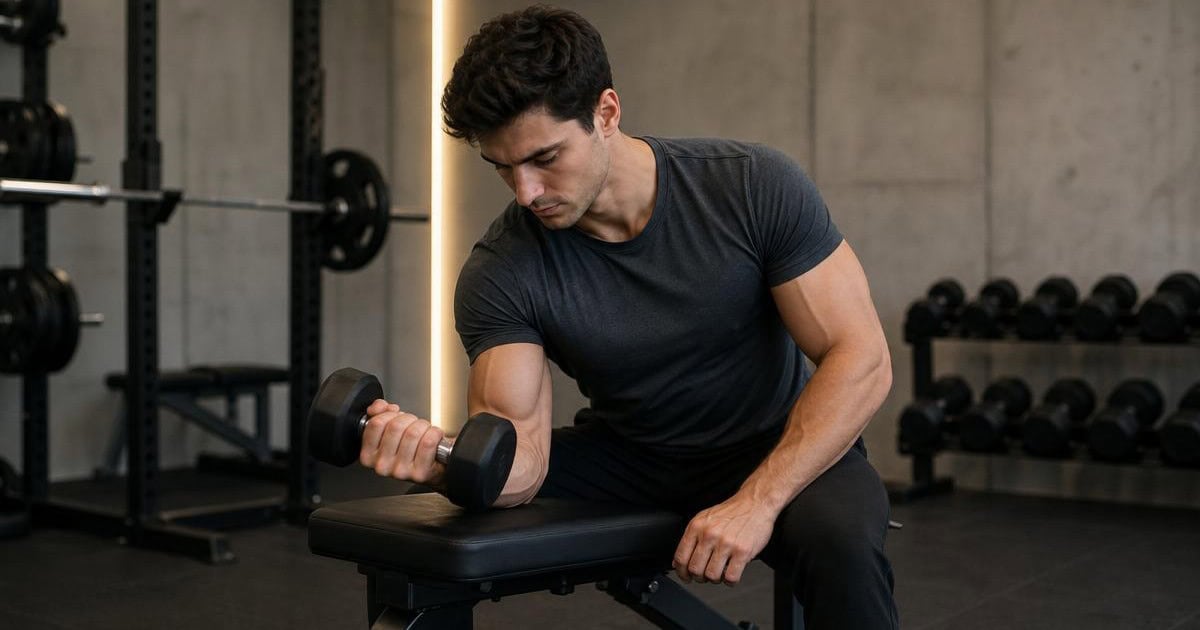
The Dumbbell Seated Palms Up Wrist Curl performs unilateral wrist curls. The pattern produces isolated forearm flexor work.
For golfers elbow correction, the dumbbell seated palms up wrist curl produces isolated forearm flexor work. Run it for 3 sets of 12 to 15 reps per side as forearm flexor variation work.
Sit on a bench with the forearm resting on the thigh and the wrist hanging off the knee. Hold a dumbbell with palm-up grip. Allow the wrist to extend down (forearm flexor stretches). Curl the wrist up by flexing it. The forearm flexor works hard. Squeeze hard at peak. Lower under control. The pattern produces direct unilateral forearm flexor loading – critical for golfers elbow correction because dumbbells allow each side to work independently, eliminating compensation patterns. Excellent variation alongside barbell wrist curls for balanced forearm development.
Dumbbell Reverse Wrist Curl

The Dumbbell Reverse Wrist Curl performs reverse wrist curls. The pattern produces forearm extensor work for balance.
For golfers elbow correction, the reverse wrist curl produces forearm extensor strengthening for balanced forearm function. Run it for 3 sets of 12 to 15 reps as balanced forearm work.
Sit on a bench with the forearm resting on the thigh and the wrist hanging off the knee. Hold a dumbbell with palm-down grip. Allow the wrist to flex down (forearm extensor stretches). Curl the wrist up by extending it. The forearm extensor works hard. Squeeze hard at peak. Lower under control. The pattern produces forearm extensor strengthening – while the forearm flexors are the focus of golfers elbow correction, balanced forearm strength (both flexors and extensors) supports healthy elbow function. Combined with wrist curls, reverse wrist curls produce balanced forearm development.
Wrist Flexor Stretch
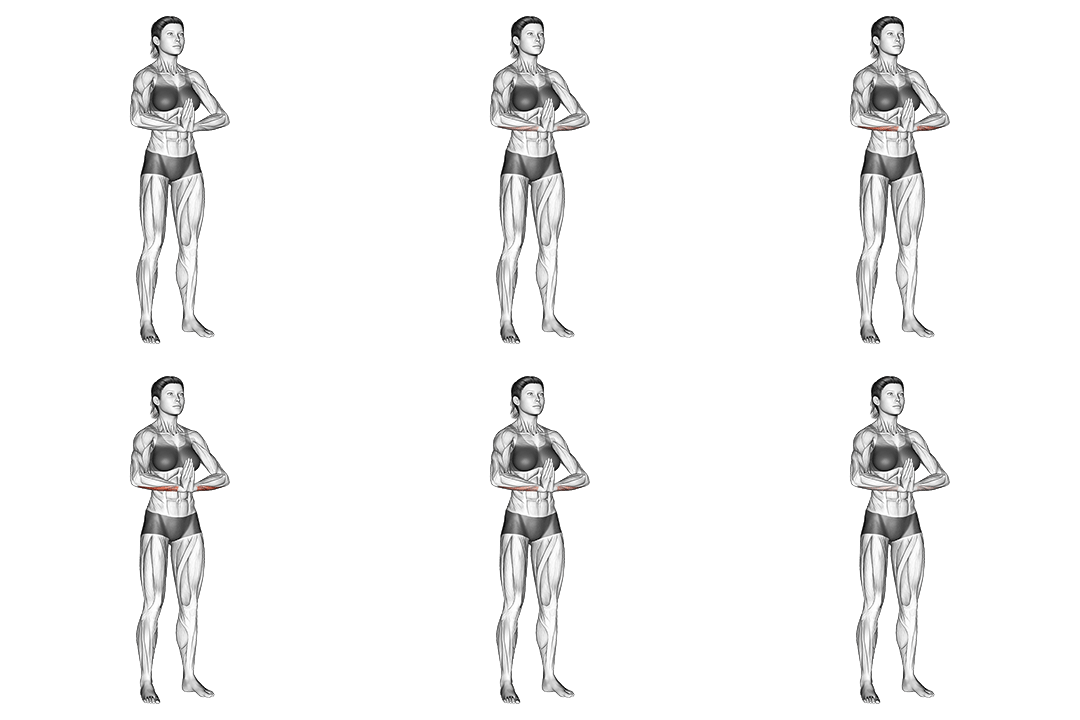
The Wrist Flexor Stretch performs wrist flexor stretching. The pattern produces direct forearm flexor stretching.
For golfers elbow correction, the wrist flexor stretch addresses the chronic tightness in the affected forearm flexors. Run it for 3 sets of 30 to 60-second holds, multiple times daily.
Extend one arm forward with palm facing up. Use the other hand to gently pull the fingers back toward the body, creating stretch through the front of the forearm and inner elbow. Hold for 30 to 60 seconds. Switch sides. The pattern produces direct forearm flexor stretching – addresses the chronic tightness in the forearm flexor muscles and tendons that contribute to golfers elbow. Daily flexor stretching is one of the most effective interventions for golfers elbow correction. Combined with strengthening, stretching addresses both the tightness and weakness common in the condition.
Wrist Extensor Stretch
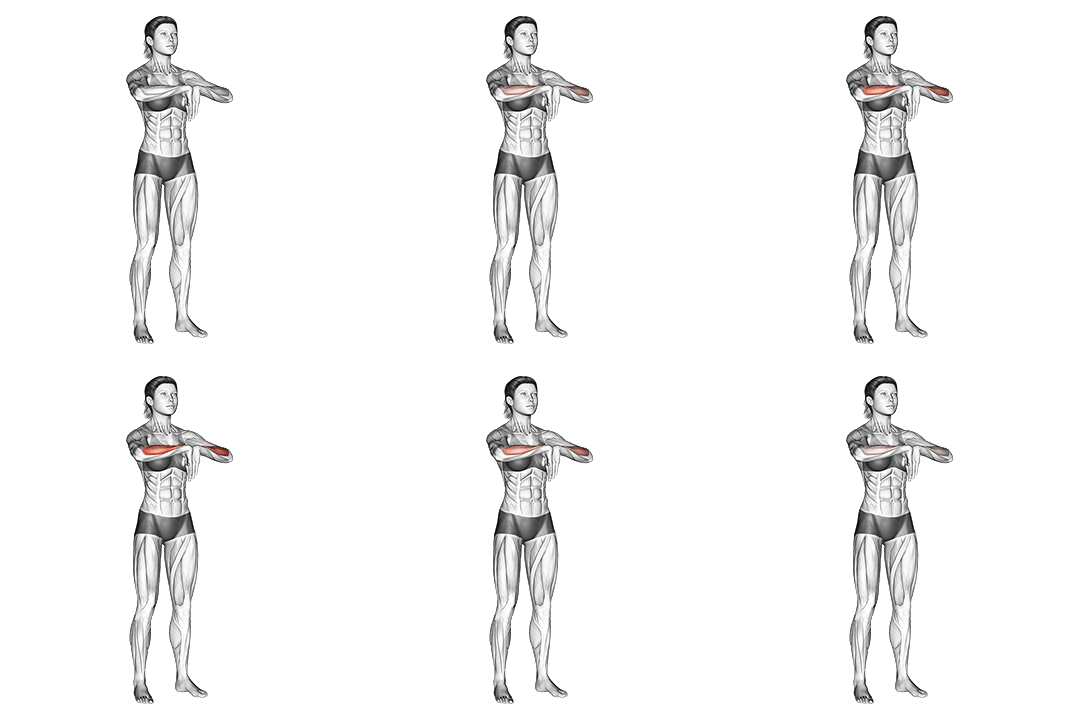
The Wrist Extensor Stretch performs wrist extensor stretching. The pattern produces forearm extensor stretching for balance.
For golfers elbow correction, the wrist extensor stretch produces forearm extensor stretching for balanced mobility. Run it for 2 sets of 30 to 60-second holds, daily.
Extend one arm forward with palm facing down. Use the other hand to gently pull the fingers back toward the body, creating stretch through the back of the forearm. Hold for 30 to 60 seconds. Switch sides. The pattern produces direct forearm extensor stretching – while flexor stretching is more important for golfers elbow correction, extensor stretching maintains balanced forearm mobility. Combined with flexor stretching, this addresses complete forearm mobility for healthy elbow function.
Dumbbell Hammer Curl

The Dumbbell Hammer Curl performs hammer curls. The pattern strengthens forearm and bicep alongside elbow support.
For golfers elbow correction, the hammer curl strengthens the brachioradialis and biceps that support the elbow. Run it for 3 sets of 10 to 12 reps as elbow support work.
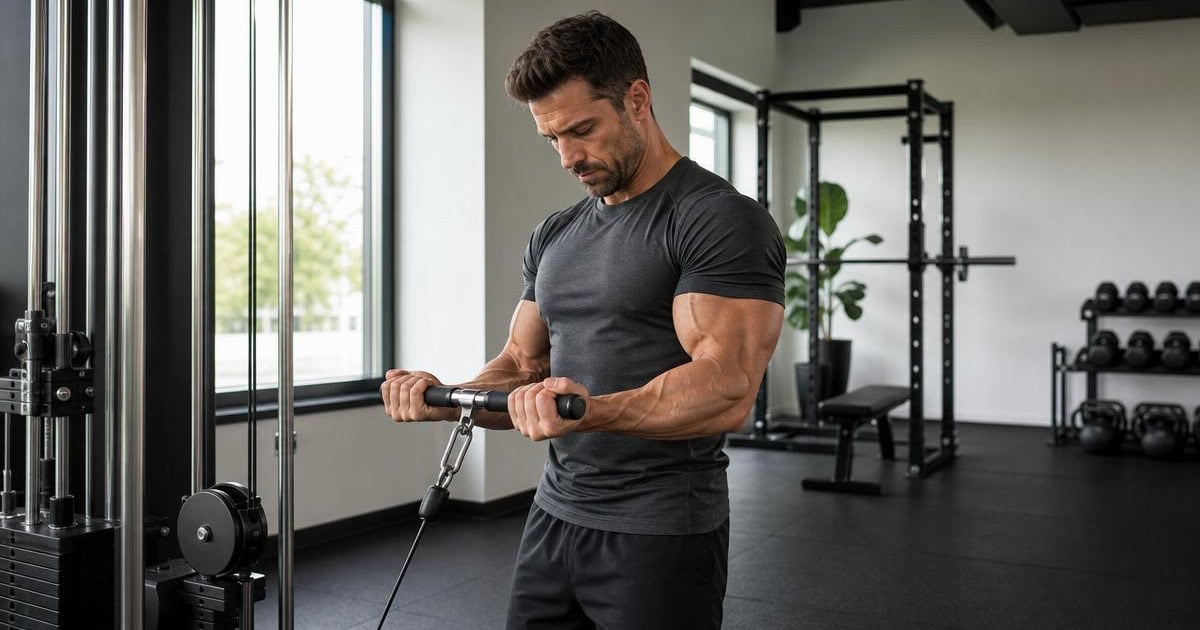
Stand with feet hip-width holding dumbbells at the sides with palms facing the body (neutral grip). Curl the dumbbells up to the shoulders by flexing at the elbows while keeping the upper arms stationary. The brachioradialis (forearm) and biceps work hard. Lower under control. The pattern strengthens the brachioradialis – the forearm muscle that contributes substantially to elbow function and golfers elbow recovery. Combined with wrist curls and rotational work, hammer curls support comprehensive forearm and elbow strengthening.
Dead Hang Stretch

The Dead Hang Stretch performs dead hangs from a pull-up bar. The pattern produces forearm decompression and stretch.
For golfers elbow correction, dead hangs produce gentle forearm decompression and stretch. Run it for 3 sets of 30 to 45-second hangs as supporting mobility work.
Hang from a pull-up bar with hands shoulder-width apart and a passive dead hang position (relaxed shoulders). Hold the position for the working interval. The forearms stretch gently and the shoulders decompress. The pattern produces gentle forearm and shoulder decompression – excellent supporting work for golfers elbow correction. Provides gentle stretch to the forearm tendons without aggressive loading. Caution: stop if dead hangs aggravate golfers elbow symptoms – some individuals find them helpful while others need to avoid them initially.
Dumbbell Zottman Curl

The Dumbbell Zottman Curl performs Zottman curls. The pattern combines bicep and forearm work for elbow support.
For golfers elbow correction, the Zottman curl combines bicep and forearm work. Run it for 3 sets of 8 to 10 reps as combined elbow work.
Stand with feet hip-width holding dumbbells at the sides with palms facing forward. Curl the dumbbells up to the shoulders (standard bicep curl). At the top, rotate the wrists so palms face down. Lower the dumbbells with palms down (eccentric forearm extensor work). At the bottom, rotate back to standard grip. The pattern combines bicep curling with forearm rotation – the rotational element trains the forearm rotators while the bicep work supports overall elbow function. Excellent combined exercise for golfers elbow correction.
Weighted Seated Supination

The Weighted Seated Supination performs forearm supination work. The pattern produces direct forearm rotational strengthening.
For golfers elbow correction, the weighted supination produces direct forearm rotational strengthening. Run it for 3 sets of 10 to 12 reps as supination work.
Sit with the forearm resting on the thigh holding a weight (dumbbell or hammer-style weight) with palm-down grip. Slowly rotate the forearm to bring the palm up (supination). The forearm rotator muscles work hard. Slowly rotate back to start. The pattern produces direct supination strengthening – critical for golfers elbow correction because forearm rotational weakness contributes to golfers elbow, and dedicated supination training addresses this weakness while supporting healthy elbow function.
Dumbbell Lying Pronation

The Dumbbell Lying Pronation performs forearm pronation work. The pattern produces forearm rotational strengthening.
For golfers elbow correction, the lying pronation produces direct forearm rotational strengthening through pronation. Run it for 3 sets of 10 to 12 reps as pronation work.
Lie face-down on a bench with the forearm extending off the side. Hold a dumbbell or hammer-style weight with palm-up grip. Slowly rotate the forearm to bring the palm down (pronation). The forearm rotator muscles work hard. Slowly rotate back to start. The pattern produces direct pronation strengthening – critical for golfers elbow correction because balanced forearm rotational strength (both pronation and supination) supports healthy elbow function. Combined with supination work, pronation training balances forearm rotational capacity.
How To Program These Workouts
A productive golfers elbow session pulls 5 to 7 exercises from the list above. A common balanced session: barbell wrist curl (primary flexor strengthening with very light weight), wrist flexor stretch (mobility), weighted seated supination (rotational), dumbbell lying pronation (rotational), dumbbell hammer curl (elbow support), dumbbell reverse wrist curl (balanced forearm). For acute pain phase: emphasize gentle stretching (wrist flexor stretch, wrist extensor stretch) and very light wrist curls. For correction phase: include strengthening (wrist curls progressing in weight, rotational work, hammer curls, Zottman curls) alongside continued stretching. Run flexor strengthening for 3 sets of 12 to 15 reps with very light weights initially (1 to 5 lbs), stretching for 3 sets of 30 to 60-second holds, rotational work for 3 sets of 10 to 12 reps, support work for 3 sets of 10 to 12 reps. Multiple daily sessions accelerate correction.
Train golfers elbow correction with high frequency and progressive loading for accelerated improvement. The condition responds best to high-frequency intervention with gradual progression. Most successful golfers elbow programs include: 1) daily flexor stretching (multiple times daily) to address acute tightness, 2) daily light wrist curls (very light weight initially – 1 to 5 lbs – progressing slowly over weeks), 3) rotational forearm work 3 to 4 times per week, 4) avoiding aggravating activities (heavy gripping, repeated wrist flexion in sports, excessive bicep curling with poor form), 5) gradual return to full activity as symptoms resolve. Most cases improve within 6 to 12 weeks of consistent multiple-daily-session practice. Critical: progress weights very gradually – aggressive loading aggravates golfers elbow. Severe or persistent cases warrant medical evaluation.
For broader programming, see our how to fix tennis elbow and how to improve wrist mobility. For specific work, see our best forearm flexor exercises.
Final Thoughts
Fixing golfers elbow requires applying the right intervention principles consistently over time: forearm flexor strengthening (especially eccentric loading) as the primary intervention, forearm flexor stretching for tissue mobility, balanced forearm extensor work for complete forearm function, forearm rotational strengthening for elbow stability, brachioradialis strengthening for elbow support, gentle forearm mobility, and addressing aggravating activities. The combination of wrist curls, supination work, pronation work, hammer curls, Zottman curls, dead hangs, wrist flexor stretches, reverse wrist curls, and wrist extensor stretches covers every functional pattern needed for golfers elbow correction and produces broader forearm and elbow function improvement than rest-only approaches. Most individuals who consistently apply these principles see measurable golfers elbow improvement within 6 to 12 weeks – including reduced elbow pain, better forearm function, less symptoms during daily activity, and the integrated forearm health that supports daily activity and athletic performance. For anyone with golfers elbow, dedicated exercise-based correction is one of the most effective conservative interventions available. Persistent or severe cases warrant medical evaluation.
Stay focused on light wrist curls with gradual progression as the priority intervention for golfers elbow. The most common mistake people make in golfers elbow correction is either avoiding the affected area entirely (delays healing) or progressing weights too aggressively (aggravates symptoms). The fix: 1) start with very light wrist curls (1 to 5 lbs only) daily, 2) progress weights very slowly over weeks (typically progressing 1 to 2 lbs per week as symptoms allow), 3) prioritize quality eccentric loading over heavy weight, 4) include flexor stretching multiple times daily for tissue mobility, 5) avoid aggravating activities while healing. Combined with patience and consistent gradual progression, light wrist curls produce the golfers elbow correction that aggressive loading or rest alone never achieves. The forearm flexor tendons heal slowly and respond best to gradual progressive loading.
Frequently Asked Questions
How do I fix golfers elbow fast?
Light wrist curls daily plus flexor stretching plus avoiding aggravating activities. Light wrist curls (1 to 5 lbs initially) provide the eccentric loading critical for forearm flexor tendon healing. Wrist flexor stretches multiple times daily address acute tightness. Avoiding aggravating activities (heavy gripping, repeated wrist flexion in sports) prevents continued strain. Combined with rotational forearm work, hammer curls, and balanced forearm strengthening, this comprehensive approach produces accelerated correction. Most cases improve within 6 to 12 weeks of consistent practice. Critical: progress weights very gradually.
What causes golfers elbow?
Repetitive forearm flexor strain. Golfers elbow typically develops from: 1) repetitive gripping and wrist flexion activities, 2) weak forearm flexors, 3) abnormal forearm mechanics, 4) sudden increases in golf, throwing, or grip-intensive activities, 5) prolonged computer mouse use, 6) improper technique in sports requiring grip and wrist flexion, 7) repeated bicep curls or rowing with poor form, 8) cumulative repetitive forearm stress. Most cases involve multiple factors. The fix combines forearm flexor strengthening, stretching, rotational work, and addressing aggravating factors for complete correction.
How long does golfers elbow take to heal?
6 to 12 weeks for measurable improvement, 6 to 12 months for full resolution. Most people who consistently apply forearm flexor strengthening (light weights with gradual progression) plus stretching plus avoiding aggravating activities see measurable improvement within 6 to 12 weeks. Full resolution typically takes 6 to 12 months for most cases. Severe or persistent cases (those not improving with conservative treatment after 6 months) warrant medical evaluation. Golfers elbow is highly treatable through consistent conservative intervention with patient progressive loading.
Should I rest with golfers elbow?
Active rehabilitation with avoidance of aggravating activities works better than complete rest. Complete rest doesn’t address the underlying causes of golfers elbow (forearm flexor weakness, tightness). Active rehabilitation through light progressive loading (wrist curls), stretching, and supporting work addresses these underlying causes and produces faster correction. The fix: avoid specific aggravating activities (heavy gripping, repeated wrist flexion) while doing dedicated rehabilitation exercises (light wrist curls, stretches, supporting work) daily. Active rehabilitation produces faster correction than rest alone.
What’s the best exercise for golfers elbow?
Light wrist curls with gradual progression. Light wrist curls (1 to 5 lbs initially) provide the eccentric forearm flexor loading critical for tendon healing – the most well-researched intervention for golfers elbow. Combined with wrist flexor stretches (mobility), supination/pronation work (rotational stability), hammer curls (elbow support), Zottman curls (combined work), and balanced forearm work (reverse wrist curls), wrist curls form the foundation of golfers elbow correction. Critical: start very light and progress slowly – aggressive loading aggravates the condition.