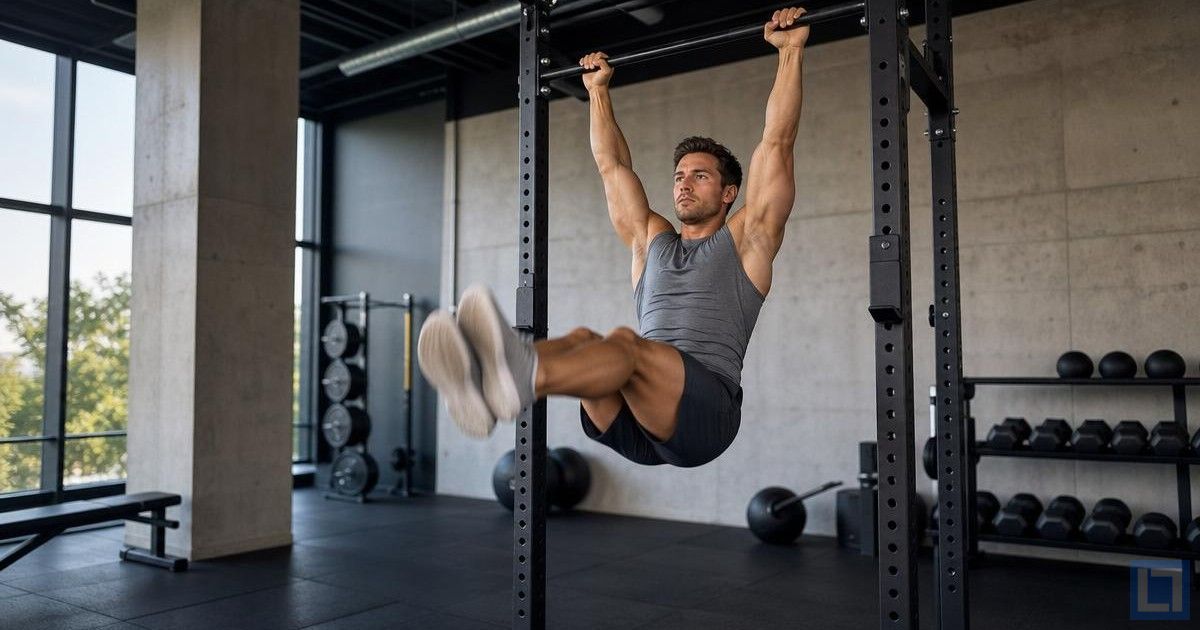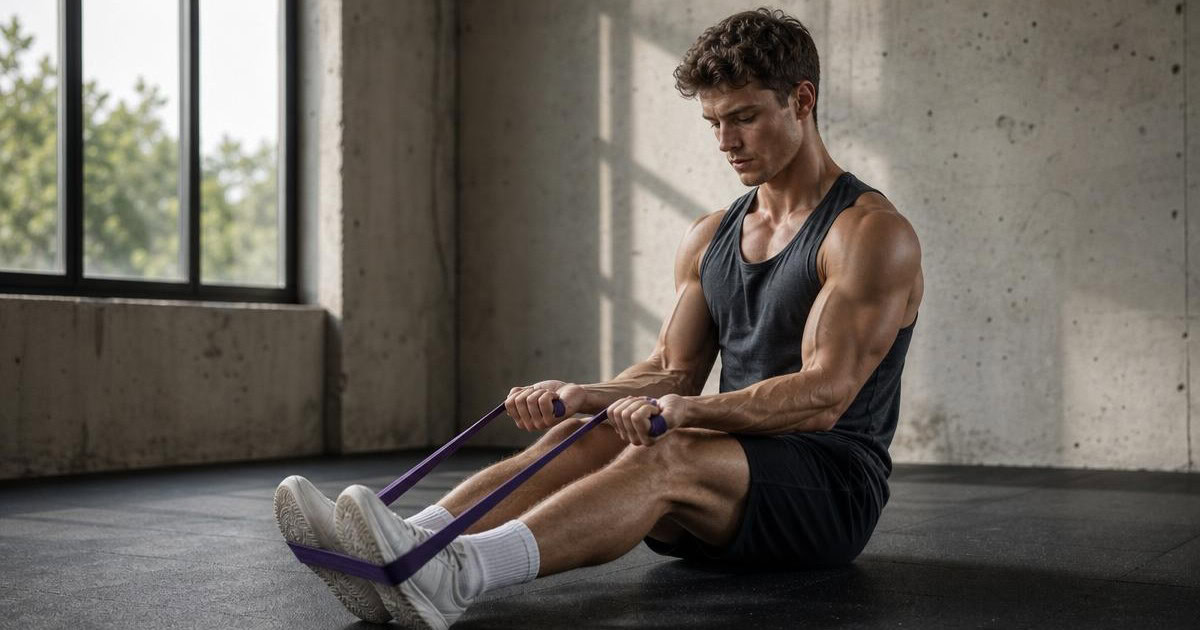
Resistance band forearm training produces real forearm development and grip strength through patterns that load the forearms with the unique advantages bands offer: progressive tension that increases through the concentric phase for strong peak contraction loading, accessible wrist curl and reverse wrist curl variations for direct forearm flexor and extensor work, hammer curl and reverse curl variations for brachialis and brachioradialis development, and compound patterns like band resisted chin-ups for extreme combined grip and forearm work. The format works particularly well for forearms because grip and forearm strength responds well to the band’s progressive tension throughout the range, and bands deliver dedicated loading for forearm flexors (wrist curls), forearm extensors (reverse wrist curls), brachialis (hammer curls), and brachioradialis (reverse curls). Most lifters who consistently train resistance band forearm work 1 to 2 times per week alongside compound pulling movements (or even alone for home-only training) see measurable forearm development, improved grip strength, better deadlift hold capacity, and reduced grip-limited weaknesses within 8 to 12 weeks. The combination of wrist curls, hammer curls, reverse curls, and compound work produces broader forearm development than equipment-limited training would suggest.
Below are ten effective resistance band forearm exercises that cover wrist curl variations (band wrist curl, band reverse wrist curl), hammer curl patterns (band hammer curl, band standing hammer curl, resistance band hammer curl), reverse curl work (band reverse curl), seated arm work (resistance band seated biceps curl, band 45 degrees biceps curl, band close grip biceps curl), and advanced compound grip work (band resisted chin up). Together they form a complete band forearm program. A 25 to 35-minute session pulled from this list, performed 1 to 2 times per week, produces strong forearm and grip development for home or travel-friendly training without requiring weights or specialized grip equipment.
Band Wrist Curl

The Band Wrist Curl performs wrist curls with a resistance band held palms-up. The band’s progressive tension produces strong forearm flexor loading through controlled wrist flexion.
For resistance band forearm training, the band wrist curl is the foundational forearm flexor exercise. The band tension increases through flexion. Run it for 4 sets of 12 to 15 reps as primary forearm flexor work in any band forearm session.
Stand on a resistance band with both feet (or anchor it low). Sit on a bench with the forearms resting on the thighs and palms facing up. Grip the band ends with both hands. The wrists hang slightly off the knees. Lower the hands by allowing the wrists to extend down. Curl the hands up by flexing the wrists upward as far as possible. Squeeze the forearm flexors hard at the top. Lower under control. The band tension produces continuous forearm work.
Band Reverse Wrist Curl

The Band Reverse Wrist Curl performs wrist curls with a palms-down (reverse) grip on a resistance band. The reverse grip emphasizes the forearm extensors (back of forearm).
For resistance band forearm training, the reverse wrist curl is the foundational forearm extensor exercise. The pattern hits the often-undertrained extensors. Run it for 3 to 4 sets of 12 to 15 reps as primary forearm extensor work.
Stand on a band or anchor it low. Sit on a bench with the forearms resting on the thighs and palms facing down. Grip the band ends with both hands. The wrists hang slightly off the knees. Lower the hands by allowing the wrists to flex down. Curl the hands up by extending the wrists upward as far as possible. Squeeze the forearm extensors hard at the top. Lower under control. The pattern balances the typically-strong flexors with often-undertrained extensors.
Band Hammer Curl

The Band Hammer Curl performs hammer curls (neutral grip with palms facing each other) with a resistance band. The neutral grip emphasizes the brachialis and brachioradialis (forearm muscles).
For resistance band forearm training, the hammer curl produces combined brachialis and brachioradialis work. The pattern hits the muscles between bicep and forearm. Run it for 3 sets of 10 to 12 reps as combined forearm and arm mass work.
Stand on a resistance band with both feet. Grip the band ends with both hands using a neutral grip (palms facing each other, like holding hammers). Curl the bands up by flexing the elbows while maintaining the neutral grip throughout. Squeeze hard at the top. Lower under control. The neutral grip produces strong brachialis and brachioradialis loading – the muscles that contribute to forearm and arm thickness.
Band Standing Hammer Curl

The Band Standing Hammer Curl performs standing hammer curls with a resistance band anchored low. The pattern produces strong combined forearm and arm loading from a standing position.
For resistance band forearm training, the standing hammer curl produces strong forearm work with band tension. The standing position requires more body control. Run it for 3 sets of 10 to 12 reps as standing forearm and arm work.
Stand with feet hip-width on a resistance band or anchor it low. Grip the band ends with neutral grip (palms facing each other). The arms start extended at the sides. Curl the bands up by flexing the elbows while maintaining neutral grip. Keep the upper arms relatively still and elbows pinned to the sides. Squeeze hard at the top. Lower under control. The pattern produces strong combined brachialis and forearm work.
Band Reverse Curl

The Band Reverse Curl performs bicep curls with a reverse (palms-down) grip on a resistance band. The reverse grip emphasizes the brachioradialis and forearm extensors.
For resistance band forearm training, the reverse curl produces strong brachioradialis work. The reverse grip emphasizes the forearm muscles strongly. Run it for 3 sets of 10 to 12 reps as forearm extensor and brachioradialis work.
Stand on a resistance band. Grip the band ends with both hands using a reverse (palms-down) grip. The arms start extended. Curl the bands up by flexing the elbows while maintaining the reverse grip. Squeeze hard at the top. Lower under control. The reverse grip produces strong brachioradialis and forearm extensor loading. Use lighter resistance than standard curls because the reverse grip is mechanically less efficient.
Resistance Band Hammer Curl

The Resistance Band Hammer Curl performs hammer curls with a resistance band, similar to the band hammer curl but with anchor variation. The pattern produces consistent combined forearm and arm loading.
For resistance band forearm training, the resistance band hammer curl produces variation forearm work. The neutral grip continues to emphasize brachialis. Run it for 3 sets of 10 to 12 reps as variation forearm work.
Anchor a resistance band low (under the foot or to a low anchor point). Grip the band end with both hands using a neutral grip (palms facing each other). Stand with feet hip-width and arms extended. Curl the band up by flexing the elbows while maintaining neutral grip. Squeeze hard at the top. Lower under control. The pattern continues to emphasize brachialis through neutral grip with continuous band tension.
Resistance Band Seated Biceps Curl

The Resistance Band Seated Biceps Curl performs bicep curls seated with a resistance band. The seated position eliminates lower-body compensation and isolates the bicep and forearm work.
For resistance band forearm training, the seated biceps curl produces clean combined arm and forearm work. The seated position eliminates compensation. Run it for 3 sets of 10 to 12 reps as combined arm and forearm work.
Sit on a bench with feet planted on a resistance band. Grip the band ends with both hands using palms-up grip. The arms hang at the sides with elbows pinned to the body. Curl the bands up by flexing the elbows. The forearms work to grip the bands while the biceps perform the curl. Squeeze hard at the top. Lower under control. The seated position produces clean concentrated work.
Band 45 Degrees Biceps Curl

The Band 45 Degrees Biceps Curl performs bicep curls with the arms angled at 45 degrees to the body (incline-style curl). The angle produces stretched-position bicep and forearm loading.
For resistance band forearm training, the 45 degrees biceps curl produces stretched-position arm and forearm work. The angled position emphasizes the lower bicep and forearms. Run it for 3 sets of 10 to 12 reps as stretched-position work.
Stand on a resistance band with both feet. Grip the band ends with both hands palms up. Lean forward slightly so the arms hang at about 45 degrees behind the body (creating an incline angle similar to incline bench curls). Curl the bands up by flexing the elbows. The angled position produces stretched-position bicep loading. The forearms grip the bands continuously throughout. Squeeze hard at the top. Lower under control.
Band Close Grip Biceps Curl

The Band Close Grip Biceps Curl performs bicep curls with a close grip on a resistance band. The narrow grip emphasizes the long head of the biceps and forearms.
For resistance band forearm training, the close grip biceps curl produces combined long-head bicep and forearm work. The narrow grip is biomechanically demanding for forearms. Run it for 3 sets of 10 to 12 reps as combined long-head and forearm work.
Stand on a resistance band. Grip the band ends with both hands close together using a narrow palms-up grip. Curl the bands up by flexing the elbows while maintaining the close grip. The narrow grip plus continuous band tension produces strong combined long-head bicep and forearm loading. Squeeze hard at the top. Lower under control. The pattern is more demanding on grip than wider variations.
Band Resisted Chin Up

The Band Resisted Chin Up performs chin-ups with a resistance band adding resistance (band looped around the body or weighted). The pattern produces extreme combined grip, forearm, and back loading.
For resistance band forearm training, the band resisted chin-up produces extreme grip and forearm work through compound pulling. The pattern hits the forearms through sustained heavy grip. Run it for 3 sets of 4 to 8 reps as advanced compound forearm and grip work.
Set up at a chin-up bar with a resistance band looped around the body (wrapped around the waist or shoulders) and the other end anchored low (or pulling down through a weight). Perform chin-ups against both bodyweight and added band resistance. The forearms work extraordinarily hard to grip the bar against the increased load. The pattern develops elite grip strength along with compound back and bicep work. Use only after building solid unassisted chin-up strength.
How To Program These Workouts
A productive resistance band forearm session pulls 5 to 6 exercises from the list above based on training goals. A common balanced session: band wrist curl (flexor mass), band reverse wrist curl (extensor balance), band hammer curl (brachialis), band reverse curl (brachioradialis), resistance band seated biceps curl (combined arm/forearm). For grip strength focus: band wrist curl, band reverse wrist curl, band resisted chin up. Run wrist curl work for 3 to 4 sets of 12 to 15 reps, hammer/reverse curl work for 3 sets of 10 to 12 reps, combined arm work for 3 sets of 10 to 12 reps, and advanced compound work for 3 sets of 4 to 8 reps. Total session covers 14 to 18 working sets focused on forearm and grip development.
Train resistance band forearm work 1 to 2 times per week as part of broader pulling-day or grip-strength programming. The forearms recover quickly between sessions but accumulate fatigue from compound pulling work that activates them substantially. Most successful programs include band forearm work either: 1) at the end of a back day after compound pulls, 2) on a dedicated arm day with bicep and tricep work, or 3) as a complete arm session for home-only training. Climbers and grip strength specialists often train more frequently with carefully managed volume. Keep training time under 30 to 35 minutes per session.
For broader forearm programming, see our best forearm workouts and how to grow your forearms. For specific grip work, see our best grip strength workouts.
Final Thoughts
The best resistance band forearm workouts deliver real forearm development and grip strength through patterns that effectively load the forearms without weights or specialized grip equipment. The combination of wrist curl variations, hammer curl patterns, reverse curl work, seated arm work, and advanced compound grip work covers every functional pattern of the forearm and produces broader development than equipment-limited training would suggest. The band’s progressive tension throughout the concentric phase produces strong peak contraction loading. For lifters who train at home, while traveling, or with limited equipment access, want to address the often-undertrained forearm extensors, want to balance strong flexors with extensor strength for joint health, or want to build elite grip strength through band-resisted compound work, dedicated resistance band forearm training is one of the most effective options available.
Stay focused on slow tempo and balanced flexor/extensor work. The most common resistance band forearm training mistakes include rushing through reps without controlled tempo (which limits forearm work) and skipping reverse wrist curls entirely (which leaves forearm extensors undertrained, contributing to elbow tendinitis). The fix: use slow controlled tempo on all variations with brief peak contraction holds, and include both wrist curls and reverse wrist curls in every forearm session for balanced flexor/extensor development. Quality reps with proper tempo and balanced training produce stronger forearm development.
Frequently Asked Questions
Are resistance bands effective for forearms?
Yes very effectively. Resistance bands produce real forearm development through wrist curl variations (flexor mass), reverse wrist curls (extensor balance), hammer curls (brachialis), reverse curls (brachioradialis), and compound work. The band’s progressive tension increases through the concentric phase, producing strong peak contraction loading throughout the range. Many lifters build excellent forearms through dedicated band training, particularly when combining wrist curls with hammer/reverse variations.
Will resistance band forearm training improve my grip?
Yes substantially when consistent. Resistance band forearm work strengthens the wrist flexors and extensors plus the brachialis and brachioradialis – the muscle groups that contribute most to grip strength. Most successful grip strength programs include band wrist curl variations as primary work alongside heavy carries (when accessible). Lifters who add 1 to 2 weekly band forearm sessions typically see grip strength improvements within 6 to 10 weeks, often translating to better deadlift hold capacity and reduced grip-limited weaknesses.
Should I do wrist curls or reverse wrist curls?
Both for balanced forearm development and joint health. Wrist curls (palms up) train the forearm flexors which are typically already strong from grip work. Reverse wrist curls (palms down) train the forearm extensors which are typically undertrained, contributing to elbow tendinitis when imbalanced. Most successful forearm programs include both, often with extra emphasis on reverse wrist curls to address the typical imbalance. The combination produces broader forearm development than flexor-only work.
How heavy should bands be for forearms?
Light to medium for wrist work, medium for compound work. Wrist curl variations use light to medium bands (15 to 35 pounds resistance) because the wrist position requires control. Hammer curls and reverse curls use medium bands (25 to 45 pounds). Compound work like band resisted chin-ups uses heavier bands (35 to 65+ pounds). Most successful programs progressively load all exercises until 12 to 15 reps becomes challenging on isolation work and 6 to 10 reps on compound work.
How often should I train forearms with bands?
One to two band forearm sessions per week works for most lifters. The forearms recover quickly between sessions but accumulate fatigue from compound pulling work that activates them substantially. Most successful programs include band forearm work either at the end of a back day, on a dedicated arm day, or as part of a complete band-only home program. Some lifters benefit from daily light forearm work for grip endurance development.