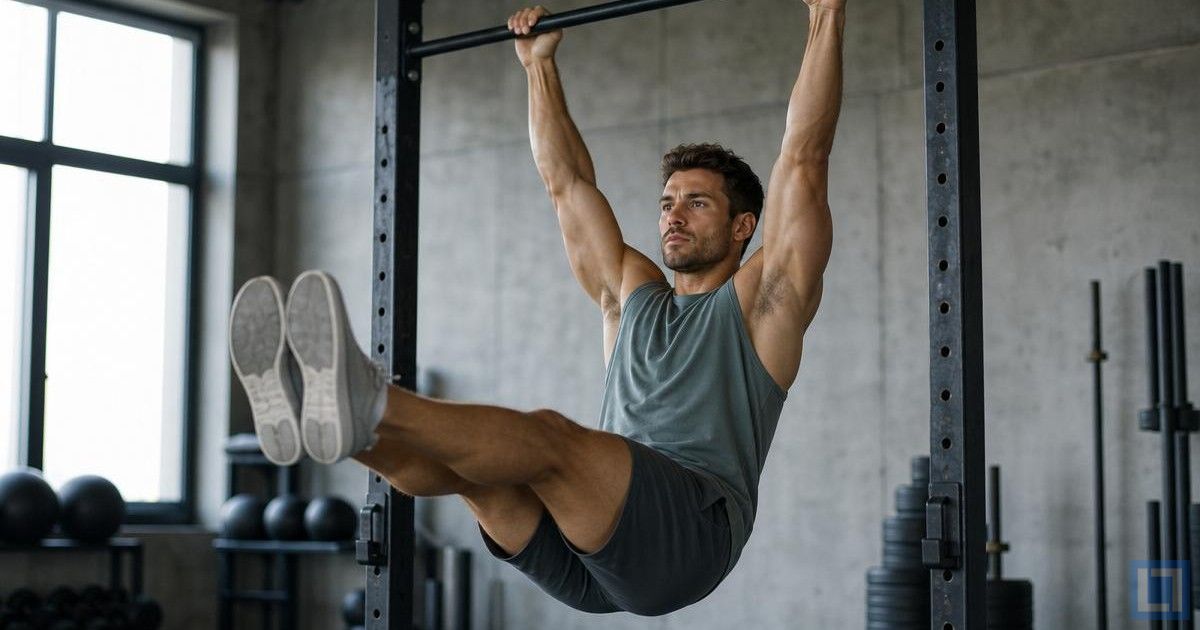
Ten-minute ab workouts produce real core development when structured around the right exercises and circuit format. The compressed time window forces ruthless exercise selection, which often produces stronger results than longer workouts that dilute focus across too many exercises. The best 10-minute ab workouts use circuit-style programming where exercises run back-to-back with minimal rest, which drives metabolic stress that produces strong core stimulus per minute of training. The format fits naturally into busy schedules and works as both standalone training and as a finisher attached to other workouts.
Below are ten effective 10-minute ab exercises that cover trunk flexion (crunches, sit-ups, ab tuck), rotational work (bicycle crunch, lying woodchop, machine trunk rotation), isometric holds (boat pose, lying ab press), and combined patterns (bear plank kickback, opposite crunch, jack split crunches). Together they form a complete 10-minute ab program that produces strong core stimulus through circuit-style training.
Dumbbell Lying Woodchop

The Dumbbell Lying Woodchop lies on the back and rotates a single dumbbell from one hip to the opposite shoulder in a chopping motion. The rotational pattern hits the obliques and rotational core stabilizers under load.
For 10-minute ab circuits, the lying woodchop adds external loading to a movement pattern that bodyweight rotation cannot match. The rotational motion fits naturally into circuit format because the alternating sides allow continuous work without long rest. Run it for 30 to 45-second intervals as one of the loaded core movements in the circuit.
Lie flat on the back with both hands holding a single dumbbell. Start with the dumbbell at one hip. Rotate the trunk to bring the dumbbell across the body to the opposite shoulder area. Reverse under control. Switch sides each rep.
Boat Yoga Pose
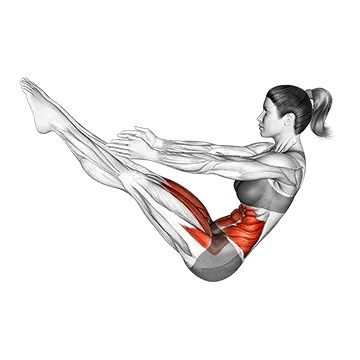
The Boat Yoga Pose sits on the floor and balances on the tailbone with legs lifted and arms extended forward, forming a V-shape with the body. The isometric hold produces strong continuous core loading.
For 10-minute ab circuits, the boat pose serves as the static-hold component that contrasts with the dynamic exercises. The isometric demand produces strong core stimulus that complements the dynamic motions and forces the abs to brace continuously rather than working through reps. Run it for 30 to 45-second holds in the circuit.
Sit on the floor with knees bent. Lean back slightly to balance on the tailbone. Lift the legs to form a V-shape with the torso. Extend the arms forward parallel to the floor. Hold the position while breathing normally. Lower the legs to a slight bend if the straight-leg position is too demanding.
Opposite Crunch

The Opposite Crunch lies on the back and brings the elbow to the opposite knee in a crunch motion that combines flexion with rotation. The combined pattern hits the abs and obliques simultaneously.
The opposite crunch is one of the most efficient combined core exercises that exists. The motion hits multiple core functions per rep, which makes it ideal for time-limited 10-minute circuits where exercise efficiency matters. Run it for 30 to 45-second intervals or 12 to 15 reps per side at controlled tempo.
Lie flat on the back with hands behind the head and knees bent. Lift the shoulder blades off the floor. Bring one elbow toward the opposite knee while rotating the trunk. Lower under control. Repeat on the other side. Continue alternating throughout the interval.
Ab Tuck

The Ab Tuck sits on the floor leaning back slightly and tucks the knees toward the chest by contracting the abs. The exercise hits the lower abs and hip flexors through the tucking motion.
For lower-ab work in 10-minute circuits, the ab tuck is one of the most efficient exercises that exists. The seated leaning position fits between standard sit-ups and harder hanging exercises, and the tempo allows continuous reps for full intervals. Run it for 30 to 45-second intervals at moderate tempo.
Sit on the floor with hands behind the body for support and legs extended forward. Lean back slightly to engage the core. Tuck the knees toward the chest by bending at the knees and contracting the abs. Extend the legs back out. Continue alternating.
Bear Plank Kickback

The Bear Plank Kickback starts in a bear plank position (hands and knees with knees hovering off the floor) and alternately extends one leg back in a kickback motion. The combined plank hold and dynamic leg motion hits the core, glutes, and hamstrings.
For combined core and glute work in 10-minute circuits, the bear plank kickback adds significant glute activation alongside the standard plank loading. The combination produces broader stimulus per rep than pure plank holds. Run it for 30 to 45-second intervals at controlled tempo, alternating legs.
Set up on hands and knees with hands directly under shoulders and knees under hips. Lift the knees to hover slightly off the floor (bear plank position). Extend one leg straight back behind the body, squeezing the glute at the top. Return to bear plank. Extend the opposite leg.
Seated Alternate Crunch

The Seated Alternate Crunch sits on the floor leaning back slightly and alternately brings the elbow toward the opposite knee in a controlled crunch motion. The pattern combines abdominal flexion with rotation in a seated position.
For combined ab and oblique work, the seated alternate crunch fits naturally into 10-minute circuit formats. The continuous alternating motion produces strong oblique stimulus while loading the abs through trunk flexion. Run it for 30 to 45-second intervals at controlled tempo.
Sit on the floor with knees bent and feet planted. Lean back slightly to engage the core. Place the hands behind the head. Bring one elbow toward the opposite knee while rotating the trunk. Return to the seated position. Repeat on the other side.
Jack Split Crunches

The Jack Split Crunches lie on the back and combine a jumping-jack-style leg motion with a crunch, alternating opens and closes of the legs while curling the trunk up. The combination produces strong loading on the abs and hip flexors.
For dynamic ab work in 10-minute circuits, jack split crunches add a unique motion that breaks up the standard crunch and sit-up patterns. The split-leg dynamic produces strong hip flexor and lower-ab loading alongside the trunk flexion. Run it for 30 to 45-second intervals at moderate tempo.
Lie flat on the back with hands behind the head and legs extended together. Curl the trunk up while opening the legs apart in a jack motion. Lower the trunk while bringing the legs back together. Continue alternating.
Lying Ab Press

The Lying Ab Press lies on the back with knees bent at 90 degrees over the hips and hands placed on the knees, then presses the knees outward against the hands while resisting with the hands. The isometric pressing produces strong abdominal contraction.
For isometric ab work, the lying ab press is one of the most underrated exercises that exists. The continuous pressing and resisting produces strong ab activation without any visible motion, which makes it useful as a recovery interval or finisher in 10-minute circuits. Run it for 30 to 45-second isometric holds.
Lie flat on the back with knees bent at 90 degrees over the hips. Place the hands on the knees. Press the knees outward against the hands while simultaneously resisting with the hands (so the knees do not move). Hold the isometric tension while breathing normally.
Bicycle Twisting Crunch

The Bicycle Twisting Crunch lies on the back and alternates bringing one knee toward the chest while rotating the trunk to bring the opposite elbow toward the knee. The combined flexion and rotation hits the abs and obliques simultaneously.
The bicycle crunch is one of the most efficient single ab exercises that exists for circuit-style training. The continuous alternating motion produces strong metabolic stress on the entire core, and the rotation adds oblique work alongside ab flexion. Run it for 30 to 45-second intervals at controlled tempo.
Lie flat on the back with hands behind the head and knees bent. Lift the shoulder blades off the floor. Bring one knee toward the chest while rotating the trunk to bring the opposite elbow toward the knee. Switch sides in a continuous bicycle motion.
Lever Trunk Rotation

The Lever Trunk Rotation sits at a machine with the body braced against pads and rotates the torso against resistance. The machine version of trunk rotation provides constant loading and consistent path of motion that free-weight rotation cannot match.
For lifters with gym access, the machine trunk rotation produces strong oblique loading through controlled rotation. The fixed path of the machine eliminates the form errors that bodyweight or weighted rotational exercises produce. Run it for 3 sets of 12 to 15 reps per side as accessory oblique work in any ab program.
Sit at a trunk rotation machine with the body braced against the support pads and feet planted. Grip the handles. Rotate the torso to one side against the resistance, going through the full range of motion. Reverse to the opposite side. The motion is controlled and the seat position keeps the lower body fixed.
How To Program These Workouts
A productive 10-minute ab circuit pulls six to eight exercises from the list above and runs them back-to-back. Standard circuit format: 30 to 40 seconds work, 10 to 20 seconds rest between exercises, with one complete circuit pass taking roughly 5 to 7 minutes. Run the circuit twice through with a 60-second rest between rounds for a complete 10 to 12-minute session. Adjust work-to-rest ratios based on fitness level: beginners run 30 seconds work / 30 seconds rest; intermediates run 40 seconds work / 20 seconds rest; advanced lifters run 45 seconds work / 15 seconds rest.
Train 10-minute ab circuits 3 to 5 times per week. The short duration and moderate intensity allow higher frequency than heavier traditional ab training. Most lifters do well with daily or near-daily 10-minute ab circuits as a finisher to other training, or as standalone training on rest days from heavier work. The compounding effect of frequent short sessions produces strong results over 8 to 12 weeks of consistent practice.
For longer ab workouts, see our 15-minute ab workouts and best 10-minute ab workouts. For different formats, see our best ab circuit workouts.
Final Thoughts
Ten-minute ab workouts deliver real core development through focused circuit-style training that fits in any schedule. The combination of trunk flexion, rotational work, isometric holds, and combined patterns covers every major core function in a compressed format that maximizes per-minute training value. For lifters who want consistent core training without the time investment of longer sessions, this format is one of the most effective options available.
Stay focused on form quality over rep count. The most common 10-minute ab training mistake is rushing through reps to hit higher numbers, which kills the form quality and reduces effective stimulus. The fix: prioritize strict full-range reps with controlled tempo. A 30-second interval of 12 strict bicycle crunches produces stronger ab stimulus than 25 sloppy ones. Quality first, quantity follows. The 10-minute time investment compounds dramatically when the work quality stays high across daily sessions.
Frequently Asked Questions
Are 10-minute ab workouts effective?
Yes, when programmed correctly with circuit-style training and consistent practice. The compressed time window forces focused training that often produces stronger per-minute results than longer workouts. Most lifters who run 10-minute ab circuits 3 to 5 times per week see meaningful core strength improvements within 4 to 6 weeks and visible changes within 8 to 12 weeks combined with appropriate nutrition.
How often should I do 10-minute ab workouts?
Three to five times per week works for most lifters. The short duration and moderate intensity allow higher frequency than heavier traditional ab training. Daily 10-minute ab circuits work for many lifters during periods of focused training; the compounding effect of frequent short sessions produces strong cumulative results over 8 to 12 weeks.
Will a 10-minute ab workout give me a six-pack?
10-minute ab training builds the muscle that gives the stomach its shape; reducing body fat through nutrition reveals that shape. Both are required for visible abs. Most lifters need to be at 12 to 18 percent body fat for abs to show clearly. The training handles the muscle-building side; sustainable nutrition handles the body fat side. Consistent 10-minute sessions combined with appropriate calorie management produces visible results over 12 to 16 weeks.
Do I need equipment for 10-minute ab workouts?
No for most exercises in this list. Most 10-minute ab circuits use bodyweight only and require nothing more than a clear floor space and 10 minutes. A pair of light dumbbells (5 to 15 pounds) adds variety and progression for the loaded exercises (woodchop). The exercise selection is intentionally minimal-equipment to fit busy schedules and at-home training.
Can a 10-minute ab workout replace longer training?
Yes for general core fitness and beginner-to-intermediate goals. Most lifters get strong, defined cores from consistent 10-minute training over 12 to 16 weeks combined with appropriate nutrition. Advanced lifters chasing maximum core development eventually benefit from longer sessions with heavier loading (ab wheel rollouts, weighted exercises), but daily 10-minute training produces measurable results at every fitness level.