Fixing hyperlordosis (excessive lordotic curvature in the lower back, often associated with anterior pelvic tilt – the pelvic position where the pelvis tips forward producing a more pronounced lower back curve) requires understanding both the contributing factors (most hyperlordosis develops from a combination of: 1) tight hip flexors pulling the pelvis into anterior tilt, 2) weak glutes failing to maintain proper pelvic position, 3) weak anterior core failing to control pelvic tilt and lumbar extension, 4) prolonged sitting that produces hip flexor shortening and glute deactivation, 5) tight lower back muscles, 6) thoracic stiffness producing compensatory lumbar extension, 7) muscle imbalances that develop from postural habits, or 8) the cumulative effect of multiple factors) and the training principles that resolve them: anti-extension core strengthening as the primary intervention (planks, dead bugs) – the most important muscular intervention for hyperlordosis, glute strengthening (glute bridges) addressing the glute weakness contributing to anterior pelvic tilt, hip flexor stretching addressing the tightness pulling the pelvis forward, pelvic posterior tilt training (reverse crunches) for direct postural retraining, gentle lumbar flexion (child pose, knee-to-chest) for tight lower back muscles, controlled erector spinae work (superman) for balanced posterior chain, thoracic mobility (open book) for compensation patterns, spinal mobility (cat-cow), and consistent daily practice over weeks. Most non-severe cases of hyperlordosis improve substantially within 6 to 12 weeks of consistent intervention. Note: hyperlordosis can have structural causes that exercise alone cannot address, and severe or persistent cases warrant medical evaluation – this article provides general fitness information, not medical advice. Consider consulting a physical therapist or healthcare provider for individualized assessment, particularly if you experience pain.
Below are ten of the most effective exercises for addressing hyperlordosis, covering primary anti-extension core (front plank, dead bug), glute strengthening (barbell glute bridge), hip flexor stretching (kneeling hip flexor stretch), gentle lumbar flexion (child pose, knee-to-chest stretch), spinal mobility (cat-cow stretch), pelvic posterior tilt training (reverse crunch), controlled erector spinae work (superman), and thoracic mobility (open book stretch). Together they form a comprehensive hyperlordosis correction program. A 20 to 30-minute session pulled from this list, performed 4 to 6 times per week (daily during initial correction phase), produces measurable improvement within 6 to 12 weeks of consistent practice for most non-severe cases. The combination of anti-extension core plus glute strengthening plus hip flexor stretching produces faster results than any single intervention alone.
Front Plank
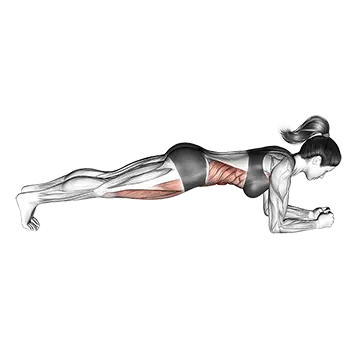
The Front Plank performs forearm plank holds. The pattern is foundational for hyperlordosis correction.
For hyperlordosis correction, the plank is foundational because it builds anti-extension core strength. Run it for 4 sets of 30 to 60-second holds, daily during initial correction.
Lie face-down on the floor. Prop up on the forearms with elbows under the shoulders. Lift the hips so the body forms a straight line from shoulders to ankles. Tuck the pelvis posteriorly and squeeze the glutes to flatten the lower back. The core works hard isometrically. Hold for the working interval. The pattern is foundational for hyperlordosis correction – hyperlordosis (excessive lower back curvature) typically involves weak anterior core that fails to control pelvic tilt. The plank trains anti-extension core strength specifically, addressing the primary core weakness underlying hyperlordosis. Daily practice rebuilds the core strength necessary for proper pelvic position.
Dead Bug

The Dead Bug performs the dead bug core exercise. The pattern is foundational for hyperlordosis correction.
For hyperlordosis correction, the dead bug builds anti-extension core stability. Run it for 3 sets of 8 to 10 reps per side as primary core stability work, daily.
Lie on the back with arms extended toward the ceiling and hips/knees bent at 90 degrees. Press the lower back into the floor (anti-extension). Slowly extend one arm overhead while extending the opposite leg straight, keeping the lower back pressed into the floor throughout. Return to start. Switch sides. The pattern produces excellent anti-extension core stability training – the dead bug specifically trains the core to maintain neutral spine while limbs move. Critical for hyperlordosis correction because the exercise teaches the core to prevent excessive lumbar extension during movement, addressing the central motor control issue underlying hyperlordosis.
Barbell Glute Bridge
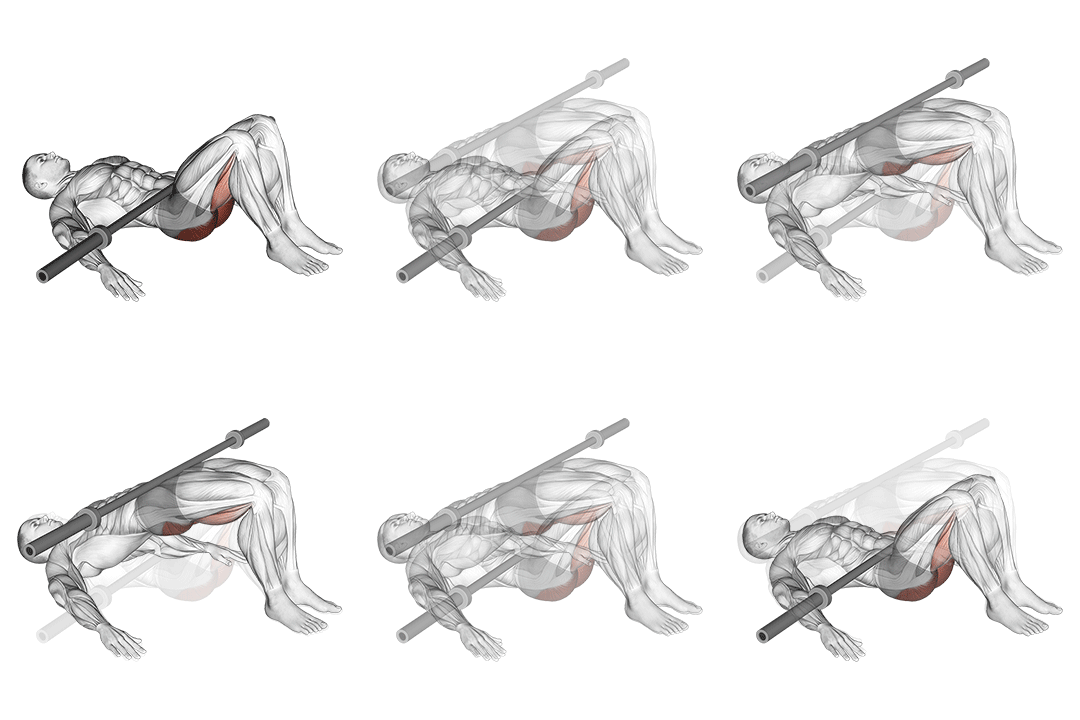
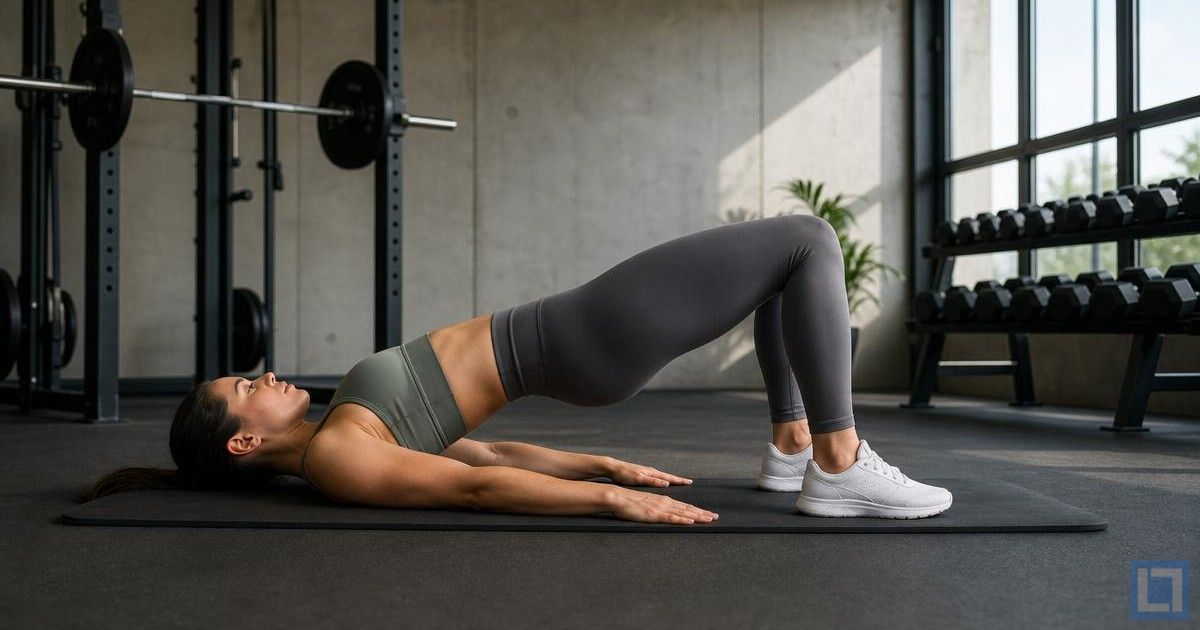
The Barbell Glute Bridge performs glute bridges. The pattern is critical for hyperlordosis correction.
For hyperlordosis correction, the glute bridge addresses weak glutes contributing to anterior pelvic tilt. Run it for 3 sets of 10 to 12 reps as glute strengthening, 3 to 4 times per week.
Lie on the floor with knees bent and feet planted. Position a barbell across the hips. Drive through the heels to lift the hips up by extending the hips. The body forms a straight line from shoulders to knees at the top. The glutes work hard. Squeeze hard at peak hip extension. Lower under control. The pattern produces direct glute strengthening – critical for hyperlordosis correction because weak glutes contribute substantially to anterior pelvic tilt (the pelvic position underlying hyperlordosis). Strong glutes pull the pelvis into proper position, reducing the lordotic curve. Glute strengthening is one of the most important interventions for hyperlordosis.
Kneeling Hip Flexor Stretch
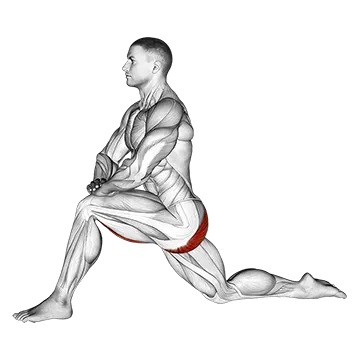
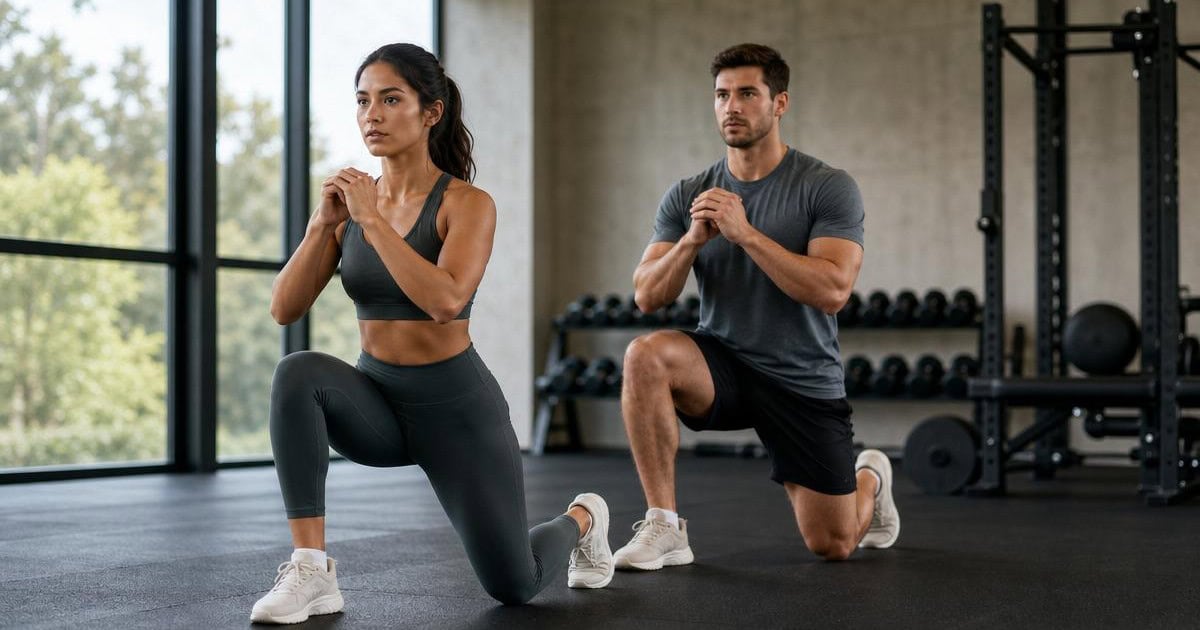
The Kneeling Hip Flexor Stretch performs hip flexor stretching. The pattern addresses tight hip flexors contributing to hyperlordosis.
For hyperlordosis correction, the kneeling hip flexor stretch addresses tight hip flexors pulling the pelvis forward. Run it for 3 sets of 30 to 60-second holds per side, daily.
Kneel on one knee with the other foot planted in front (about hip-width apart). Tuck the pelvis posteriorly and lean forward into the front leg, feeling deep stretch through the front hip on the kneeling leg side. Hold for 30 to 60 seconds. Switch sides. The pattern produces direct hip flexor stretching – critical for hyperlordosis correction because tight hip flexors pull the pelvis into anterior tilt, contributing substantially to the lordotic curve. Daily hip flexor stretching addresses this primary contributing factor.
Child Pose

The Child Pose performs the child pose stretch. The pattern produces lower back relaxation.
For hyperlordosis correction, the child pose produces gentle lower back stretch reducing lumbar tightness. Run it for 2 to 3 sets of 60-second holds, daily.
Kneel on the floor with knees wide and big toes touching. Sit back on the heels and reach the arms forward extending the spine. Allow the chest to lower toward the floor between the thighs. Allow the lower back to round gently (the opposite of hyperlordosis). Hold for 60 seconds. The pattern produces gentle lower back lengthening – critical for hyperlordosis correction because chronic lumbar extension produces lower back tightness, and child pose provides counterbalancing flexion. Daily practice supports the postural correction underway through other exercises.
Cat Cow Stretch

The Cat Cow Stretch performs cat-cow spinal mobility. The pattern produces spinal mobility for hyperlordosis correction.
For hyperlordosis correction, cat-cow produces spinal mobility addressing the segmental stiffness common in hyperlordosis. Run it for 3 sets of 8 to 12 reps as spinal mobility work, daily.
Position on hands and knees with hands under shoulders and knees under hips. Inhale and arch the back, lifting the head and tailbone (cow position). Exhale and round the back, tucking the chin to chest and tailbone under (cat position). Continue alternating slowly, emphasizing the cat (flexion) position to counteract hyperlordosis. The pattern produces spinal mobility – critical for hyperlordosis correction because chronic lumbar extension produces segmental stiffness, and active flexion through cat-cow restores mobility while training the lumbar flexion that hyperlordosis lacks.
Reverse Crunch

The Reverse Crunch performs reverse crunches. The pattern produces lower abs and pelvic posterior tilt training.
For hyperlordosis correction, the reverse crunch trains pelvic posterior tilt addressing anterior pelvic tilt. Run it for 3 sets of 10 to 12 reps as pelvic tilt training.
Lie on the back with hands at the sides or under the lower back for support. Lift the legs with knees bent at 90 degrees. Curl the hips up by posteriorly tilting the pelvis, bringing the knees toward the chest while lifting the hips off the floor. The lower abs work hard through pelvic posterior tilt. Lower under control. The pattern produces lower rectus abdominis loading with pelvic posterior tilt training – critical for hyperlordosis correction because the exercise specifically trains the pelvic posterior tilt that counteracts the anterior pelvic tilt characteristic of hyperlordosis.
Knee to Chest Stretch

The Knee To Chest Stretch performs knee-to-chest stretching. The pattern produces gentle lower back stretching.
For hyperlordosis correction, the knee-to-chest stretch produces gentle lumbar flexion reducing lower back tightness. Run it for 3 sets of 30 to 60-second holds per side, daily.
Lie on the back with both legs extended. Bring one knee up toward the chest, hugging the knee with both hands. Pull the knee gently toward the chest. Feel stretch through the glute and lower back. Hold for 30 to 60 seconds. Switch sides. The pattern produces gentle lower back stretching through lumbar flexion – critical for hyperlordosis correction because chronic lumbar extension produces lower back tightness, and gentle flexion stretching provides counterbalancing mobility while reducing the tightness common in hyperlordosis.
Superman

The Superman performs the superman exercise. The pattern produces erector spinae loading with controlled extension.
For hyperlordosis correction, the superman builds erector spinae endurance with controlled mobility. Run it for 3 sets of 10 to 12 reps as posterior chain work, 2 to 3 times per week.
Lie face-down on the floor with arms extended overhead. Lift the arms, chest, and legs off the floor simultaneously by contracting the lower back and glutes. Hold briefly at peak. Lower under control. The pattern produces erector spinae and glute activation through controlled extension – while hyperlordosis involves excessive extension, complete correction requires balanced erector spinae endurance to support proper posture. Combined with anti-extension core work (planks, dead bugs) and glute strengthening, controlled superman work supports balanced posterior chain function.
Open Book Stretch

The Open Book Stretch performs thoracic mobility stretching. The pattern produces thoracic mobility for hyperlordosis correction.
For hyperlordosis correction, the open book stretch addresses thoracic stiffness contributing to hyperlordotic compensation. Run it for 3 sets of 8 to 10 reps per side, daily.
Lie on one side with knees bent at 90 degrees and hips stacked. Extend both arms straight in front at shoulder height with palms together. Slowly rotate the top arm and torso open toward the floor behind, opening like a book. Reach the top arm to touch the floor on the opposite side. Hold briefly. Return to start. Switch sides. The pattern produces thoracic rotation mobility – critical for hyperlordosis correction because thoracic stiffness often forces compensatory lumbar extension. Restoring thoracic mobility reduces the compensatory demands on the lumbar spine.
How To Program These Workouts
A productive hyperlordosis session pulls 6 to 8 exercises from the list above. A common balanced session: front plank (anti-extension core primary – daily), dead bug (anti-extension stability – daily), barbell glute bridge (glute strengthening), kneeling hip flexor stretch (mobility – daily), child pose (lumbar flexion – daily), reverse crunch (posterior pelvic tilt training), cat-cow stretch (spinal mobility – daily), open book stretch (thoracic mobility). For acute correction phase: emphasize daily anti-extension core work plus daily hip flexor stretching plus 3 to 4 weekly glute strengthening sessions. For maintenance phase: 3 to 4 sessions per week covering all patterns. Run anti-extension core work for 3 sets of 30 to 60-second holds, glute strengthening for 3 sets of 10 to 12 reps, mobility work for 3 sets of 30 to 60-second holds.
Train hyperlordosis correction with daily high-frequency intervention for accelerated improvement. The condition responds best to consistent daily anti-extension core work plus regular glute strengthening plus daily hip flexor stretching plus addressing aggravating activities (especially prolonged sitting where possible). Most successful hyperlordosis programs include: 1) daily anti-extension core (planks, dead bugs – the most important intervention), 2) daily hip flexor stretching, 3) 3 to 4 weekly glute strengthening sessions, 4) daily gentle mobility work, 5) regular pelvic tilt training, 6) reduced prolonged sitting where possible, 7) postural awareness during daily activities. Most non-severe cases improve substantially within 6 to 12 weeks. Severe or persistent cases warrant medical evaluation – consider consulting a physical therapist or healthcare provider for individualized assessment.
For broader programming, see our how to fix anterior pelvic tilt and how to fix lower back pain. For specific work, see our best core exercises.
Final Thoughts
Fixing hyperlordosis requires applying the right intervention principles consistently over time: anti-extension core strengthening as the primary intervention, glute strengthening addressing the glute weakness underlying anterior pelvic tilt, hip flexor stretching addressing the tightness pulling the pelvis forward, gentle lumbar flexion for tight lower back muscles, pelvic posterior tilt training, spinal mobility, thoracic mobility, controlled erector spinae work, and addressing aggravating lifestyle factors. The combination of planks, dead bugs, glute bridges, hip flexor stretches, child pose, cat-cow, reverse crunches, knee-to-chest stretches, supermans, and open book stretches covers every functional pattern needed for hyperlordosis correction and produces broader core, hip, and postural function than any single intervention. Most individuals with non-severe hyperlordosis who consistently apply these principles see measurable improvement within 6 to 12 weeks – including reduced lower back tightness, addressed glute weakness, more flexible hip flexors, better core control, more balanced spinal mobility, less postural fatigue, and the integrated postural function that supports overall movement quality. For most non-severe hyperlordosis cases from postural and muscular factors, dedicated exercise-based correction is one of the most effective interventions available.
Stay focused on anti-extension core plus glute strengthening as priorities for hyperlordosis correction. The most common mistake people make is doing only stretching without addressing the muscular weakness underlying hyperlordosis (weak glutes, weak anterior core that fails to control pelvic tilt). The fix: prioritize daily anti-extension core work (planks, dead bugs) plus regular glute strengthening (glute bridges) alongside hip flexor stretching. Combined anti-extension core plus glute strengthening produces faster results than stretching alone because hyperlordosis is primarily a muscular weakness issue (weak glutes, weak anterior core) that allows tight hip flexors to pull the pelvis into anterior tilt. Addressing the muscular weakness through strengthening produces sustainable correction that stretching alone never achieves. Note that severe or persistent cases warrant medical evaluation – this is general fitness information, not medical advice.
Frequently Asked Questions
How do I fix hyperlordosis?
Daily anti-extension core work plus glute strengthening plus hip flexor stretching plus pelvic tilt training. Daily planks and dead bugs (3 sets of 30 to 60-second holds and 8 to 10 reps respectively) build the anti-extension core strength addressing the primary muscular weakness. Glute bridges (3 sets of 10 to 12 reps, 3 to 4 times per week) address glute weakness underlying anterior pelvic tilt. Daily hip flexor stretches address tight hip flexors pulling the pelvis forward. Combined with reverse crunches (pelvic tilt training), child pose (lumbar flexion), cat-cow (spinal mobility), open book (thoracic), and supermans (erector spinae), this comprehensive approach produces measurable improvement within 6 to 12 weeks for most non-severe cases. Severe cases warrant medical evaluation.
What causes hyperlordosis?
Multiple contributing muscular and postural factors. Most hyperlordosis develops from: 1) tight hip flexors pulling the pelvis into anterior tilt, 2) weak glutes failing to maintain proper pelvic position, 3) weak anterior core failing to control pelvic tilt, 4) prolonged sitting producing hip flexor shortening and glute deactivation, 5) tight lower back muscles, 6) thoracic stiffness producing compensatory lumbar extension, 7) muscle imbalances from postural habits. Some cases involve structural factors that exercise cannot address. The fix combines core strengthening, glute work, hip flexor stretching, and addressing prolonged sitting. Severe or persistent cases warrant medical evaluation.
How long does it take to fix hyperlordosis?
6 to 12 weeks for measurable improvement in most non-severe cases. Most people who consistently apply daily anti-extension core work plus glute strengthening plus hip flexor stretching plus addressing aggravating factors see measurable improvement within 6 to 12 weeks. Beginners often see initial gains within 4 to 6 weeks. Severe cases may take 12 to 16+ weeks. Persistent cases (those not improving after 12 weeks of consistent treatment) or cases with significant pain warrant medical evaluation. The longer hyperlordosis has been established, the longer correction takes. Consistent daily practice produces sustainable correction.
Should I avoid arching my back?
Postural awareness during daily activities supports correction. During acute correction phase, deliberately maintaining neutral spine position during standing, sitting, and lifting reinforces the postural retraining underway. Avoiding excessive lumbar extension during daily activities (slouching while sitting, standing with arched back) supports the correction process. However, completely avoiding back extension is unnecessary and can produce its own issues – normal back movement is healthy. Focus on reducing chronic excessive extension while maintaining normal movement variability. Consider working with a qualified professional for personalized postural guidance.
Can I fix hyperlordosis without a doctor?
Most non-severe cases respond well to dedicated exercise-based correction without medical intervention. However, hyperlordosis can have structural causes that exercise cannot address, and persistent or painful cases warrant medical evaluation. Consider consulting a physical therapist or healthcare provider if: 1) you experience pain, 2) symptoms persist after 12 weeks of consistent intervention, 3) you have other concerning symptoms. This article provides general fitness information, not medical advice. For complex cases or those involving pain, professional assessment provides personalized guidance that general information cannot replace.