Fixing forward head posture (FHP) requires understanding both the cause (typically a combination of weak deep neck flexors, tight suboccipital muscles, weak mid back muscles, tight chest muscles, and rounded shoulders – all of which combine to position the head forward of the shoulders rather than balanced over them) and the training principles that correct it: dedicated chin tuck training for the weak deep neck flexors, mid back strengthening (face pulls, rows, band pull-aparts) to pull the shoulders back which supports proper head position, rear delt isolation for shoulder position, lower trap activation for upper back support, posterior chain work for integrated upper back development, and combined daily practice for accelerated correction. Most people with forward head posture are dealing with one or more of these issues: hours of daily smartphone use that pulls the head forward (the ‘tech neck’ phenomenon), prolonged computer work without breaks, weak deep neck flexors from lack of chin tuck training, weak mid back from lack of pulling exercises relative to pressing, tight pec muscles from forward shoulder position, and overall sedentary patterns that reinforce forward head posture. The fix involves: 1) daily chin tucks for the weak deep neck flexors (the single most direct exercise for FHP), 2) high-frequency mid back work (face pulls, band pull-aparts) for shoulder position, 3) rear delt isolation for shoulder support, 4) lower trap activation (Y raises) for upper back integrity, 5) heavy compound back work (rows, deadlifts) for foundational strength, and 6) daily mobility and postural awareness practice.
Below are ten of the most effective exercises for fixing forward head posture, covering chin tucks (band face pull substitute appearing first), high-frequency posture work (band face pull, band pull apart), direct neck and head position training (chin tuck), rear delt isolation (dumbbell rear delt fly), lower trap activation (prone Y raise), posterior chain work (superman), compound back work (cable seated row, barbell bent over row), core stability (front plank), and posture-specific work (forearm wall slide). Together they form a complete FHP correction program. A 20 to 30-minute FHP correction session pulled from this list, performed 3 to 5 times per week (or as integrated work alongside your regular training), plus daily chin tucks, produces measurable forward head posture improvement within 8 to 12 weeks of consistent training.
Band Face Pull

The Band Face Pull performs face pulls with a resistance band. The pattern is foundational mid back work supporting forward head correction.
For fixing forward head posture, face pulls are foundational. Forward head posture often combines with rounded shoulders, and face pulls address both. Run it for 3 to 5 sets of 15 to 20 reps as primary posture work, daily if possible.
Set up a resistance band at face level. Stand facing the band and grip the band with both hands. Step back to create tension. Pull the band toward the face by retracting the shoulder blades and pulling the elbows back and up (high elbows). The rear delts, rhomboids, mid traps, and external rotators work hard. Squeeze the shoulder blades hard at peak. Return under control. The pattern directly counters the forward shoulder/forward head pattern – strong mid back muscles pull the shoulders back, which helps reposition the head over the shoulders.
Band Pull Apart
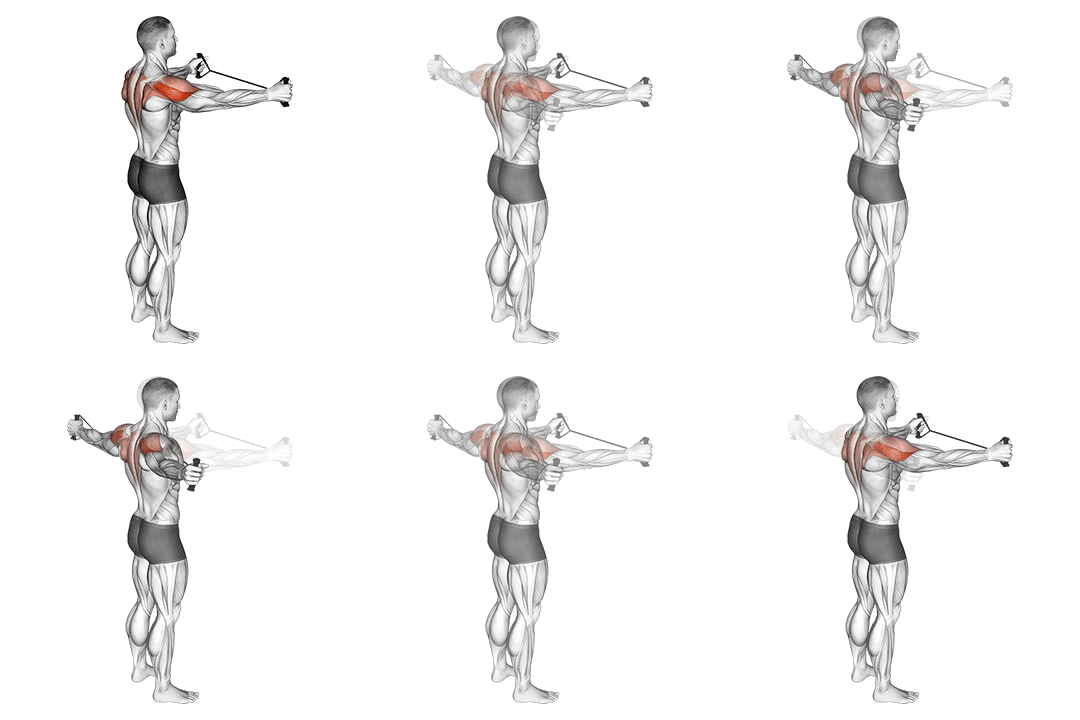
The Band Pull Apart performs pull-aparts. The pattern produces direct mid back loading supporting head position.
For fixing forward head posture, the band pull-apart produces direct mid back loading with high frequency tolerance. Run it for 3 to 5 sets of 15 to 25 reps as daily posture work.
Stand holding a resistance band with both hands at chest height with arms extended forward. The band should have moderate tension. Pull the band apart by retracting the shoulder blades and pulling the arms out to the sides until the band touches the chest. The rhomboids, rear delts, and mid traps work hard. Squeeze the shoulder blades hard at peak. Return under control. The pattern produces direct mid back loading with low recovery cost – daily band pull-aparts (50 to 100 daily reps) accelerate forward head posture correction by strengthening the mid back muscles that pull the shoulders back.
Dumbbell Rear Delt Fly
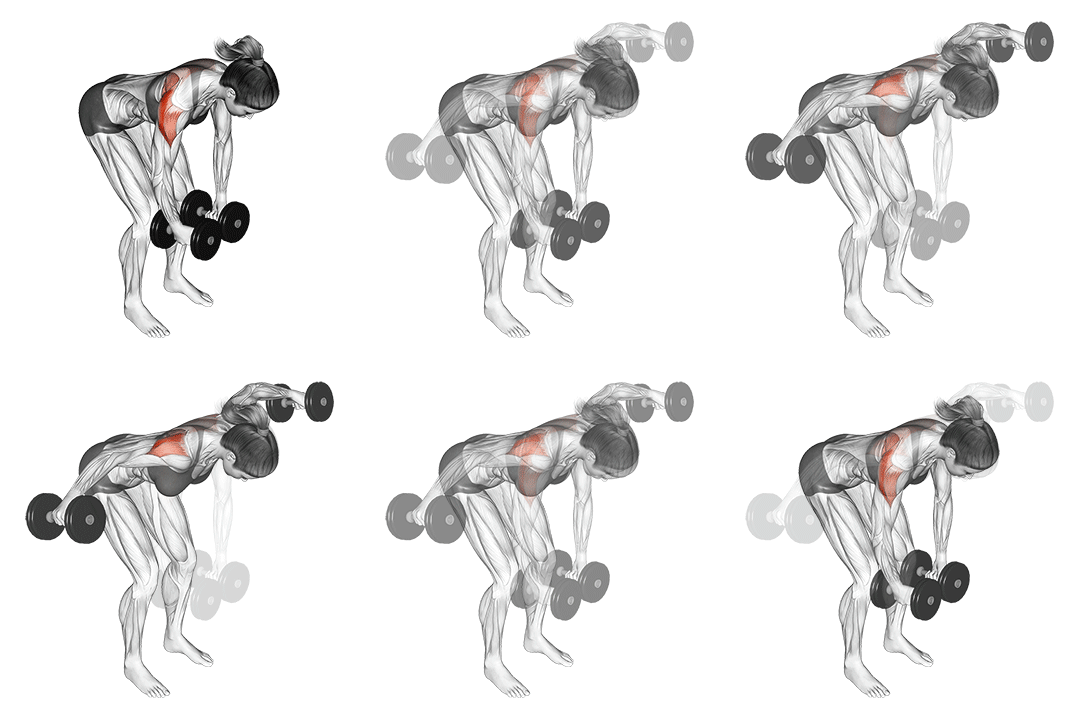
The Dumbbell Rear Delt Fly performs rear delt flies. The pattern produces direct rear delt isolation supporting head position.
For fixing forward head posture, the rear delt fly produces direct rear delt loading. Run it for 3 to 4 sets of 12 to 15 reps as primary rear delt work.
Stand with feet hip-width holding dumbbells. Hinge forward at the hips with a flat back so the torso is parallel to the floor. Hold the dumbbells underneath the chest with palms facing each other. Lift the dumbbells out to the sides by raising the arms straight out to shoulder height. The rear delts and rhomboids work hard through horizontal abduction. Squeeze hard at peak. Lower under control. The pattern produces direct rear delt isolation – rear delts are critical for proper shoulder position which supports proper head position.
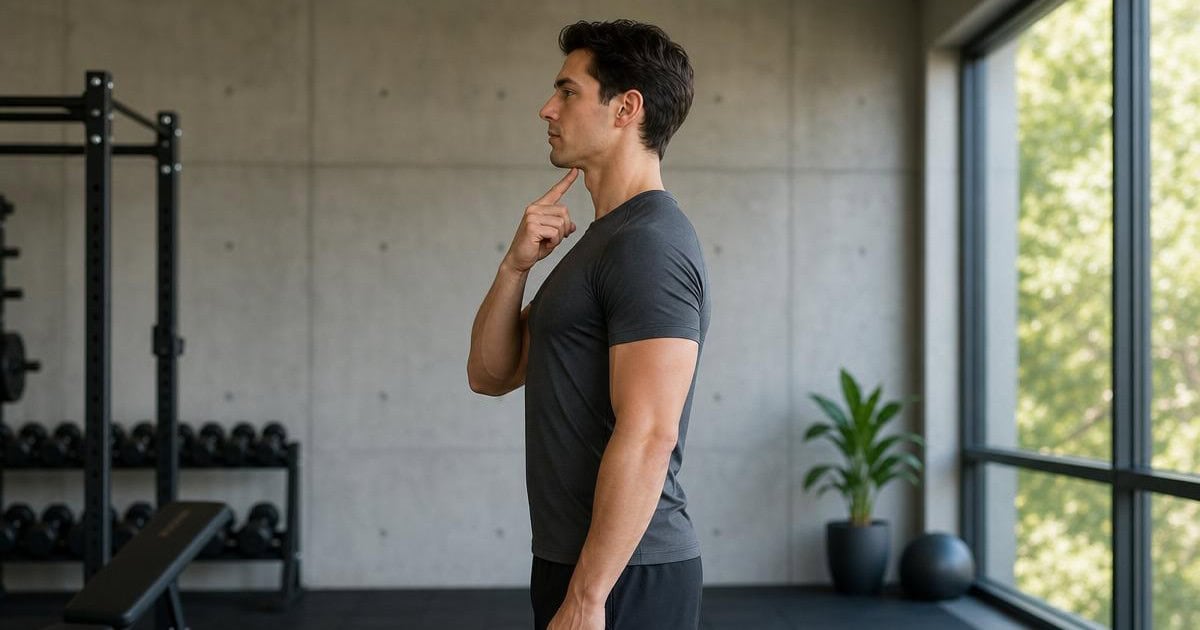
Chin Tuck

The Chin Tuck performs chin tuck exercises. The pattern is the most direct exercise for fixing forward head posture.
For fixing forward head posture, the chin tuck is THE most direct exercise. The pattern directly trains pulling the head back into proper alignment. Run it for 3 to 5 sets of 10 to 15 reps, multiple times daily.
Stand or sit with the back tall. Without tilting the head, gently pull the chin straight back (creating a “double chin” appearance temporarily). The deep neck flexors work hard while the suboccipital muscles (often tight in forward head posture) lengthen. Hold for 5 to 10 seconds. Return under control. The pattern is THE most direct exercise for fixing forward head posture – chin tucks directly train the deep neck flexors that hold the head over the shoulders, while stretching the suboccipital muscles that often hold the head forward. Daily chin tucks (multiple sessions per day, 30+ total daily reps) produce measurable forward head posture correction within weeks.
Prone Y Raise

The Prone Y Raise performs prone Y raises. The pattern produces direct lower trap and rear delt loading.
For fixing forward head posture, the prone Y raise produces direct lower trap loading that supports proper shoulder and head position. Run it for 3 sets of 12 to 15 reps as posture accessory work.
Lie face-down on a bench or the floor with arms extended overhead in a Y position (about 45 degrees from the body). Lift the arms up by retracting the shoulder blades while maintaining the Y position. The lower traps and rear delts work hard. Squeeze at peak. Lower under control. The pattern produces direct lower trap loading – the lower traps are critical for proper shoulder position which supports proper head position. Lower trap weakness often contributes to forward head posture through poor shoulder position.
Superman

The Superman performs prone superman holds. The pattern produces direct posterior chain work supporting posture.
For fixing forward head posture, the superman produces direct upper back and lower back strengthening. Run it for 3 sets of 10 to 15 reps or 30-second holds as posture accessory work.
Lie face-down on the floor with arms extended overhead and legs straight. Lift both arms and legs off the floor simultaneously by extending the upper and lower back. The upper back, lower back, and glutes all work hard. Hold briefly at peak. Lower under control. The pattern produces direct posterior chain loading – upper back extension specifically targets the muscles that hold shoulders back and upper back upright, supporting proper head position over the shoulders.
Cable Seated Row

The Cable Seated Row performs seated cable rows. The pattern produces direct mid back loading supporting head position.
For fixing forward head posture, the cable seated row produces direct mid back loading. Run it for 3 to 4 sets of 10 to 12 reps as primary posture/back work.
Sit on a cable seated row station with feet planted on the platform and knees slightly bent. Grip the cable handle with both hands. Sit upright with the back tall. Pull the handle to the lower chest by retracting the shoulder blades and pulling the elbows back. The rhomboids, mid traps, and rear delts work hard. Squeeze the shoulder blades hard at peak. Return under control. The pattern produces excellent mid back loading – the upright position trains proper posture under load while the rowing pattern strengthens the mid back muscles that pull the shoulders back into proper position.
Front Plank
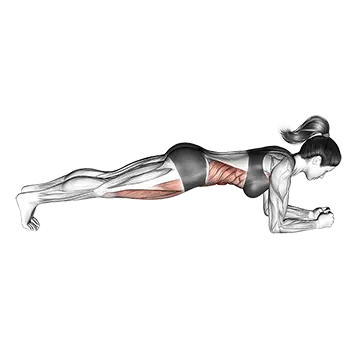
The Front Plank performs forearm plank holds. The pattern builds core stability supporting proper posture.
For fixing forward head posture, the plank builds core stability that supports proper upright posture. Run it for 3 sets of 30 to 60-second holds as supporting core work.
Lie face-down on the floor. Prop up on the forearms with elbows under the shoulders. Lift the hips so the body forms a straight line from shoulders to ankles. The core works hard isometrically. Hold for the working interval. The pattern builds core stability that supports posture – weak core often contributes to poor posture through inability to maintain upright trunk position. Combined with mid back work, core training produces integrated posture improvement.
Barbell Bent Over Row

The Barbell Bent Over Row performs barbell rows. The pattern produces compound mid back loading.
For fixing forward head posture, the bent-over row produces heavy compound mid back loading. Run it for 4 sets of 6 to 10 reps as primary heavy posture work.
Stand with feet hip-width holding a barbell at the front of the thighs with overhand grip. Hinge forward at the hips with a flat back so the torso is at about 45 degrees. Pull the bar to the lower chest by retracting the shoulder blades and pulling the elbows back. The rhomboids, mid traps, lats, and rear delts work hard. Squeeze the shoulder blades hard at peak. Lower under control. The pattern produces foundational mid back loading – heavy bent-over rows build the back muscles that support proper shoulder position, which supports proper head position.
Forearm Wall Slide
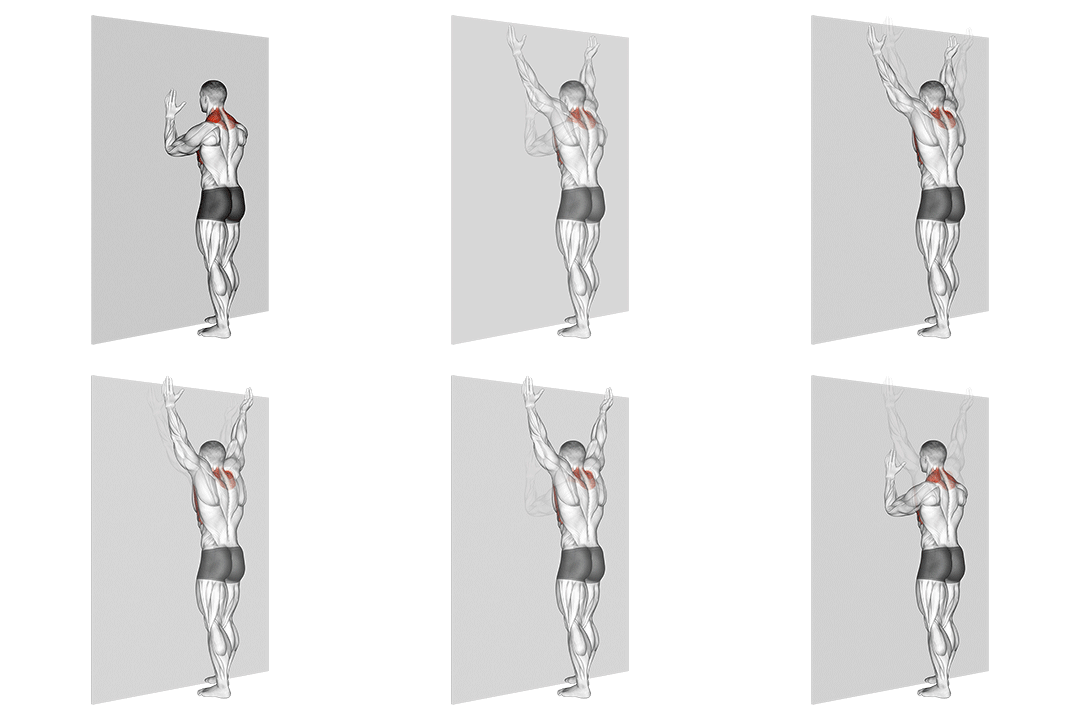
The Forearm Wall Slide performs wall slides with forearms. The pattern produces direct upper back and lower trap activation.
For fixing forward head posture, the wall slide produces direct upper back activation while reinforcing proper posture. Run it for 3 sets of 10 to 12 reps as posture activation work.
Stand with the back against a wall. Place the forearms and hands flat against the wall with elbows at shoulder height (about 90-degree angle). Slide the forearms up the wall while maintaining contact with the wall, the lower back, and shoulders. The lower traps, rhomboids, and rear delts work hard. Slide back down under control. The pattern produces direct upper back activation while teaching proper posture against the wall – the wall serves as a reference for proper alignment. Excellent posture-specific exercise that reinforces both upper back strengthening and proper postural awareness.
How To Program These Workouts
A productive FHP correction session pulls 6 to 8 exercises from the list above. A common balanced session: chin tuck (direct FHP), band face pull (high reps), band pull apart (high reps), dumbbell rear delt fly (isolation), cable seated row or barbell bent over row (compound), prone Y raise (lower trap), forearm wall slide (posture activation). For high-frequency daily work: chin tuck (multiple times daily), band face pull, band pull apart, prone Y raise – these can be performed daily without recovery concerns. For dedicated correction sessions: include all 10 exercises with appropriate volume. Run chin tucks for 3 to 5 sets of 10 to 15 reps multiple times daily, high-frequency band work for 3 to 5 sets of 15 to 25 reps daily, isolation work for 3 to 4 sets of 12 to 15 reps, compound back work for 3 to 4 sets of 6 to 12 reps.
Train FHP correction with high frequency for accelerated improvement. Most successful FHP correction programs incorporate work as: 1) daily chin tucks (multiple sessions per day, 30+ total daily reps) – this is the single most important FHP intervention, 2) daily band work (band face pulls, band pull-aparts) at 50 to 100 total daily reps, 3) dedicated FHP correction sessions 3 to 5 times per week (6 to 8 exercises), 4) integrated FHP work in main lifting sessions (face pulls and band pull-aparts as warm-up). The mid back muscles tolerate very high frequency – daily band work plus daily chin tucks accelerates FHP correction substantially. Most individuals see measurable posture improvement within 8 to 12 weeks of consistent daily practice plus dedicated sessions.
For broader programming, see our how to fix rounded shoulders and how to improve shoulder mobility. For specific work, see our best mid back exercises.
Final Thoughts
Fixing forward head posture requires applying the right training principles consistently over time: daily chin tucks for the weak deep neck flexors (the most direct FHP intervention), high-frequency mid back work for shoulder position, rear delt isolation for shoulder support, lower trap activation for upper back integrity, heavy compound back work for foundational strength, and daily postural awareness practice. The combination of chin tucks, face pulls, band pull-aparts, rear delt flies, Y raises, supermans, rows, planks, bent-over rows, and wall slides covers every functional pattern needed for FHP correction and produces broader posture improvement than any single approach. Most individuals who consistently apply these principles see measurable forward head posture improvement within 8 to 12 weeks – reduced forward head position, less neck pain, better breathing capacity, fewer headaches, and improved overall posture. For anyone with FHP from smartphone use, desk work, or chronic poor posture, dedicated correction training is one of the most effective interventions available.
Stay focused on chin tucks as the single most important FHP exercise. The most common mistake people make in FHP correction is neglecting dedicated chin tuck training in favor of general posture exercises. The fix: prioritize daily chin tucks (multiple sessions per day, 30+ total daily reps) as the cornerstone of FHP correction – the deep neck flexors hold the head over the shoulders, and chin tucks are the most direct exercise for strengthening these specific muscles. Combined with daily band work (face pulls, band pull-aparts) for shoulder position and dedicated correction sessions 3 to 5 times per week, daily chin tucks produce the FHP correction that exercise-program-only approaches without specific neck training never achieve.
Frequently Asked Questions
How long does it take to fix forward head posture?
8 to 12 weeks for measurable improvement, 6 to 12 months for complete correction. Most individuals who consistently apply daily chin tucks plus dedicated FHP correction sessions see measurable improvement within 8 to 12 weeks – reduced forward head position, less neck pain, better posture. Severe FHP (from years of smartphone use and chronic poor posture) may require 6 to 12 months of consistent work for complete correction. The improvement timeline depends on starting severity, training consistency, and concurrent factors (continuing phone use, desk work, sleep position).
What causes forward head posture?
Combination of phone use, desk work, weak deep neck flexors, weak mid back, tight chest. FHP is typically caused by: 1) hours of daily smartphone use that pulls the head forward (the ‘tech neck’ phenomenon), 2) prolonged computer work without proper monitor height, 3) weak deep neck flexors from lack of chin tuck training, 4) weak mid back muscles from lack of pulling exercises, 5) tight pectoral muscles from forward shoulder position, 6) overall sedentary patterns. Modern lifestyle is the primary contributor for most FHP cases.
Can forward head posture be fixed?
Yes for most cases, with consistent training. FHP caused by muscle imbalance (the most common cause – typically from phone use, desk work, and lack of corrective exercise) responds very well to dedicated correction training. FHP caused by structural skeletal issues may have limited correction potential and require professional evaluation. For typical FHP from modern lifestyle, dedicated correction training produces measurable improvement for almost everyone within 8 to 12 weeks of daily chin tucks plus posture work.
What’s the best exercise for forward head posture?
Chin tucks – the single most direct FHP exercise. Chin tucks directly train the deep neck flexors that hold the head over the shoulders. Combined with daily band work (face pulls, band pull-aparts) for shoulder position, rear delt isolation, lower trap activation (Y raises), and compound back work (rows), these form the foundation of FHP correction. Most successful programs prioritize daily chin tucks (multiple sessions per day) as the cornerstone of FHP correction.
How often should I train for forward head posture correction?
Daily chin tucks plus 3 to 5 dedicated sessions per week. The deep neck flexors and mid back muscles tolerate very high frequency. Most successful FHP programs include: 1) daily chin tucks (multiple sessions per day, 30+ total daily reps), 2) daily band work (face pulls, band pull-aparts) at 50 to 100 total daily reps, 3) dedicated correction sessions 3 to 5 times per week with 6 to 8 exercises, 4) integrated posture work in main lifting sessions. Daily chin tucks accelerate FHP correction more than any other intervention.