Building a stronger bench press requires consistent heavy bench work combined with targeted development of the supporting muscles – triceps for lockout strength, chest for raw pressing power, front delts for the upper portion of the lift, and the back muscles that provide the stable foundation that proper bench press technique demands. Strong bench press numbers come from balanced development across all of these areas rather than just from bench pressing itself.
These ten exercises cover the complete bench press strength toolkit. The bench press itself is the primary exercise – direct heavy bench work drives bench press progress more than any other single factor. Triceps work (close grip bench, skullcrushers, overhead extensions) builds the triceps strength that determines lockout. Chest variations (incline bench, dumbbell press, flies) build pressing power and chest hypertrophy. Back work (rows, pull-ups) builds the back strength that supports bench setup. Push-ups provide accessory volume. Together they produce the complete strength that drives bench press progress.
Barbell Bench Press

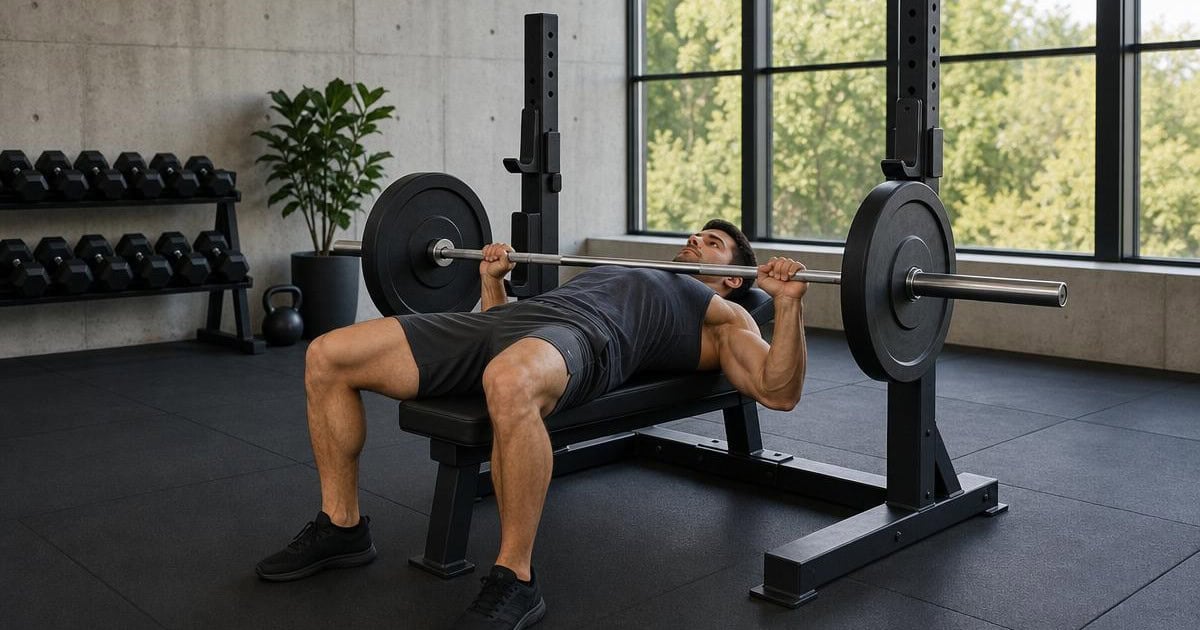
The Barbell Bench Press performs the foundational bench press. The pattern is the primary bench press strength builder.
For bench press strength, the barbell bench press itself is the primary exercise. Run it for 4 to 5 sets of 3 to 6 reps as primary heavy work.
Set up on a flat bench with feet planted firmly. Grip the bar slightly wider than shoulder-width. Unrack the bar to lockout. Lower the bar under control to the lower chest, touching the chest briefly. Press back up to lockout. The pattern is the bench press itself – the most direct way to develop bench press strength is heavy bench press work with progressive overload. Build foundational strength through 3 to 6 rep work in the 75-90% range of one-rep max. Foundational lift for bench press development.
Barbell Close Grip Bench Press

The Barbell Close Grip Bench Press performs narrow-grip bench press. The pattern develops the triceps strength that bench press lockout demands.
For bench press strength, close grip bench press develops the triceps for lockout strength. Run it for 3 to 4 sets of 6 to 10 reps as triceps strength work.
Lie on a bench with a barbell held above the chest, hands shoulder-width or slightly closer. Lower the bar to the chest while keeping the elbows tucked close to the body. Press back up to extend the arms. The narrow grip emphasizes triceps work – critical for bench press strength because most bench press sticking points occur near lockout where the triceps drive the lift. Strong triceps eliminate lockout weakness and contribute substantially to overall bench press strength.
Dumbbell Bench Press

The Dumbbell Bench Press performs chest pressing with dumbbells. The pattern develops per-side balance and addresses asymmetries.
For bench press strength, dumbbell presses address per-side asymmetries and build accessory strength. Run it for 3 to 4 sets of 6 to 10 reps as accessory work.
Lie on a bench with dumbbells held at the sides of the chest, palms facing forward. Press the dumbbells up by extending the elbows until the arms are straight. Lower under control to the start. The pattern develops chest pressing with per-side loading – critical for addressing left/right asymmetries that bilateral barbell work can mask. Dumbbell press strength supports barbell bench press performance through balanced pressing development and increased stabilizer demand.
Barbell Incline Bench Press

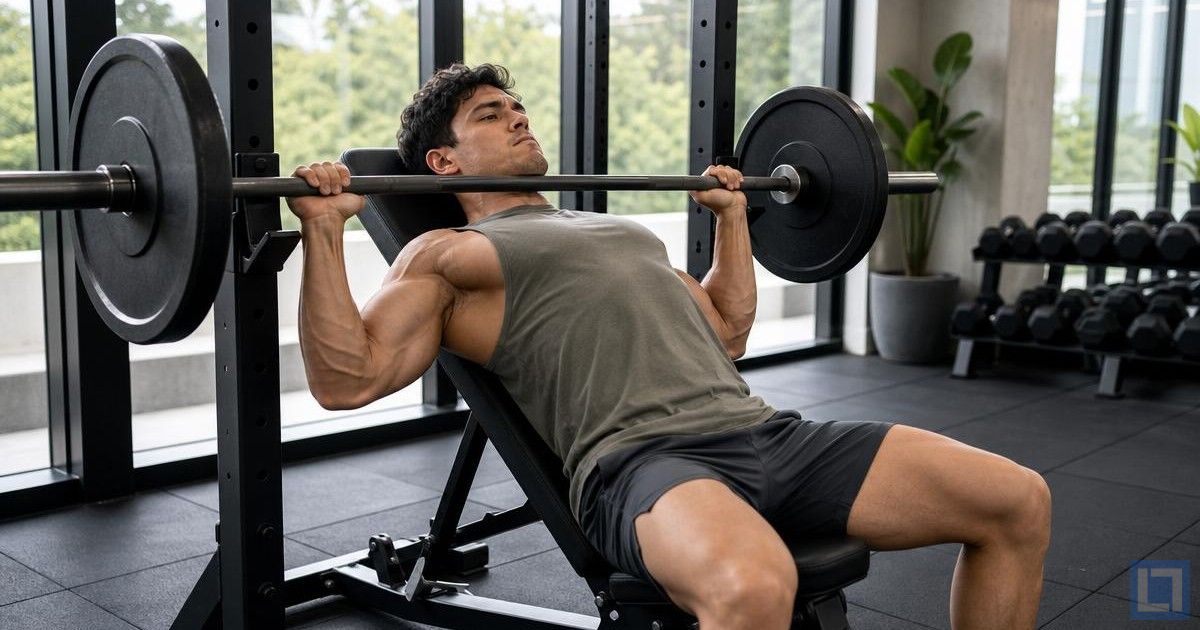
The Barbell Incline Bench Press performs incline bench press. The pattern develops upper chest and front delt strength.
For bench press strength, incline bench builds upper chest strength supporting full bench press. Run it for 3 to 4 sets of 5 to 8 reps as variation work.
Set up a barbell on an incline bench (30 to 45 degrees). Lie back, plant feet firmly, and grip the bar slightly wider than shoulder-width. Unrack to lockout. Lower the bar to the upper chest. Press back up to lockout. The incline position emphasizes the upper chest and front delts – important for bench press strength because upper chest and front delt development support the bench press through the entire range of motion. Excellent variation for complete pressing strength.
Dumbbell Fly

The Dumbbell Fly performs chest fly isolation. The pattern isolates the chest through pure adduction.
For bench press strength, dumbbell flies isolate the chest for hypertrophy. Run it for 3 sets of 10 to 15 reps as chest isolation work.
Lie on a flat bench holding dumbbells above the chest, palms facing each other, elbows slightly bent. Lower the dumbbells out to the sides in an arc until felt stretch in the chest. Return to the start by squeezing the chest. The pattern isolates the chest through pure horizontal adduction – excellent for bench press strength because chest hypertrophy directly translates to bench press strength gains. Builds the chest size that benches more weight by increasing both muscle mass and lever advantage.
Barbell Standing Overhead Triceps Extension

The Barbell Standing Overhead Triceps Extension performs overhead triceps work. The pattern emphasizes the long head of the triceps.
For bench press strength, overhead triceps extensions develop the long head for lockout. Run it for 3 sets of 8 to 12 reps as triceps strength work.
Stand with a barbell held overhead, arms straight, hands shoulder-width or slightly closer. Lower the bar behind the head by bending the elbows. Reverse to extend the arms back to the overhead position. The pattern emphasizes the long head of the triceps – critical for bench press strength because the long head contributes substantially to elbow extension at lockout. The overhead position stretches the long head under load, producing growth that translates to lockout strength.
EZ Bar California Skullcrusher

The EZ Bar California Skullcrusher performs lying triceps extensions. The pattern is foundational for triceps strength.
For bench press strength, skullcrushers build heavy triceps strength. Run it for 3 to 4 sets of 8 to 12 reps as triceps strength work.
Lie on a bench with an EZ bar held overhead, arms straight. Lower the bar by bending the elbows, bringing the bar toward the forehead. Reverse to extend the arms back to the start. The pattern isolates the triceps through pure elbow extension – foundational for triceps development that supports bench press strength. The EZ bar reduces wrist stress compared to straight bar variations. Strong skullcrusher numbers correlate with strong bench press numbers because both depend on triceps strength.
Push Ups

The Push Up performs bodyweight pushups. The pattern supports bench press through bodyweight pressing work.
For bench press strength, push-ups build foundational pressing endurance and stability. Run it for 3 sets of 15 to 25 reps as bodyweight pressing work.
Set up in a high plank position with hands shoulder-width apart, body in a straight line. Lower the body by bending the elbows until the chest is just above the floor. Press back up to the start. The pattern develops chest, shoulder, and triceps strength through bodyweight loading – supports bench press through accessory pressing volume that builds work capacity and stabilizer strength. Useful as warm-up before heavy bench work or as accessory volume on light days.
Pull Up

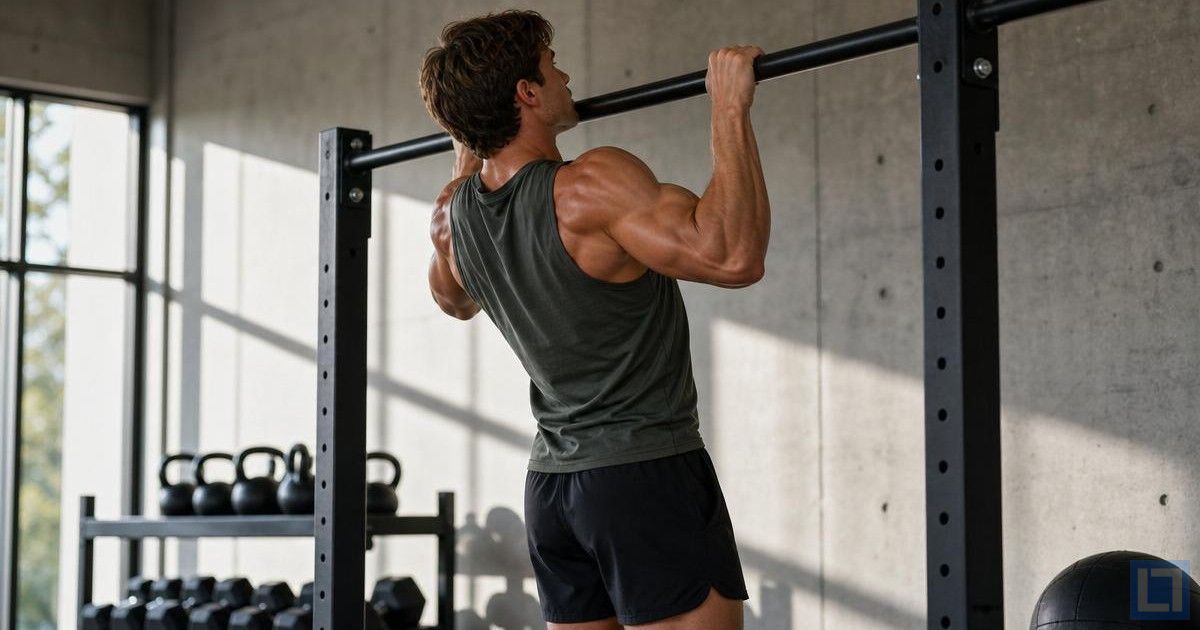
The Pull Up performs bodyweight pull-ups. The pattern builds back strength that supports bench press setup and balance.
For bench press strength, pull-ups balance pressing volume and build back strength supporting bench setup. Run it for 3 to 4 sets of 5 to 12 reps as pulling balance work.
Hang from a pull-up bar with hands shoulder-width or wider, palms facing forward. Pull the body upward until the chin is above the bar by driving the elbows down and back. Lower under control to a full hang. The pattern develops back strength – critical for bench press because the back provides the stable base for bench setup, supports proper scapular retraction during the lift, and balances the substantial pressing volume that bench press training emphasizes. Strong backs bench more.
Barbell Bent Over Row

The Barbell Bent Over Row performs heavy compound rows. The pattern builds back strength that supports bench press.
For bench press strength, bent-over rows build back strength supporting bench press setup. Run it for 3 to 4 sets of 6 to 10 reps as back strength work.
Stand with a barbell in front. Hinge at the hips with knees slightly bent until the torso is roughly 45 degrees from the floor, back flat. Grip the bar with hands shoulder-width. Pull the bar to the lower chest by driving the elbows back. Lower under control. The pattern develops back and rear delt strength – important for bench press strength because strong upper back muscles support the bench setup position (retracted scapulae creating tight foundation), balance the pressing volume, and contribute to long-term shoulder health that supports sustained bench press progress.
How To Program These Workouts
Bench press strength development works best with 2 to 3 bench-focused sessions per week. Vary intensity across the week – heavy day (3 to 5 reps at 85-90% 1RM), medium day (6 to 8 reps at 75-80% 1RM), accessory day (push-ups, flies, lighter pressing). Total weekly bench-specific volume should account for total stress on the chest, shoulders, and triceps.
Structure progression strategically. Sample week: Day 1 (Heavy Bench) – barbell bench press 4-5 sets of 3-5 reps, close grip bench 3 sets of 6-8 reps, dumbbell rows 3 sets of 8-10 reps. Day 2 (Volume Bench) – incline bench press 4 sets of 6-8 reps, skullcrushers 3 sets of 8-10 reps, pull-ups 3 sets to near failure. Day 3 (Accessory) – dumbbell bench 4 sets of 8-10 reps, dumbbell flies 3 sets of 12-15 reps, overhead triceps extensions 3 sets of 10-12 reps, bodyweight push-ups.
Progressive overload drives bench press strength – add small amounts of weight or reps when current loading becomes manageable. Track bench press loads in a log and aim for steady progress. Most lifters can add 2.5 to 5 pounds to bench press every 2 to 4 weeks during dedicated bench press focus periods. Combine progressive overload with quality technique, adequate recovery, and supporting nutrition. Substantial bench press strength gains require 3 to 12 months of consistent dedicated work.
Final Thoughts
These ten exercises cover the complete bench press strength toolkit. The bench press itself drives direct strength gains. The triceps work builds the lockout strength that determines bench press numbers. The chest hypertrophy work builds the muscle that pushes the most weight. The back work supports the foundation bench press demands. Together they produce the complete strength that drives bench press progress.
Building a stronger bench press requires consistent heavy work over months and years combined with attention to the supporting muscles. Most bench press progress comes from the bench press itself, with the supporting work providing the muscular balance and weakness elimination that sustained progress requires. Lifters who balance heavy bench work with intelligent accessory programming typically demonstrate measurably better bench press progress than those who only bench press.
Frequently Asked Questions
How often should the bench press be trained?
2 to 3 bench-focused sessions per week works well for most lifters. More frequent training (4+ sessions) typically produces overtraining for natural lifters. The bench press demands recovery between heavy sessions – quality over frequency drives progress. Vary intensity across the week (heavy day, medium day, accessory day) for sustained progress.
What is the most important accessory exercise for bench press?
Triceps work is typically the most important accessory for bench press strength – most bench press sticking points occur near lockout where the triceps drive the lift. Close grip bench press, skullcrushers, and overhead triceps extensions all develop the triceps strength that determines lockout. Strong triceps eliminate lockout weakness.
Should bench press training include heavy weight or high volume?
Both – bench press strength responds to both heavy work (3 to 5 reps at 85-90% 1RM) for neural and strength gains and moderate-volume work (6 to 10 reps at 75-80% 1RM) for hypertrophy. The best programs vary intensity across the week. Pure heavy training without volume work limits muscle development; pure volume work without heavy work limits neural and maximal strength gains.
How long does it take to substantially increase bench press?
Initial progress can be rapid for beginners (10 to 30 pound gains in 8 to 12 weeks). Intermediate lifters typically progress 1 to 2.5 pounds every 2 to 4 weeks during dedicated training. Advanced lifters progress slower, often 5 to 10 pounds per year. Substantial bench press transformation (50+ pounds added to working sets) typically requires 6 to 18 months of consistent dedicated training depending on training experience and individual factors.
Does back training help bench press?
Yes substantially – strong upper back muscles support the bench press setup position (retracted scapulae creating tight foundation), balance the substantial pressing volume that bench press training emphasizes, and contribute to long-term shoulder health that supports sustained bench press progress. Most lifters benefit from substantial pulling volume (at least 1:1 with pressing volume) to support bench press progress.