The trapezius (trap) – the large diamond-shaped muscle covering the upper back from the base of the skull to the mid-back – is one of the most prominent upper-body muscles, contributing substantially to upper-body mass, neck and shoulder strength, posture, and the developed yoke appearance that characterizes well-developed physiques. The trap has three regions that respond to different patterns: upper traps that activate strongest during scapular elevation (shrugs, upright rows, deadlifts), mid traps that activate strongest during scapular retraction (rows, face pulls, rear delt flies), and lower traps that activate strongest during scapular depression and downward rotation (face pulls, lower trap raises, certain pull patterns). Complete trap development requires training all three regions through varied patterns. The trap activates strongest during: scapular elevation (barbell shrug, dumbbell shrug, upright row) for upper trap loading – the most important upper trap pattern, isometric loading (deadlifts, farmers walks, rack pulls) for compound trap stimulus, scapular retraction (bent-over rows, dumbbell rows) for mid trap loading, and direct mid/lower trap work (face pulls, rear delt flies) for the typically underdeveloped regions. Most lifters underdevelop the mid and lower traps because: 1) shrugs are typically the only direct trap exercise programmed, 2) most lifters neglect dedicated mid/lower trap work, 3) the mid and lower traps respond to dedicated direct work that few programs include systematically.
Below are ten of the most effective exercises for trapezius development, covering primary upper trap loading (barbell shrug, dumbbell shrug, barbell upright row), foundational compound trap loading (barbell deadlift, barbell rack pull), mid-trap loading (barbell bent over row, dumbbell bent over row, dumbbell rear delt fly), direct mid/lower trap work (cable standing face pull), and isometric trap loading (farmers walk). Together they form a complete trapezius program. A 60 to 75-minute trap-focused session pulled from this list, performed 1 to 2 times per week (or as integrated work in pull/back days), produces strong trap development for any lifter focused on building the developed yoke, complete back development, or impressive upper-body strength.
Barbell Shrug

The Barbell Shrug performs barbell shrugs. The pattern is foundational for trapezius development.
For trapezius development, the barbell shrug is foundational. Run it for 4 sets of 8 to 12 reps as primary upper trap work.
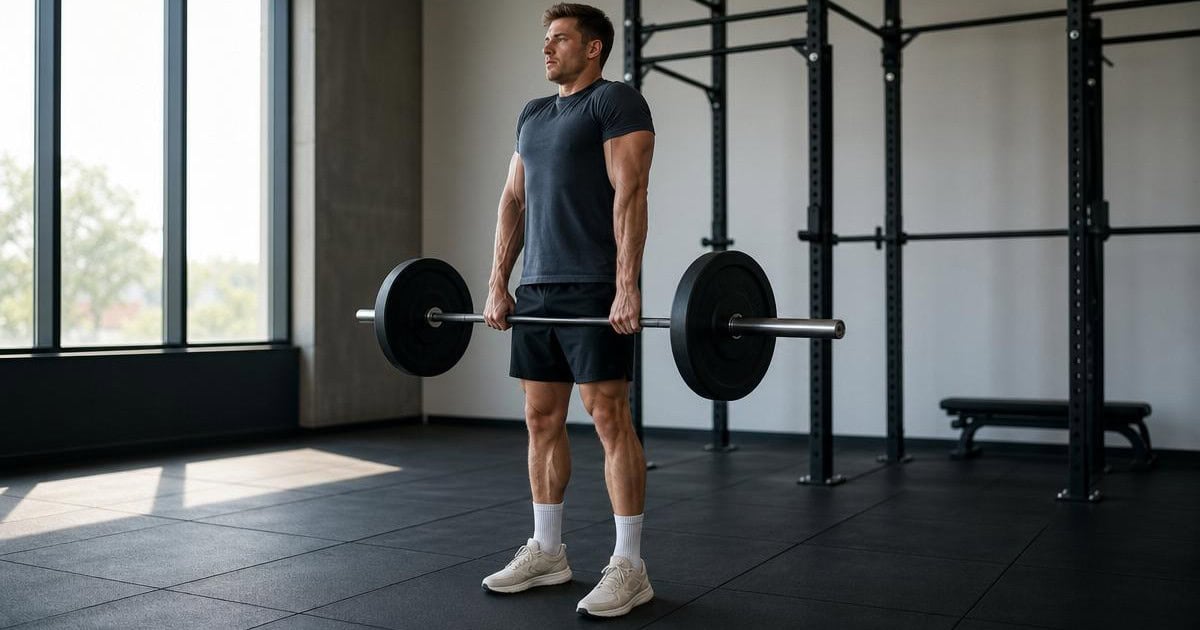
Stand with feet hip-width holding a barbell at the front of the thighs with overhand grip. Lift the shoulders straight up toward the ears by elevating the scapulae. The upper traps work hard through pure scapular elevation. Squeeze the upper traps hard at peak. Lower under control. The pattern is foundational for trapezius development – heavy barbell shrugs produce the most direct upper trap loading possible. Most lifters with the most developed traps have built them on consistent heavy shrug training plus complementary back work. The compound nature trains the traps with substantial weight.
Barbell Deadlift

The Barbell Deadlift performs barbell deadlifts. The pattern produces extreme compound trap loading.
For trapezius development, the deadlift produces extreme compound trap loading. Run it for 3 sets of 5 to 8 reps as compound trap work.
Stand with feet hip-width with a barbell on the floor over the mid-foot. Hinge at the hips and bend the knees to grip the bar. Drive through the heels while extending the hips and knees to lift the bar from the floor. Stand fully tall at the top. Lower under control. The pattern produces extreme compound loading on the traps – the entire trap (upper, mid, and lower) works isometrically to support the weight throughout the lift. Heavy deadlifts produce the most compound trap stimulus possible and contribute substantially to trap mass when programmed regularly.
Barbell Bent Over Row

The Barbell Bent Over Row performs barbell rows. The pattern produces compound mid-trap loading.
For trapezius development, the bent-over row produces compound mid-trap loading. Run it for 3 sets of 6 to 10 reps as mid-trap and back work.
Stand with feet hip-width holding a barbell at the front of the thighs with overhand grip. Hinge forward at the hips with a flat back so the torso is at about 45 degrees. Pull the bar to the lower chest by retracting the shoulder blades and pulling the elbows back. The lats, rhomboids, mid traps, and rear delts work hard. Squeeze the shoulder blades hard at peak. Lower under control. The pattern produces compound mid-trap loading – the rowing motion specifically targets the mid traps through scapular retraction. Critical for complete trap development because shrugs alone underdevelop the mid and lower traps.
Barbell Upright Row

The Barbell Upright Row performs barbell upright rows. The pattern produces upper trap and shoulder loading.
For trapezius development, the barbell upright row produces upper trap loading with shoulder involvement. Run it for 3 sets of 8 to 10 reps as upper trap and shoulder work.
Stand with feet hip-width holding a barbell at the front of the thighs with overhand grip (slightly wider than shoulder-width). Lift the bar straight up close to the body until it reaches upper chest height, leading with the elbows. The upper traps and medial delts work hard. Lower under control. The pattern produces upper trap loading through the abduction-shrug pattern – the upright row trains the upper traps differently than pure shrugs by combining shrug motion with arm elevation. Use moderate weight and avoid extreme range to prevent shoulder impingement.
Cable Standing Face Pull

The Cable Standing Face Pull performs cable face pulls. The pattern produces direct mid and lower trap loading.
For trapezius development, the face pull produces direct mid and lower trap loading combined with rear delt work. Run it for 3 to 4 sets of 12 to 15 reps as mid/lower trap work.
Set up a cable with rope attachment at face height. Grip both ends of the rope with palms down. Step back so the cable is taut. Pull the rope toward the face by retracting the shoulder blades and externally rotating the arms (so the hands separate at the face). The mid traps, lower traps, and rear delts work hard. Squeeze hard at peak. Return under control. The pattern produces direct mid and lower trap loading combined with external rotation – critical for trap development because mid and lower traps are typically underdeveloped, and face pulls address this directly.
Dumbbell Shrug

The Dumbbell Shrug performs dumbbell shrugs. The pattern produces variation upper trap loading.
For trapezius development, dumbbell shrugs provide variation alongside barbell shrugs. Run it for 3 sets of 10 to 12 reps as variation upper trap work.
Stand with feet hip-width holding dumbbells at the sides. Lift the shoulders straight up toward the ears by elevating the scapulae. The upper traps work hard through pure scapular elevation. Squeeze the upper traps hard at peak. Lower under control. The pattern produces variation upper trap loading – dumbbells allow different range of motion than barbells (dumbbells can travel slightly farther) and address left/right asymmetries. Combined with barbell shrugs, dumbbell shrugs produce complete upper trap development.
Dumbbell Bent Over Row

The Dumbbell Bent Over Row performs dumbbell rows. The pattern produces variation mid-trap loading.
For trapezius development, dumbbell rows provide compound mid-trap variation. Run it for 3 sets of 8 to 12 reps as mid-trap variation.
Stand with feet hip-width holding dumbbells in each hand at the sides. Hinge forward at the hips with a flat back so the torso is parallel to the floor. Pull the dumbbells up to the lower chest by retracting the shoulder blades and pulling the elbows back. The lats, rhomboids, mid traps, and rear delts work hard. Squeeze the shoulder blades hard at peak. Lower under control. The pattern produces compound mid-trap loading with dumbbell variation – allows different range of motion than barbell rows and addresses left/right asymmetries. Combined with barbell rowing, dumbbell rowing produces complete mid-trap development.
Farmers Walk
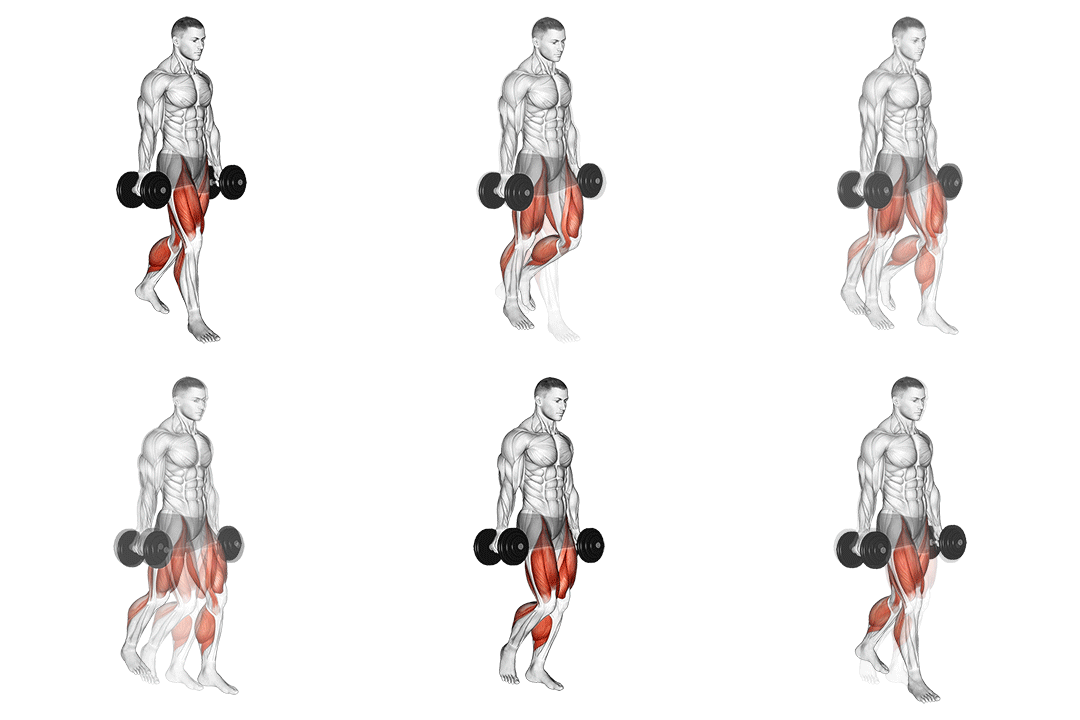
The Farmers Walk performs loaded carries. The pattern produces extreme isometric trap loading.
For trapezius development, farmers walks produce extreme isometric trap loading. Run it for 3 sets of 30 to 45-second heavy carries as isometric trap work.
Stand holding heavy weights (dumbbells, kettlebells, or trap bar) in each hand at the sides. Walk forward with controlled steps, maintaining tall posture and tight core. Continue for the working interval. The traps (especially upper traps) work hard isometrically supporting the weight. The pattern produces excellent isometric trap loading – the traps work statically to support heavy weight, building both upper trap mass and the integrated trap strength that supports heavy lifting. Excellent compound trap exercise that combines trap loading with grip and core work.
Dumbbell Rear Delt Fly
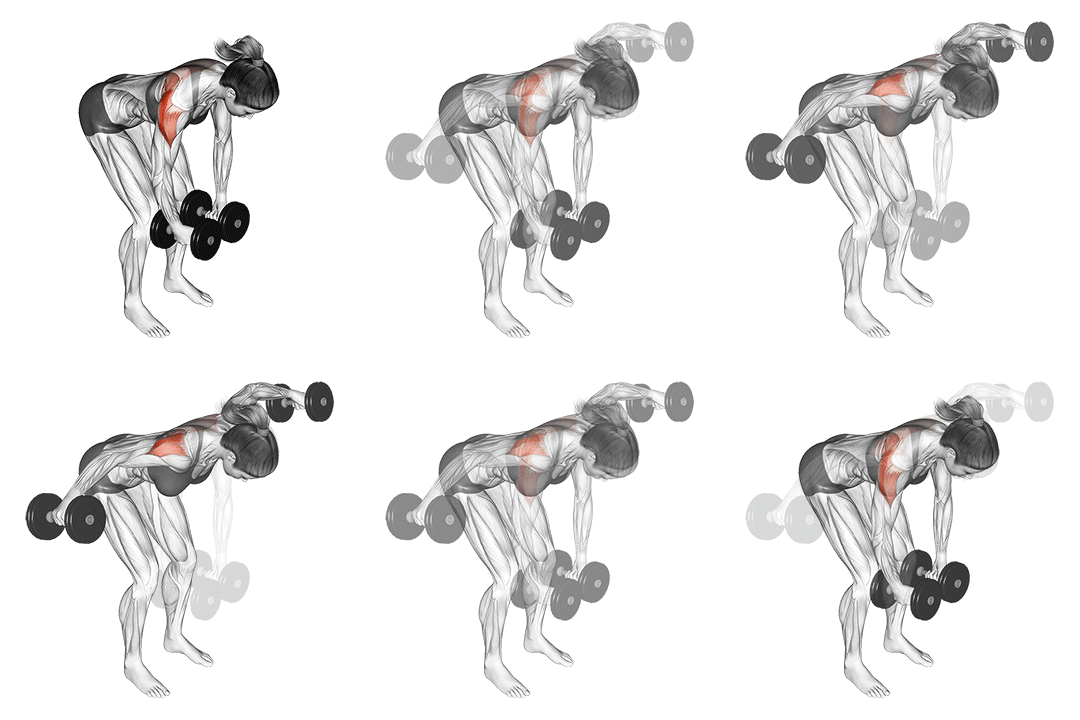
The Dumbbell Rear Delt Fly performs rear delt flies. The pattern provides mid-trap and rear delt loading.
For trapezius development, the rear delt fly provides mid-trap loading combined with rear delt work. Run it for 3 sets of 12 to 15 reps as mid-trap and rear delt work.
Stand with feet hip-width holding dumbbells. Hinge forward at the hips with a flat back so the torso is parallel to the floor. Hold the dumbbells underneath the chest with palms facing each other. Lift the dumbbells out to the sides by raising the arms straight out to shoulder height. The mid traps, rhomboids, and rear delts work hard through horizontal abduction. Squeeze hard at peak. Lower under control. The pattern produces mid-trap loading combined with rear delt work – the horizontal abduction pattern specifically engages mid traps alongside rear delts.
Barbell Rack Pull

The Barbell Rack Pull performs partial deadlifts from elevated position. The pattern produces extreme trap loading.
For trapezius development, the rack pull produces extreme trap loading with heavier weights than full deadlifts. Run it for 3 sets of 5 to 8 reps as advanced trap work.
Set up a barbell on a rack at knee height. Stand with feet hip-width over the bar. Grip the bar with hands shoulder-width. Drive through the heels while extending the hips to lift the bar from the rack to standing position. Lower under control to the rack. The pattern produces extreme trap loading – the rack pull allows substantially heavier weights than full deadlifts (often 30 to 50+ pounds heavier), producing tremendous isometric loading on the traps. Excellent for advanced lifters seeking maximum trap stimulus.
How To Program These Workouts
A productive trapezius session pulls 5 to 7 exercises from the list above. A common balanced session: barbell shrug (heavy primary upper), barbell deadlift (compound), barbell bent-over row (mid-trap compound), cable standing face pull (mid/lower), dumbbell shrug (variation), farmers walk (isometric), dumbbell rear delt fly (mid-trap isolation). For upper trap focus: heavy barbell shrugs, dumbbell shrugs, upright rows, farmers walks. For mid/lower trap focus: face pulls, bent-over rows, rear delt flies. For complete trap development: include all three regions with appropriate volume distribution. Run heavy compound work for 3 to 4 sets of 5 to 10 reps, isolation work for 3 sets of 10 to 15 reps, isometric work for 3 sets of 30 to 45-second carries.
Train trapezius 1 to 2 times per week as part of complete back/pull programming. Most successful trap programs structure work as: 1) primary trap day (heavy shrugs and rack pulls plus face pulls), 2) integrated trap work in back/pull sessions (deadlifts, rows include trap loading), 3) accessory trap work in regular training. The trap responds well to higher volume than typically programmed because: 1) it’s a large muscle group, 2) the upper traps recover quickly, 3) the mid/lower traps require dedicated work. Combined with progressive overload (especially heavy shrugs and rack pulls) and adequate volume (12 to 18+ weekly working sets across all three trap regions), dedicated trap training produces visible development within 12 to 16 weeks for most lifters.
For broader programming, see our how to grow traps and how to build a bigger yoke. For specific work, see our best mid trap exercises.
Final Thoughts
The best trapezius exercises deliver real trap development through training that targets all three regions of the trap muscle: primary upper trap loading through scapular elevation patterns, foundational compound trap loading through deadlifts and rack pulls, mid-trap loading through scapular retraction patterns, direct mid/lower trap work for the typically underdeveloped regions, and isometric trap loading through loaded carries. The combination of barbell shrugs, deadlifts, bent-over rows, upright rows, face pulls, dumbbell shrugs, dumbbell rows, farmers walks, rear delt flies, and rack pulls covers every functional pattern of trap development and produces broader upper-body, posture, and aesthetic development than partial training would suggest. Many lifters discover bigger upper traps visible from the front and back, more developed yoke appearance from front view, more developed mid-back thickness, more impressive overall back development, and the integrated trap development that defines well-developed physiques within 12 to 16 weeks of adding consistent comprehensive trap work. For lifters seeking complete trap development, dedicated multi-region trap training is one of the most effective interventions available.
Stay focused on heavy progressive overload as the priority for trap development. The most common mistake lifters make in trap training is using moderate weights without aggressive progressive overload, which produces moderate trap development at best. The fix: prioritize heavy progressive overload on shrugs and rack pulls (heavy barbell shrugs with continuously increasing loads) plus heavy deadlifts plus farmers walks for compound trap stimulus. The traps respond exceptionally well to heavy loads – they’re built to support heavy weight and grow proportionally to loading. Combined with appropriate volume across all three regions and varied training modalities, heavy progressive trap training produces the trap development that moderate-load training never achieves. Train traps heavy.
Frequently Asked Questions
How can I build bigger traps?
Heavy shrugs plus heavy deadlifts plus face pulls. Heavy barbell shrugs with progressive overload produce direct upper trap loading – the most important upper trap exercise. Heavy deadlifts produce extreme compound trap loading. Face pulls develop mid and lower traps. Combined with rack pulls (advanced compound), upright rows (variation), bent-over rows (mid-trap compound), dumbbell shrugs (variation), farmers walks (isometric), rear delt flies (mid-trap isolation), and dumbbell rows (variation), these form the foundation of complete trap development. The fastest gains come from heavy progressive overload.
What’s the best trap exercise?
Heavy barbell shrugs. Heavy barbell shrugs produce the most direct trap loading possible – they specifically target the upper traps through pure scapular elevation under heavy load. Combined with heavy deadlifts (compound), bent-over rows (mid-trap), face pulls (mid/lower trap), upright rows (compound shrug variant), rack pulls (extreme compound), farmers walks (isometric), rear delt flies (mid-trap), and dumbbell variations, heavy shrugs form the foundation of trap development. Most lifters with the most developed traps have built them on consistent heavy shrug training plus complementary work.
How do I build a yoke?
Heavy shrugs plus heavy deadlifts plus dedicated neck work. The yoke (the developed upper-trap and neck appearance from the front) requires heavy shrugs (upper trap), heavy deadlifts (compound trap), and dedicated neck training (neck flexion, neck extension, neck side work). Combined with farmers walks (isometric), rack pulls (advanced compound), and consistent training over 6+ months, this yoke-focused program produces measurable yoke development. The yoke depends on the integration of trap and neck development – both must be trained for visible yoke appearance.
How often should I train traps?
1 to 2 times per week as part of complete back/pull programming. The trap responds well to higher volume than typically programmed because: 1) it’s a large muscle group, 2) the upper traps recover quickly, 3) the mid/lower traps require dedicated work. Most successful programs include: 1) primary trap day (heavy shrugs plus accessories), 2) integrated trap work in back/pull sessions, 3) accessory work in regular training. Total weekly trap volume should be 12 to 18+ working sets across all three regions.
How long does it take to build bigger traps?
12 to 16 weeks for measurable improvement, ongoing for substantial development. Most lifters who consistently apply heavy shrugs plus heavy deadlifts plus dedicated mid/lower trap work plus adequate volume see measurable trap improvement within 12 to 16 weeks. Beginners often see initial gains within 8 to 12 weeks. Substantial trap development requires 6 to 12+ months of consistent training. The traps are highly responsive to heavy progressive overload but require patience for visible yoke development.