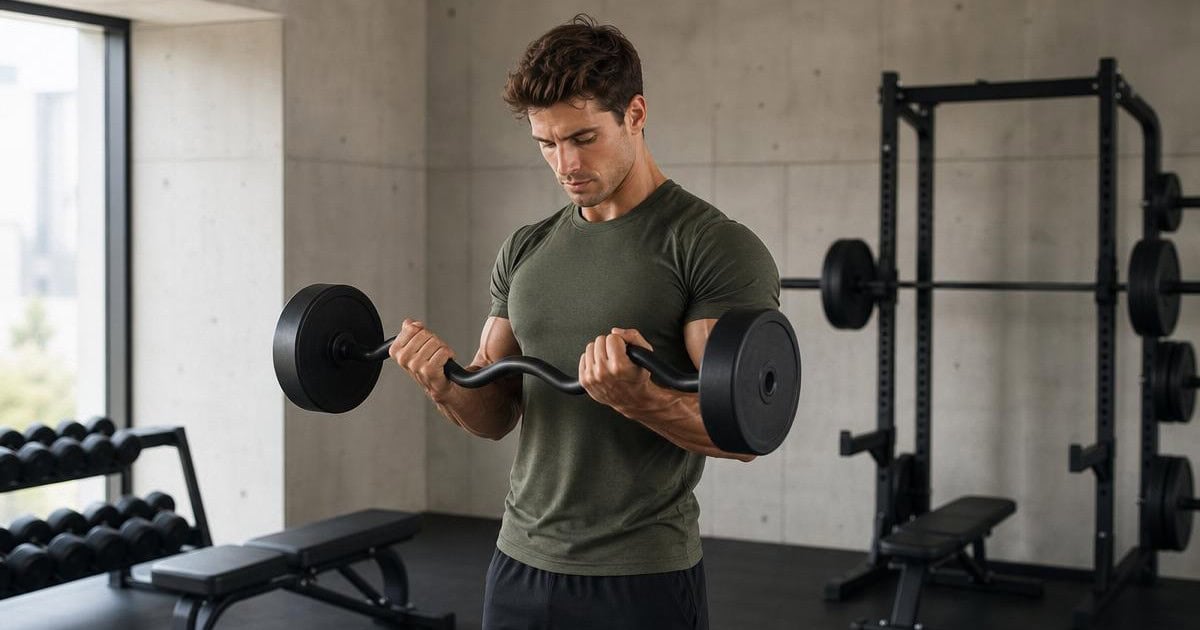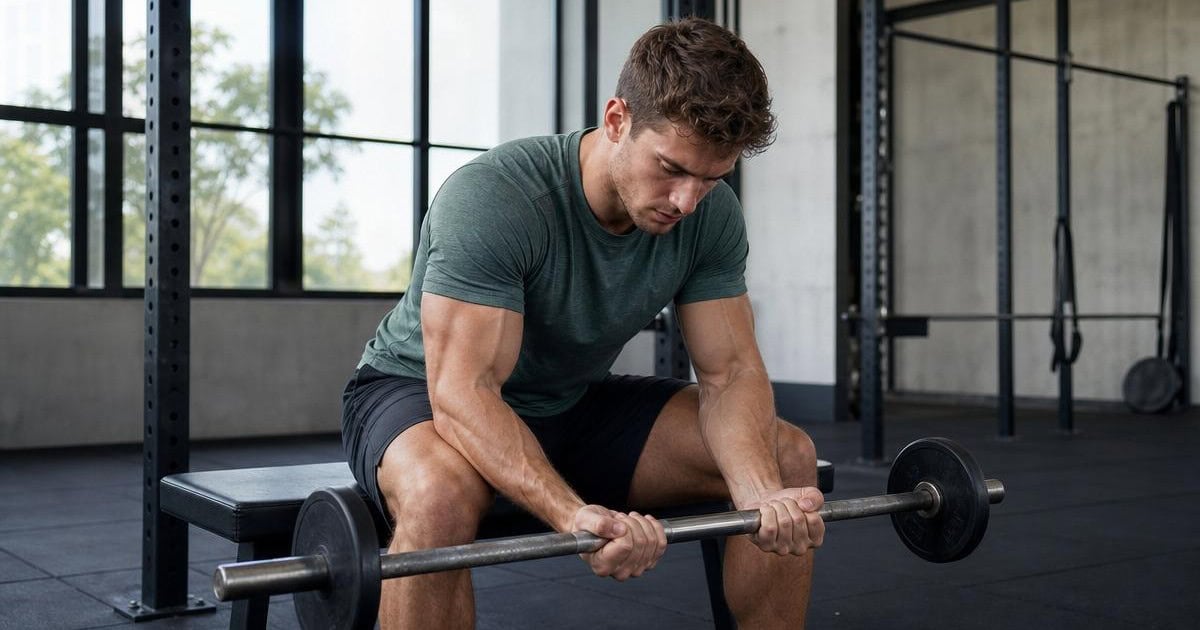
The forearm flexors are the muscles on the inside of the forearm responsible for wrist flexion and finger flexion. They run from the inside of the elbow to the wrist and fingers, providing the grip strength that supports virtually every pulling and holding task. Strong, well-developed forearm flexors create the visible forearm mass that distinguishes well-built arms and provide the grip strength foundation for heavy pulling, deadlifting, and any task involving sustained heavy holds.
These ten exercises cover complete forearm flexor development. Direct wrist curls (barbell and dumbbell, both flexion and balanced extension variants) build forearm mass through pure isolation. Heavy carries and deadlifts produce extreme grip loading that forearms must support. Pull-ups and dead hangs build grip endurance through bodyweight loading. Curls add forearm work alongside biceps training. Together they hit the forearm flexors through every productive angle and loading pattern.
Barbell Wrist Curl

The Barbell Wrist Curl performs wrist flexion with a barbell. The pattern directly isolates the forearm flexors.
For forearm flexor development, barbell wrist curls allow heavy direct loading. Run it for 3 to 4 sets of 12 to 20 reps as primary forearm work.
Sit on a bench with the forearms resting on the thighs, palms facing up, holding a barbell with hands shoulder-width. Let the barbell roll down toward the fingertips. Curl the wrists up by flexing the wrists, lifting the bar back through the full range. Lower under control. The pattern directly isolates the wrist flexors of the forearms – the muscles on the inside of the forearm responsible for wrist flexion. Foundational forearm flexor exercise that allows progressive heavy loading for direct hypertrophy stimulation.
Dumbbell Seated Palms Up Wrist Curl

The Dumbbell Seated Palms Up Wrist Curl performs wrist curls with dumbbells. The pattern allows independent forearm training per side.
For forearm flexor development, dumbbell wrist curls address per-side asymmetries. Run it for 3 sets of 12 to 20 reps per side as direct forearm work.
Sit on a bench with one forearm resting on the thigh, palm facing up, holding a dumbbell. Let the dumbbell roll down toward the fingertips. Curl the wrist up by flexing the wrist, lifting the dumbbell back through the full range. Switch sides. The pattern develops the wrist flexors with per-side loading – critical for addressing left/right asymmetries in forearm development. Excellent variation alongside barbell wrist curls because the unilateral loading ensures both sides receive equal stimulation rather than allowing one to dominate.
Barbell Reverse Wrist Curl

The Barbell Reverse Wrist Curl performs wrist extension with a barbell. The pattern works the forearm extensors that balance the flexors.
For complete forearm development, reverse wrist curls balance the flexor work. Run it for 3 sets of 12 to 15 reps as forearm extensor work.
Sit on a bench with the forearms resting on the thighs, palms facing down, holding a barbell with hands shoulder-width. Let the barbell roll down toward the fingertips with the wrists flexed downward. Curl the wrists up by extending the wrists, lifting the bar back through the full range. Lower under control. The pattern targets the wrist extensors on the outside of the forearm – critical for complete and balanced forearm development. Strong forearm flexors paired with weak extensors creates muscle imbalance that contributes to elbow pain. Reverse wrist curls balance the wrist flexor work.
Dumbbell Reverse Wrist Curl

The Dumbbell Reverse Wrist Curl performs reverse wrist curls with dumbbells. The pattern allows per-side forearm extensor work.
For complete forearm development, dumbbell reverse wrist curls address per-side balance. Run it for 3 sets of 12 to 15 reps per side as extensor work.
Sit on a bench with one forearm resting on the thigh, palm facing down, holding a dumbbell. Let the dumbbell roll down toward the fingertips. Curl the wrist up by extending the wrist, lifting the dumbbell back through the full range. Switch sides. The pattern targets the wrist extensors with per-side loading – addressing both forearm muscle balance and per-side asymmetries simultaneously. Excellent for complete forearm development because the unilateral loading ensures balanced bilateral extensor strength.
Farmers Walk
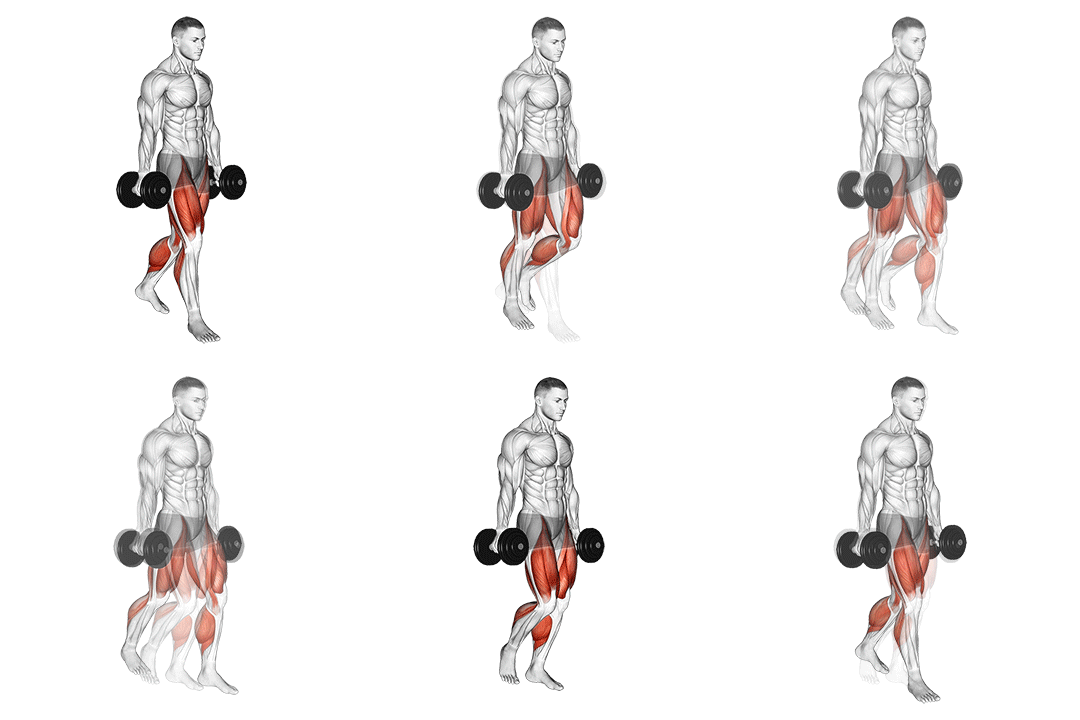
The Farmers Walk performs loaded carries with heavy implements. The pattern produces extreme forearm flexor loading through grip work.
For forearm flexor development, farmers walks build grip and forearm strength. Run it for 3 to 4 sets of 30 to 60 second carries as grip-focused work.
Stand with heavy dumbbells, kettlebells, or trap bar held at the sides. Walk forward with controlled strides while maintaining upright posture. The forearm flexors must work isometrically to maintain grip on the heavy load throughout the carry. Continue walking for time or distance. The carry produces extreme forearm flexor loading through sustained heavy grip work – the wrist and finger flexors must continuously support heavy loads. Excellent for forearm development because the loading often exceeds what can be used in direct wrist curl variations, and the grip emphasis builds both strength and endurance.
Barbell Deadlift

The Barbell Deadlift performs conventional deadlifts. The compound pattern produces heavy forearm flexor loading through grip demand.
For forearm flexor development, deadlifts build grip strength through heavy holding. Run it for 3 to 4 sets of 4 to 6 reps as primary heavy work.
Stand with a barbell over mid-foot, feet hip-width. Hinge at the hips and bend the knees to grip the bar with hands shoulder-width. Drive the floor away by extending hips and knees together to lift the bar. Stand fully tall, then lower under control. The forearm flexors must work intensely throughout the lift to maintain grip on the heavy bar. Strong deadlifters typically develop substantial forearm mass simply from the grip demand of heavy regular pulling – the forearms get worked through grip strength every session of heavy back work.
Dead Hang Stretch

The Dead Hang Stretch performs passive hangs from a pull-up bar. The pattern builds grip endurance and forearm flexor work.
For forearm flexor development, dead hangs build sustained grip endurance. Run it for 3 sets of 30 to 60 second hangs as grip endurance work.
Hang from a pull-up bar with arms fully straight, hands shoulder-width. Allow the body to hang relaxed, focusing on maintaining grip on the bar. Continue hanging for time, breathing throughout. The forearm flexors and grip muscles work isometrically to maintain hold on the bar – sustained passive hangs build substantial grip endurance and forearm endurance through the time-under-tension. Excellent accessible exercise that requires only a pull-up bar and develops the grip endurance that supports all pulling work.
Pull Up

The Pull Up performs bodyweight pull-ups. The compound pattern develops grip and forearm strength alongside back work.
For forearm flexor development, pull-ups produce forearm work through grip and pulling demand. Run it for 3 to 4 sets of 5 to 10 reps as compound back work.
Hang from a pull-up bar with hands shoulder-width or wider, palms facing forward. Pull the body upward until the chin is above the bar by driving the elbows down and back. Lower under control to a full hang. The forearm flexors must support body weight throughout the lift – the grip demand combined with the pulling effort produces substantial forearm flexor stimulation. Excellent compound exercise that builds grip and forearm strength alongside back development through the integrated demand of pulling body weight.
Barbell Curl

The Barbell Curl performs barbell biceps curls. The pattern develops the forearm flexors through grip demand alongside biceps work.
For forearm flexor development, barbell curls add forearm loading to bicep training. Run it for 3 sets of 8 to 12 reps as compound arm work.
Stand with a barbell held at the front of the thighs, hands shoulder-width, palms facing forward. Curl the barbell up to chest height by flexing the elbows. Lower under control to start. The forearm flexors must support the barbell throughout the lift – the grip demand of holding the bar through the full curl range produces substantial forearm work. Excellent compound exercise that adds forearm flexor stimulation to biceps work, building both muscle groups through the integrated movement pattern.
Dumbbell Biceps Curl

The Dumbbell Biceps Curl performs alternating or simultaneous dumbbell curls. The pattern develops biceps and forearms through grip work.
For forearm flexor development, dumbbell curls add per-side forearm loading. Run it for 3 sets of 10 to 15 reps as compound arm work.
Stand with dumbbells in each hand at the sides, palms facing forward. Curl the dumbbells up to shoulder height by flexing the elbows. Lower under control to start. The forearm flexors must support the dumbbells throughout the curl – the grip demand combined with bicep work produces compound stimulation for both muscle groups. Excellent variation alongside barbell curls because the dumbbells allow per-side loading and slight wrist supination throughout, providing additional forearm engagement through wrist position changes.
How To Program These Workouts
Forearm flexor development works best with 2 to 3 dedicated exposures per week, often integrated into back, arm, or pull sessions. Total weekly forearm volume of 8 to 14 working sets drives substantial growth for most lifters when programmed alongside the heavy compound work that provides additional grip stimulation.
Structure forearm work after main lifts when grip is already warm but the forearms have not been crushed by max grip work. Sample integration: heavy compound work (deadlifts, rows, pull-ups), then direct forearm work (wrist curls, reverse wrist curls, dumbbell variations), finishing with grip work (farmers walks, dead hangs). 3 to 4 sets of 12 to 20 reps for direct forearm work, 3 to 4 sets of 30 to 60 second carries for grip endurance.
Progressive overload drives forearm growth – add weight or reps when current loading becomes manageable. The forearms respond well to high-rep direct work because the muscle fibers are highly endurance-oriented. Tracking wrist curl loads and carry durations in a log ensures consistent progress. Visible forearm development typically takes 12 to 24 weeks of consistent dedicated work.
Final Thoughts
These ten exercises cover the complete forearm flexor development toolkit. The direct wrist curl work (flexion and extension variants) builds forearm mass through isolation. The heavy compound work (deadlifts, carries, pull-ups) provides grip-intensive loading that forearms must support. The compound arm work (curls) adds forearm stimulation alongside biceps training. Together they produce complete forearm development.
Building well-developed forearm flexors requires consistent direct and compound work over months and years, with progressive overload as the primary driver of growth. The combination of direct wrist curl work for size and heavy grip-intensive compound work for foundational strength produces the forearm development that distinguishes serious lifters from those who skip the dedicated forearm work.
Frequently Asked Questions
What are the forearm flexors?
The forearm flexors are the muscles on the inside of the forearm responsible for wrist flexion and finger flexion. They run from the inside of the elbow to the wrist and fingers, providing the grip strength that supports pulling, holding, and grasping movements.
How often should the forearms be trained?
2 to 3 dedicated forearm exposures per week works well for most lifters, often integrated into back, arm, or pull sessions. Total weekly volume of 8 to 14 working sets drives optimal growth. The forearms recover quickly and benefit from the additional incidental loading from heavy compound pulling work.
Are wrist curls the best forearm exercise?
Direct wrist curls are foundational for forearm hypertrophy through pure isolation, but complete forearm development also requires heavy grip work (deadlifts, carries, pull-ups) and compound arm work (curls). Wrist curls alone produce limited size compared to combining isolation with heavy grip-intensive compound work.
Should reverse wrist curls be included?
Yes – reverse wrist curls (wrist extension) balance the wrist flexor work and develop the extensors on the outside of the forearm. Strong flexors paired with weak extensors creates muscle imbalance that contributes to elbow pain (medial epicondylitis or ‘golfer’s elbow’). Balanced flexor and extensor work supports complete forearm development and elbow health.
How long does it take to build noticeable forearm size?
Initial size gains appear within 8 to 12 weeks of consistent forearm-focused training. Substantial forearm development (visible mass) typically takes 12 to 24 weeks of dedicated work. The forearms have high endurance fibers that respond best to consistent moderate-rep work over time rather than short heavy programs.