Barbell Olympic Squat

Description
The barbell Olympic squat (high-bar squat) places the bar high on the upper traps and squats to full depth (ass-to-grass). The high bar position and upright torso emphasize the quadriceps more than low-bar powerlifting squats. It is the standard squat position in Olympic weightlifting.
Muscle Group
Equipment Required
Barbell Olympic Squat Instructions
- Set a barbell at upper-trap height. Step under and place it high on your traps — not on your rear delts.
- Grip the bar close to your shoulders. Elbows down.
- Unrack. Set feet shoulder-width apart, toes turned out 15 to 30 degrees.
- Brace your core. Keep your torso as upright as possible.
- Squat down as deep as possible — aim for full depth where your hamstrings contact your calves.
- Keep your knees tracking over your toes. Knees may travel forward significantly.
- Drive through your full foot to stand.
- Weightlifting shoes with raised heels are recommended for this squat style.
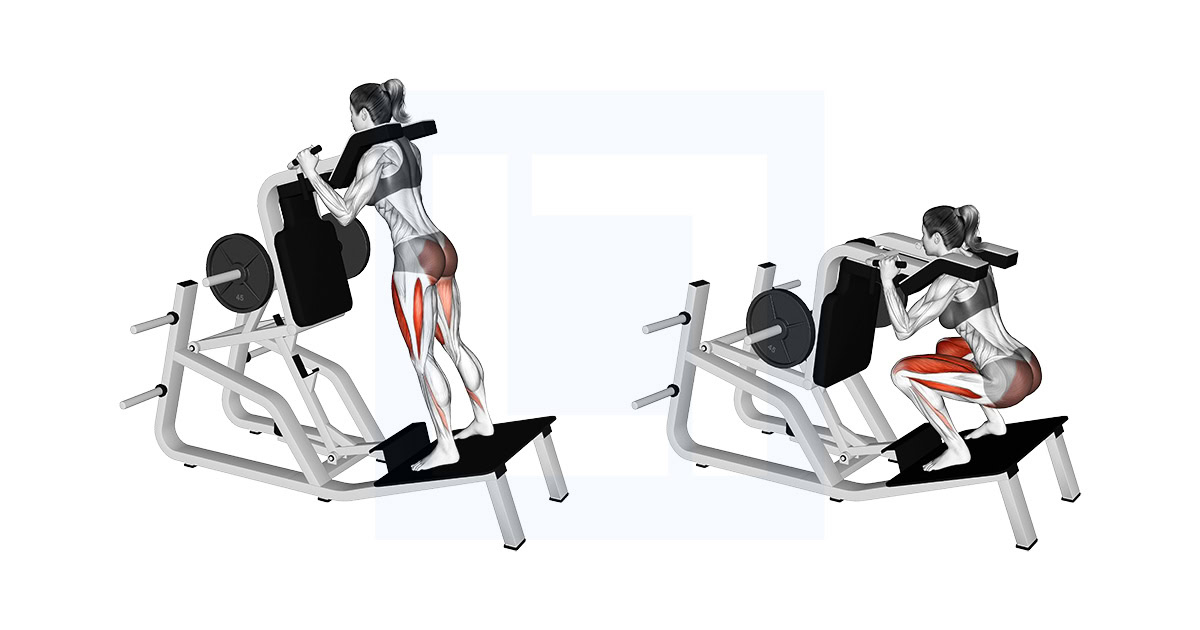
Barbell Olympic Squat Form & Visual

Barbell Olympic Squat Benefits
- Maximum quad emphasis from upright torso and full depth
- Standard squat for Olympic weightlifting
- Builds squat depth and ankle mobility
- Develops leg strength through full range
- Carries over to clean and snatch receiving positions
- Builds deep squat mobility
Barbell Olympic Squat Muscles Worked
- Quadriceps (maximum emphasis)
- Gluteus maximus
- Hamstrings
- Adductors
- Core (stabilizer)
- Erector spinae
Barbell Olympic Squat Variations & Alternatives
- Barbell Back Squat
- Barbell Front Squat
- Barbell Full Squat
- Barbell Narrow Stance Squat
- Pause Squat (ATG)