Suspension Fly

Description
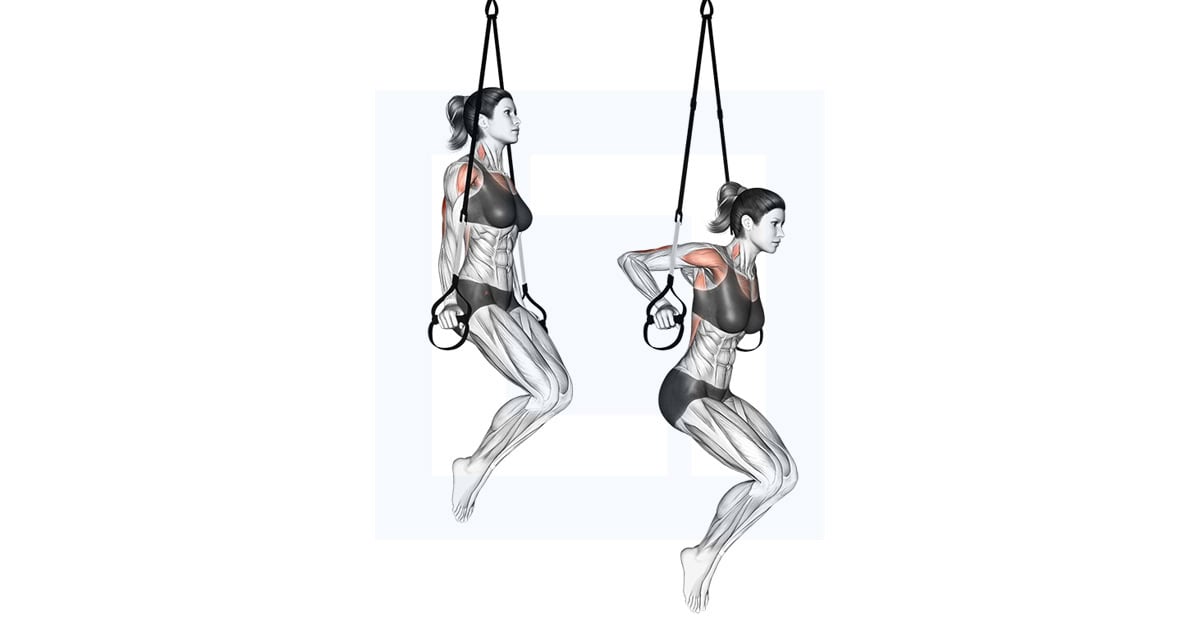
The suspension fly uses TRX straps or rings to perform a bodyweight chest fly. You face away from the anchor and arc both arms out to the sides while keeping them straight, then bring them back together — like a chest fly but using your bodyweight as resistance. The angle determines the difficulty.
Muscle Group
Equipment Required
Suspension Fly Instructions
- Set TRX straps or rings to chest height. Face away from the anchor.
- Grip the handles with arms extended forward at chest height. Step back into a forward-leaning position.
- Body forms a straight line from heels to hands. The angle determines difficulty.
- Brace your core hard.
- Lower your chest forward by spreading your arms out to the sides in a wide arc — like a chest fly.
- Maintain a slight bend in your elbows throughout.
- Lower until your arms are out wide and your chest is between your hands.
- Reverse by pulling your arms back together in front of you. Squeeze your chest hard.
Suspension Fly Form & Visual

Suspension Fly Benefits
- Builds chest with bodyweight
- Constant tension through the arc
- Easy to scale by body angle
- Heavy stabilizer engagement
- Builds core stability
- Useful when no dumbbells are available
Suspension Fly Muscles Worked
- Pectoralis major
- Anterior deltoid
- Biceps brachii (slight stabilizer)
- Core (anti-extension)
- Serratus anterior
Suspension Fly Variations & Alternatives
- Suspension Chest Press
- Dumbbell Chest Fly
- Cable Fly
- Cable Crossover
- Single-Arm Suspension Fly