Barbell Deadlift From Blocks
Description
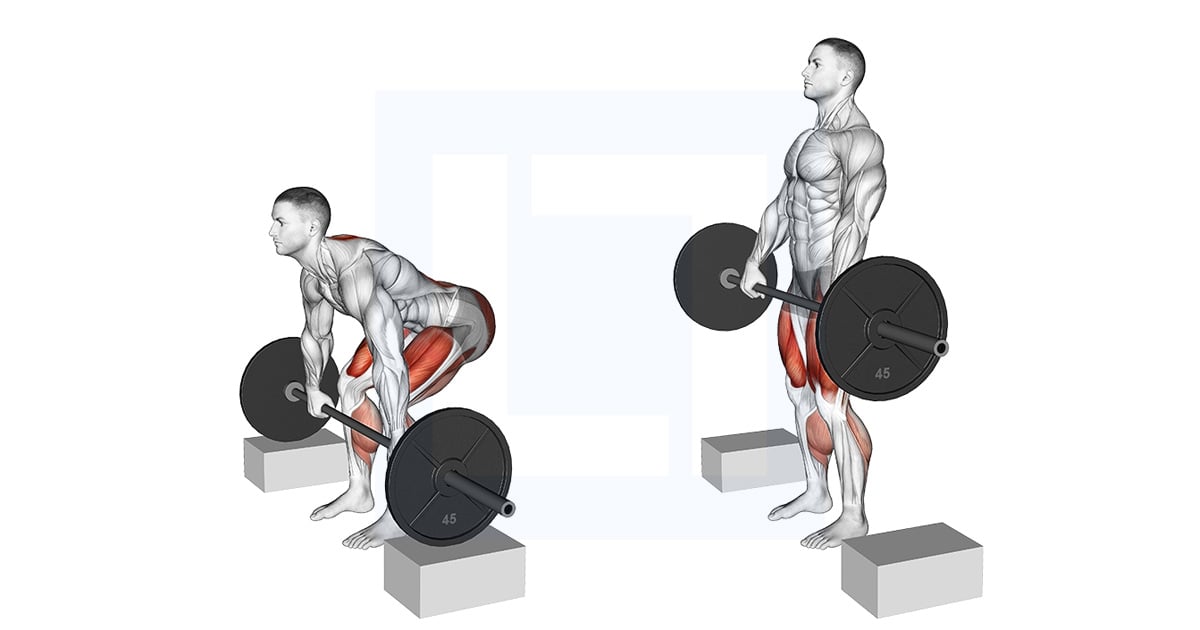
The barbell block pull, or rack pull from blocks, raises the starting position of the deadlift by setting the plates on stacked blocks or platforms. The shorter range of motion lets you handle more weight than a floor pull, building lockout strength and overloading the upper back, traps, and grip.
Muscle Group
Equipment Required
Barbell Deadlift From Blocks Instructions
- Stack blocks or platforms on each side of the lifting area to raise the bar.
- Set the bar height so the plates rest just below or above your knees, depending on the variation.
- Approach the bar in a conventional deadlift stance with feet hip-width apart.
- Bend at the hips and knees to grip the bar just outside your legs.
- Pull the slack out of the bar, engage your lats, and brace your core.
- Drive through your heels to stand up with the bar.
- Lock out at the top with hips fully extended and shoulders pulled back.
- Lower the bar back to the blocks with control.
Barbell Deadlift From Blocks Form & Visual

Barbell Deadlift From Blocks Benefits
- Allows heavier loads than full deadlifts
- Builds lockout strength
- Overloads the upper back, traps, and grip
- Reduces stress on the lower back compared to a floor pull
- Excellent accessory for competition deadlift
- Useful for working through deadlift sticking points
Barbell Deadlift From Blocks Muscles Worked
- Gluteus maximus
- Hamstrings
- Erector spinae
- Latissimus dorsi
- Trapezius
- Forearm flexors