Trap Bar Squat

Description
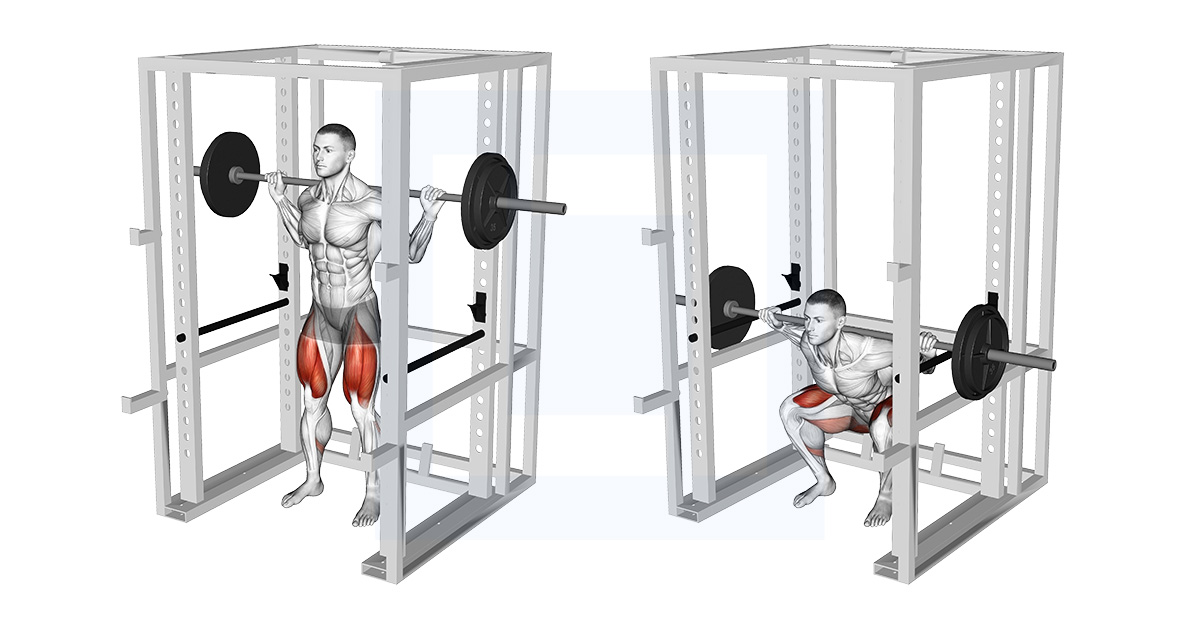
The trap bar squat stands inside a trap (hex) bar and performs a squat with a neutral grip at the sides. The trap bar allows a more upright torso than barbell back squats and is easier on the lower back. It is a hybrid between a squat and deadlift.
Muscle Group
Equipment Required
Trap Bar Squat Instructions
- Stand inside a loaded trap bar. Grip the high or low handles with a neutral grip.
- Set feet shoulder-width apart.
- Stand up by extending your hips and knees — like a deadlift but with more knee bend (squat-like).
- Stand tall at the top.
- Lower back down by bending at the knees and hips — sitting more into a squat than a hinge.
- The more you bend your knees and keep upright, the more squat-like it becomes.
- Touch the plates to the floor and repeat.
- Aim for 6 to 10 reps.
Trap Bar Squat Form & Visual

Trap Bar Squat Benefits
- Natural neutral grip reduces shoulder stress
- More upright torso than barbell back squats
- Easier on the lower back
- Hybrid squat-deadlift movement
- Easy to learn
- Builds quad and glute strength
Trap Bar Squat Muscles Worked
- Quadriceps
- Gluteus maximus
- Hamstrings
- Erector spinae
- Forearms and grip
- Core (stabilizer)
Trap Bar Squat Variations & Alternatives
- Trap Bar Deadlift (more hinge)
- Barbell Back Squat
- Barbell Front Squat
- Goblet Squat
- Trap Bar Romanian Deadlift
- Barbell Low Bar Squat
- Barbell High Bar Squat