Barbell Pin Squat

Description
The barbell pin squat (also called Anderson squat) starts each rep from a dead stop at the bottom — the barbell rests on safety pins in a power rack at your desired squat depth. Removing the stretch reflex makes each rep a pure concentric effort, building starting strength out of the hole.
Muscle Group
Equipment Required
Barbell Pin Squat Instructions
- Set safety pins in a power rack at your target squat depth (usually parallel or just below).
- Place the barbell on the safety pins. Step under the bar and position it across your upper traps.
- Set your feet shoulder-width apart. Brace your core hard.
- Drive straight up from the dead stop by extending your hips and knees.
- Lock out at the top. Pause briefly.
- Lower the barbell under control back to the pins. Let the bar fully settle on the pins.
- Release tension briefly, then brace and drive up again from a dead stop.
- Each rep starts fresh from the pins — no stretch reflex assistance.
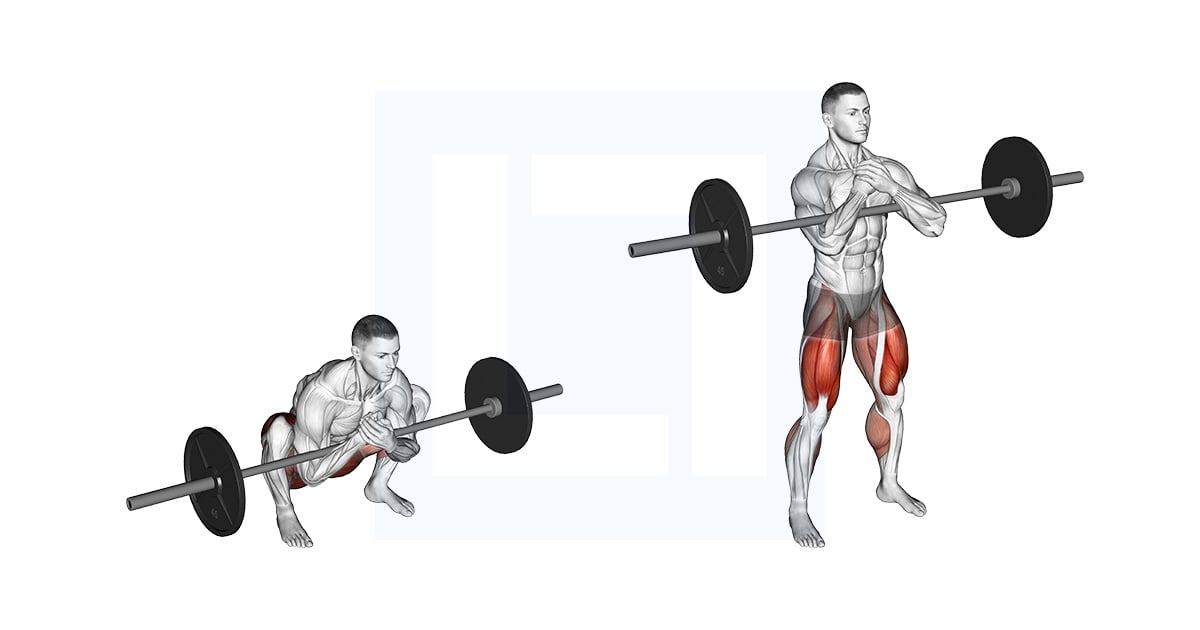
Barbell Pin Squat Form & Visual

Barbell Pin Squat Benefits
- Builds starting strength out of the hole
- Removes the stretch reflex
- Trains concentric-only power
- Identifies sticking point weakness
- Develops mental toughness
- Useful for powerlifting and squat development
Barbell Pin Squat Muscles Worked
- Quadriceps
- Gluteus maximus
- Hamstrings
- Erector spinae
- Core (heavy bracing)
- Adductors
Barbell Pin Squat Variations & Alternatives
- Barbell Back Squat
- Barbell Pause Squat
- Barbell Box Squat
- Pin Front Squat
- Anderson Deadlift (pin pull)