Whether we’re warming up before a workout, cooling down after a long run, or simply trying to undo the damage of sitting at a desk for eight hours, the best standing stretches can make a world of difference. They require no equipment, no mat, and no awkward floor transitions, just our body and a little bit of space.
Standing stretches are especially practical because we can do them almost anywhere: in the office, at the gym, or even in a hotel room while traveling. They target major muscle groups, improve flexibility, and help relieve the kind of tension that builds up from everyday life. And unlike some floor-based stretches, they keep our blood flowing and engage stabilizer muscles at the same time.
In this guide, we’ll walk through eight of the best standing stretches to improve flexibility, ease muscle tightness, and support better posture. Each one includes clear instructions, tips for proper form, and modifications where they matter most. Let’s get into it.
1. Standing Quad Stretch
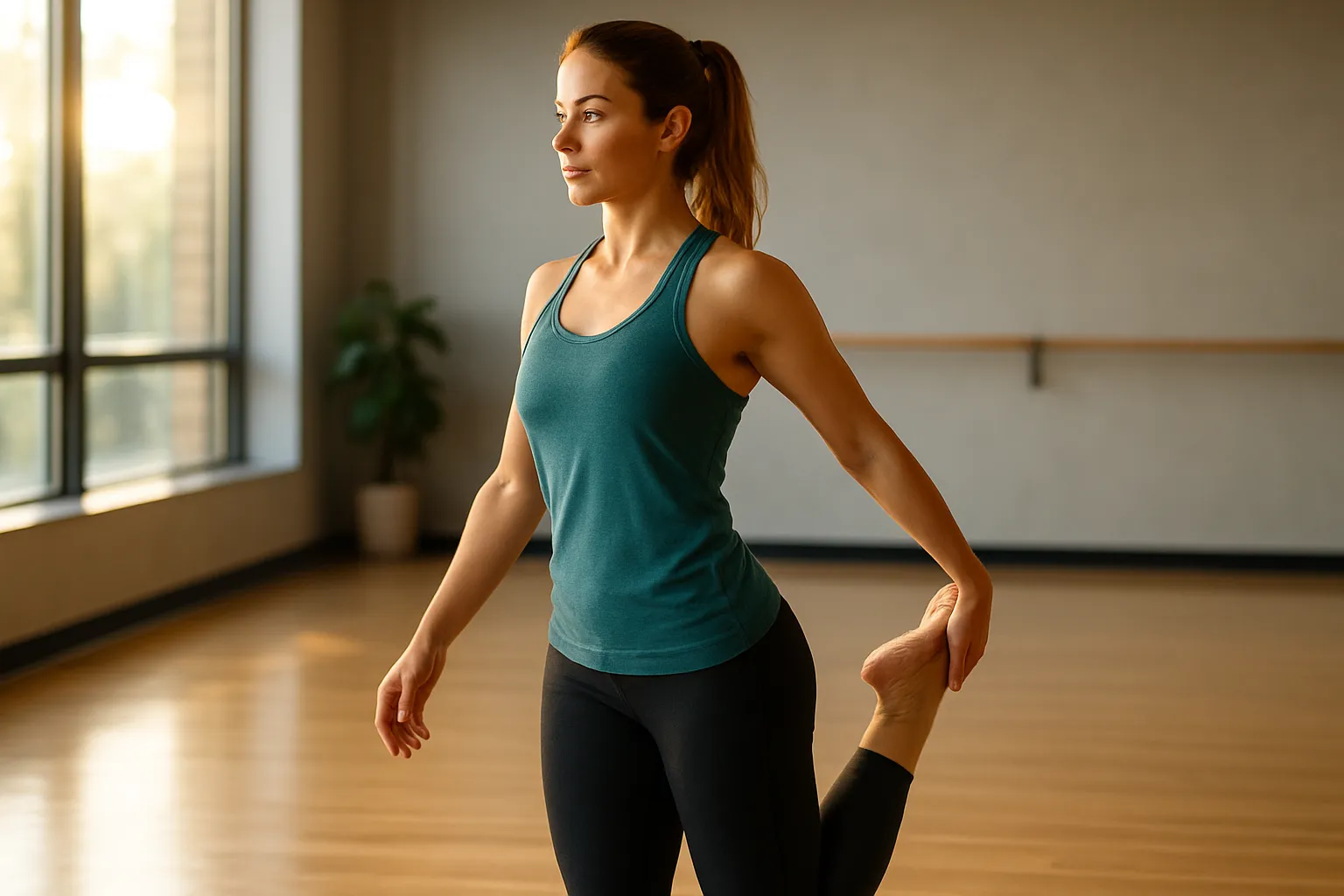
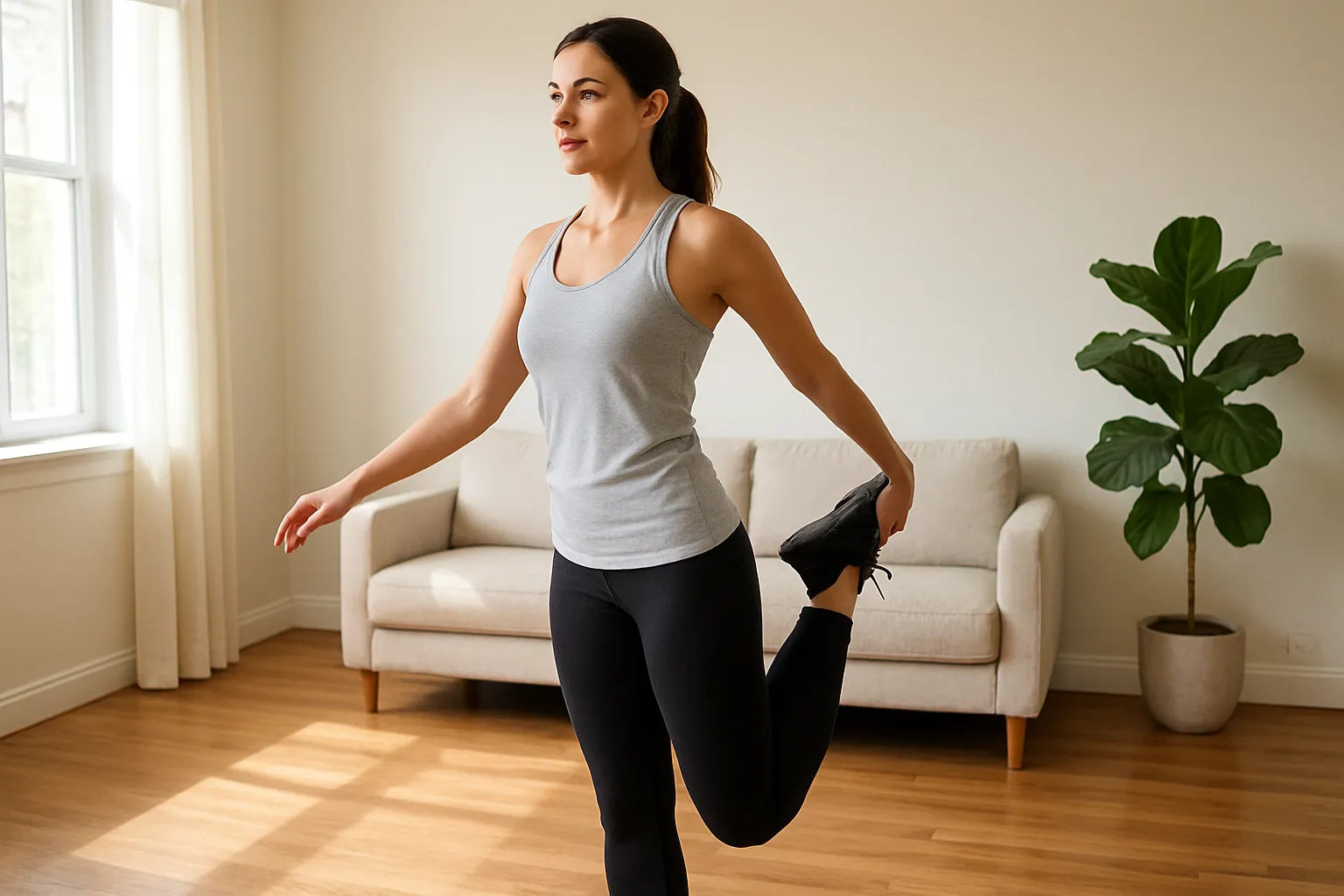
The standing quad stretch is one of the most recognizable stretches out there, and for good reason. It targets the quadriceps, the large muscle group at the front of our thighs, which tends to get tight from running, cycling, or prolonged sitting.
To perform it, we stand tall and bend one knee, bringing our heel toward our glute. We grab the top of our foot with the hand on the same side, keeping our knees close together. The key is to press our hips slightly forward to deepen the stretch without arching the lower back. Hold for 20–30 seconds, then switch sides.
This stretch also gently opens up the hip flexors, which is a bonus for anyone who spends hours in a chair. It’s one of the best standing stretches for runners and desk workers alike.
How to Maintain Balance
Balance can be tricky here, especially if our quads are particularly tight. A few strategies help:
- Use a wall or chair: Placing one hand on a stable surface takes the wobble out of the equation and lets us focus on the stretch itself.
- Fix our gaze: Staring at a single point on the floor about 5–6 feet ahead of us activates our proprioceptive system and steadies our stance.
- Engage the core: Gently bracing our abdominal muscles creates a more stable base. Think of it as building the stretch from the inside out.
Once balance improves over time, we can try performing this stretch without any support, it becomes a great test of single-leg stability.
2. Standing Hamstring Stretch
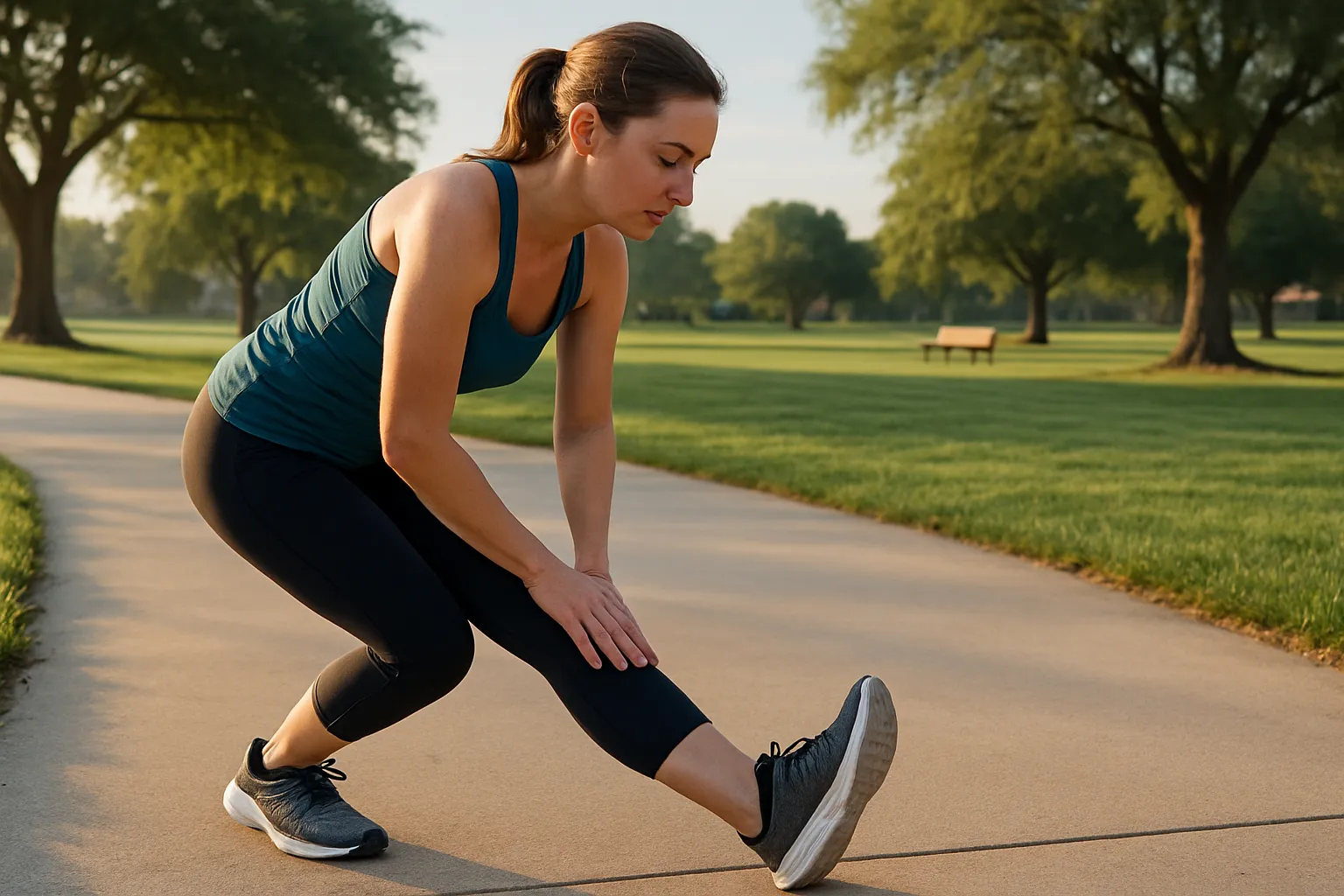
Tight hamstrings are incredibly common, and they can contribute to lower back pain, poor posture, and limited range of motion in the hips. The standing hamstring stretch addresses all of this without needing to sit on the ground.
We start by standing with our feet hip-width apart. Then we extend one leg forward, placing the heel on the ground with the toes pointing up. Keeping our back flat, not rounded, we hinge at the hips and lean forward until we feel a stretch along the back of the extended leg. Hold for 20–30 seconds per side.
A common mistake is rounding the spine to reach further. That actually shifts the stretch away from the hamstrings and puts unnecessary pressure on the lower back. The movement should come entirely from our hip hinge.
Modifications for Tight Hamstrings
If we can barely lean forward without feeling an intense pull, that’s okay. Here are some ways to ease into it:
- Bend the standing knee slightly: This takes pressure off the lower back and lets us focus on the hamstring.
- Reduce the forward lean: We don’t need to touch our toes. Even a slight hinge produces a meaningful stretch.
- Elevate the foot: Placing the extended heel on a low step or curb can change the angle just enough to make the stretch more accessible.
Consistency matters more than depth. Stretching our hamstrings for just a few minutes daily can lead to noticeable flexibility gains within a couple of weeks.
3. Standing Calf Stretch
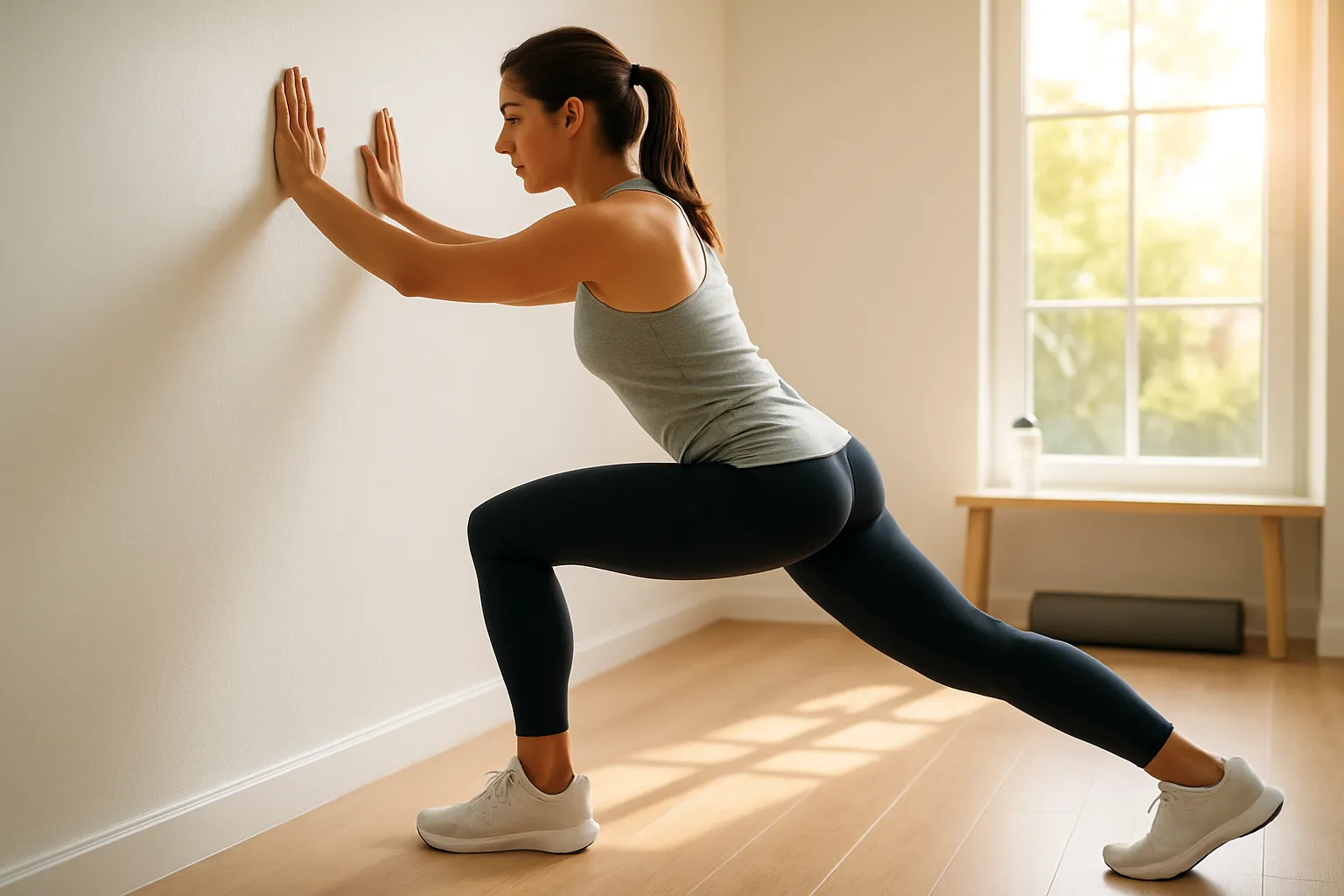
Our calves do a lot of heavy lifting, literally. They propel us forward when we walk, absorb impact when we run, and stabilize our ankles throughout the day. When they’re tight, we can experience everything from Achilles tendon discomfort to plantar fasciitis.
The standing calf stretch is simple and effective. We face a wall and place both hands against it at about shoulder height. Stepping one foot back, we keep that back leg straight with the heel pressed firmly into the floor. We lean into the wall until we feel a stretch in the calf of the back leg. Hold for 20–30 seconds, then switch.
To target the deeper calf muscle, the soleus, we can slightly bend the back knee while keeping the heel grounded. This subtle adjustment shifts the stretch lower, closer to the Achilles tendon.
This is one of the best standing stretches for anyone who runs, walks regularly, or wears heels. It’s also useful as part of a warm-up to prepare the lower legs for activity. We recommend doing it both before and after exercise for the best results.
4. Standing Side Body Stretch
We rarely move laterally in daily life, which means the muscles along the sides of our torso, the obliques, intercostals, and latissimus dorsi, often get neglected. The standing side body stretch opens them up beautifully.
We stand with our feet shoulder-width apart and raise both arms overhead. Then we clasp our hands together (or hold one wrist with the opposite hand) and gently lean to one side, creating a long arc from fingertips to hip. We hold for 15–20 seconds, return to center, and repeat on the other side.
The stretch should feel like a smooth, even pull along the entire side of the body. Avoid twisting or leaning forward, the movement is strictly lateral.
Muscles Targeted and Benefits
This stretch hits several areas at once:
| Muscle Group | Benefit |
|---|---|
| Obliques | Improved core flexibility and rotational range |
| Intercostals | Better breathing capacity and rib cage mobility |
| Latissimus dorsi | Reduced upper back and shoulder tension |
| Quadratus lumborum | Relief from lower back stiffness |
Beyond the muscular benefits, the standing side body stretch can genuinely help us breathe more deeply. By expanding the intercostal muscles between our ribs, we create more room for the lungs to fully inflate. It’s a stretch that feels restorative every single time.
5. Standing Chest Opener Stretch
If we spend any time hunched over a laptop or phone, and most of us do, our chest muscles tighten and our shoulders round forward. The standing chest opener stretch is the antidote.
We stand tall and interlace our fingers behind our back. With our arms straight, we gently lift our hands away from our body while squeezing our shoulder blades together. We should feel a stretch across the front of our chest and the fronts of both shoulders. Hold for 20–30 seconds.
For a deeper variation, we can place one forearm against a doorframe at a 90-degree angle and step through the doorway until we feel a stretch across that side of our chest. This unilateral version lets us address imbalances between the left and right sides.
Why It Helps With Posture
Poor posture isn’t just an aesthetic issue. Rounded shoulders and a forward head position can lead to chronic neck pain, tension headaches, and even reduced lung capacity over time.
The chest opener counteracts the forward-pull pattern by:
- Lengthening the pectoralis major and minor, which are the primary muscles that pull our shoulders forward.
- Activating the rhomboids and mid-trapezius, encouraging the shoulders to sit back in their natural position.
- Resetting our spinal alignment, even if temporarily, which trains our neuromuscular system to recognize better posture.
Doing this stretch two to three times throughout the workday can genuinely shift how we carry ourselves. It’s one of the best standing stretches for anyone battling desk-related tension.
6. Standing Figure Four Stretch
The standing figure four stretch is our go-to for targeting the glutes and the piriformis, a small but mighty muscle deep in the hip that’s notorious for causing sciatic-type pain when it gets tight.
We start by standing on one leg. We then cross the opposite ankle over the standing knee, creating a “figure four” shape with our legs. From here, we slowly sit our hips back and down, as if lowering into a shallow squat. We should feel a deep stretch in the outer hip and glute of the crossed leg. Hold for 20–30 seconds per side.
This stretch demands balance and hip mobility simultaneously, making it one of the more challenging options on our list. But that’s also what makes it so effective.
Tips for Keeping Proper Form
- Keep the standing foot firmly planted. Distribute weight evenly across the entire foot, don’t roll onto the toes.
- Sit back, not down. Think of pushing our hips toward a chair behind us rather than dropping straight down. This protects the standing knee.
- Flex the crossed foot. Actively flexing the ankle of the crossed leg protects the knee joint and intensifies the hip stretch.
- Use support if needed. There’s no shame in holding onto a wall or countertop. The stretch works just as well with a hand on something stable.
This is an excellent stretch to include after lower-body workouts or long periods of sitting.
7. Standing Cross-Body Shoulder Stretch
Shoulder tightness affects more people than we might think. Whether it’s from lifting, swimming, or just carrying stress in our upper body, the standing cross-body shoulder stretch provides quick and effective relief.
We bring one arm straight across our chest at shoulder height. Using the opposite hand, we gently press just above the elbow to pull the arm closer to our body. We should feel a stretch in the rear deltoid and the back of the shoulder. Hold for 20–30 seconds, then switch arms.
A couple of things to watch for: we want to keep the stretching arm straight (not bent) and avoid hiking the shoulder up toward our ear. Relaxing the shoulder down amplifies the stretch and prevents compensatory tension in the neck.
This is one of those stretches that’s easy to do between sets at the gym, during a break at work, or while standing in line. It takes seconds but delivers real shoulder mobility improvements over time. For anyone dealing with stiff shoulders or upper back tension, this simple move belongs in the daily rotation.
8. Standing Forward Fold
The standing forward fold is a full posterior chain stretch that targets the hamstrings, lower back, and calves all at once. It’s borrowed from yoga (where it’s called Uttanasana), but we don’t need to be yogis to benefit from it.
We stand with our feet hip-width apart, take a deep inhale, and as we exhale, we hinge at the hips and fold forward, letting our arms hang toward the ground. Our knees can be slightly bent, especially if our hamstrings are tight. The goal isn’t to touch the floor: it’s to let gravity gently lengthen the spine and the back of our legs.
Holding for 30–60 seconds gives the muscles time to relax into the stretch. We can gently sway side to side or grab opposite elbows and let the upper body hang like a ragdoll for an even more restorative variation.
When to Use This Stretch in Your Routine
The standing forward fold is versatile, but timing matters:
- As a warm-up: A dynamic version, folding down, holding briefly, and rolling back up, wakes up the posterior chain without over-stretching cold muscles.
- Post-workout: This is when we’ll get the deepest stretch. Muscles are warm and pliable, so holding the fold for 30–60 seconds can genuinely improve flexibility.
- During the workday: Standing up from our desk and doing a quick forward fold releases built-up tension in the lower back and resets our energy. Even 15 seconds helps.
It’s arguably the most efficient standing stretch we can do because it hits so many muscle groups in a single position.
Conclusion
The best standing stretches don’t require fancy equipment or a dedicated studio, just a willingness to pause and give our muscles the attention they deserve. From the quad stretch to the forward fold, each movement on this list addresses a common area of tightness that most of us deal with on a regular basis.
What makes standing stretches so valuable is their accessibility. We can do them at home, at work, at the gym, or even outdoors. They improve flexibility, relieve tension, support better posture, and help prevent injuries, all in just a few minutes a day.
Our recommendation? Pick three or four stretches from this list that target your tightest areas and commit to doing them daily. Consistency beats intensity when it comes to flexibility gains. Within a few weeks, we’re willing to bet you’ll notice a real difference in how your body feels and moves.
Frequently Asked Questions
What are the best standing stretches for flexibility?
Some of the best standing stretches for flexibility include the standing quad stretch, standing hamstring stretch, standing forward fold, and standing figure four stretch. These target major muscle groups like the quads, hamstrings, glutes, and calves without requiring any equipment or floor space.
How long should you hold a standing stretch?
Most standing stretches should be held for 20–30 seconds per side. For deeper stretches like the standing forward fold, holding for 30–60 seconds allows the muscles more time to relax and lengthen. Consistency with daily stretching matters more than holding any single stretch for an extended period.
Can standing stretches help with lower back pain?
Yes, several standing stretches can relieve lower back pain. The standing hamstring stretch loosens tight hamstrings that pull on the lower back, while the standing forward fold lengthens the entire posterior chain. The standing figure four stretch also targets the piriformis, which can contribute to sciatic-type discomfort when tight.
Are standing stretches better than floor stretches?
Standing stretches offer unique advantages over floor stretches, including convenience, no need for a mat, and the ability to do them anywhere. They also keep blood flowing and engage stabilizer muscles for improved balance. However, a well-rounded routine can include both standing and floor stretches depending on your goals.
What standing stretches can I do at my desk during the workday?
The best standing stretches for the office include the standing chest opener to counteract hunched posture, the cross-body shoulder stretch for upper body tension, and the standing forward fold to release lower back stiffness. These require minimal space, take just seconds, and can significantly reduce desk-related tightness.
How often should I do standing stretches to see results?
For noticeable flexibility gains, aim to do standing stretches daily, spending just a few minutes targeting your tightest areas. Picking three or four of the best standing stretches and performing them consistently can lead to meaningful improvements in flexibility and reduced muscle tension within a couple of weeks.